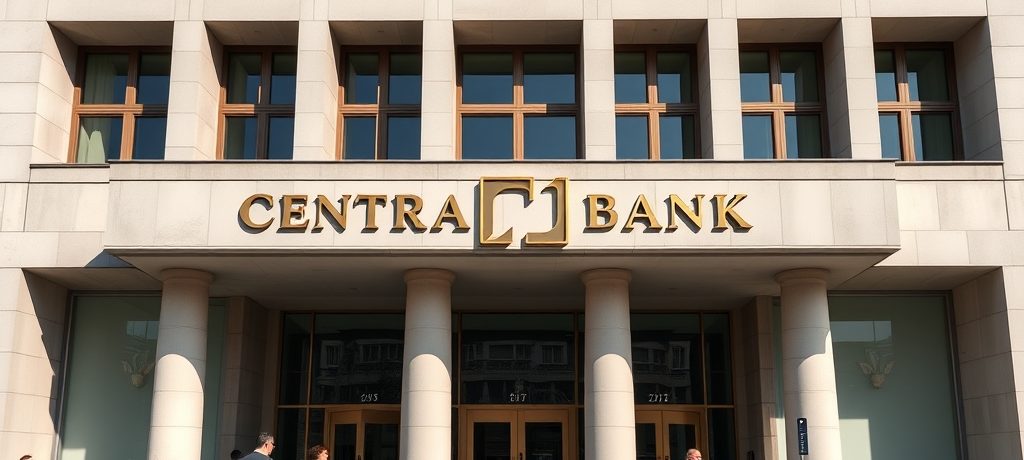
Hungarian police have arrested György Matolcsy, the country’s former Central Bank governor and a close economic ally of ex-Prime Minister Viktor Orbán, on Wednesday. This development marks a significant escalation in the new government’s campaign against alleged financial abuses from the Orbán era, a period frequently associated with accusations of widespread corruption.
Prime Minister Péter Magyar confirmed Matolcsy’s custody in a post on Facebook, though he did not provide further details regarding the arrest. This action follows a statement earlier in the day from Hungary’s Central Prosecutor’s Office, which indicated it was “carrying out coordinated investigative actions” in multiple locations. These investigations are connected to a Central Bank-related probe into “criminal misappropriation of funds.” While the Prosecutor’s Office did not name Matolcsy directly, it promised that more information about the case would be released later.
Matolcsy’s tenure as head of Hungary’s central bank spanned from 2013 to 2025. Prior to this, he served as Orbán’s minister of economy from 2010 to 2013. Throughout these roles, he was recognized as one of Orbán’s closest economic confidants. Matolcsy has consistently denied any wrongdoing in response to the allegations that have surfaced.
Much of Matolcsy’s time leading the central bank was overshadowed by accusations of corruption, particularly concerning the bank’s establishment of foundations. These foundations were endowed with substantial public funds, amounting to “hundreds of billions of forints — equivalent to hundreds of millions of dollars.” Last month, a criminal complaint was formally filed, alleging “embezzlement, negligence, fraud, and abuse of office” during Matolcsy’s governorship. This complaint emerged after an internal central bank audit scrutinized past real estate investments, revealing that properties had been purchased for “inflated prices,” which resulted in “significant financial damage” to the institution. At present, it remains “unclear whether Matolcsy’s detention was related to the real estate purchases or the endowments to the bank’s foundations.”
The arrest underscores the new government’s commitment to its stated priorities. Since taking office “earlier this year,” Prime Minister Magyar’s administration has explicitly prioritized investigating “suspected financial abuses committed by Orbán-era officials.” This commitment was further solidified in July with the launch of the National Asset Recovery and Protection Office. Magyar has described this new entity as a “superauthority,” equipped with extensive “investigative and prosecutorial powers” specifically designed to pursue cases involving misused public funds. The office is mandated to enlist the support of the police, prosecutors, and the national tax authority, with the aim of ensuring that “it doesn’t take years to uncover a complicated corruption case.”
In an exclusive interview with The Associated Press on Tuesday, Prime Minister Magyar articulated his administration’s perspective on the scale of past misconduct. He stated that it was clear that “certain members of the previous government as well as oligarchs, businessmen and family members connected to them committed serious crimes, typically corruption crimes, both with national funding and EU funding.” This statement provides broader context for the current crackdown and the government’s determination to address systemic issues.
Matolcsy’s lawyer, Pál Bátki, provided some clarity on the specific charges his client faces, telling the Hungarian news outlet Telex that the former governor was detained on suspicion of “economic fraud that caused significant financial damage and using a forged private document.” This legal detail highlights the serious nature of the allegations, which could carry substantial penalties if proven. The ongoing investigation will likely delve into the intricacies of these financial transactions and document usage.
This high-profile arrest signals a determined effort by the new Hungarian government to hold past officials accountable for alleged financial misconduct. It underscores a broader commitment to combating corruption that has long shadowed the nation’s political and economic landscape, potentially paving the way for further investigations and legal actions against individuals associated with the previous administration.