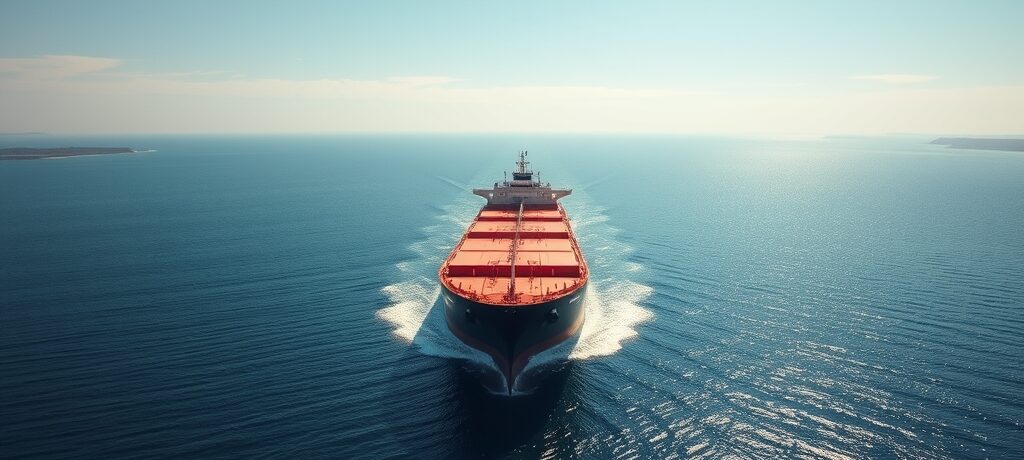
LONDON – Thirty-five countries are convening this Thursday in a concerted effort to apply diplomatic and political pressure for the reopening of the Strait of Hormuz, a crucial global shipping artery. The waterway has been severely impacted by the U.S.-Israeli war against Iran, leading to a near-total halt in traffic and sending petroleum prices soaring worldwide.
British Prime Minister Keir Starmer emphasized the urgency of the virtual meeting, chaired by Foreign Secretary Yvette Cooper. Starmer stated that the gathering “will assess all viable diplomatic and political measures we can take to restore freedom of navigation, guarantee the safety of trapped ships and seafarers and to resume the movement of vital commodities.” The closure of the strait, a critical path for the world’s oil flow connecting the Persian Gulf to global oceans, has created significant economic instability.
Economic Fallout and Geopolitical Standoff
The current crisis stems from Iranian attacks on commercial ships and the persistent threat of further aggression, effectively choking off one of the world’s most strategic maritime passages. The economic ramifications are profound, directly impacting global energy markets and contributing to inflationary pressures through elevated oil prices.
Notably, the United States is not participating in Thursday’s discussions. Former President Trump has previously asserted that securing the waterway is “not America’s job,” advising U.S. allies to “go get your own oil.” This stance underscores a divergence in international approaches to the crisis, placing the onus on other nations to find a resolution.
While no country appears willing to attempt to open the strait by force amidst ongoing fighting—given Iran’s capacity to target vessels with anti-ship missiles, drones, attack craft, and mines—Prime Minister Starmer confirmed that military planners from an unspecified number of countries will soon meet. Their objective will be to devise strategies for ensuring shipping security “after the fighting has stopped.”
A United Front for Maritime Security
As an immediate measure, 35 countries, including key economic powers such as the U.K., France, Germany, Italy, Canada, Japan, and the United Arab Emirates, have already signed a joint statement. This declaration demands that Iran cease its attempts to block the strait and pledges to “contribute to appropriate efforts to ensure safe passage” through the waterway.
Thursday’s meeting is characterized as an initial step in a broader, multi-stage process. It is expected to be followed by “working-level meetings” where officials will delve into the intricate details of implementation. Prime Minister Starmer acknowledged that resuming shipping “will not be easy,” stressing that it will necessitate “a united front of military strength and diplomatic activity” in conjunction with robust partnership from the maritime industry.
Broader Strategic Implications
This international initiative draws parallels to the “coalition of the willing” assembled by the U.K. and France to bolster Ukraine’s security post-ceasefire. Such efforts highlight a growing trend among European nations to enhance their own security capabilities and demonstrate increased responsibility on the global stage, particularly in light of renewed suggestions from former President Trump regarding a potential U.S. withdrawal from NATO.
The collective action to address the Strait of Hormuz crisis reflects a global recognition of the economic imperative to restore stability to vital trade routes. The complex interplay of diplomatic pressure, potential future military planning, and international cooperation will be critical in navigating the challenges ahead and mitigating the severe economic consequences of the waterway’s continued closure.