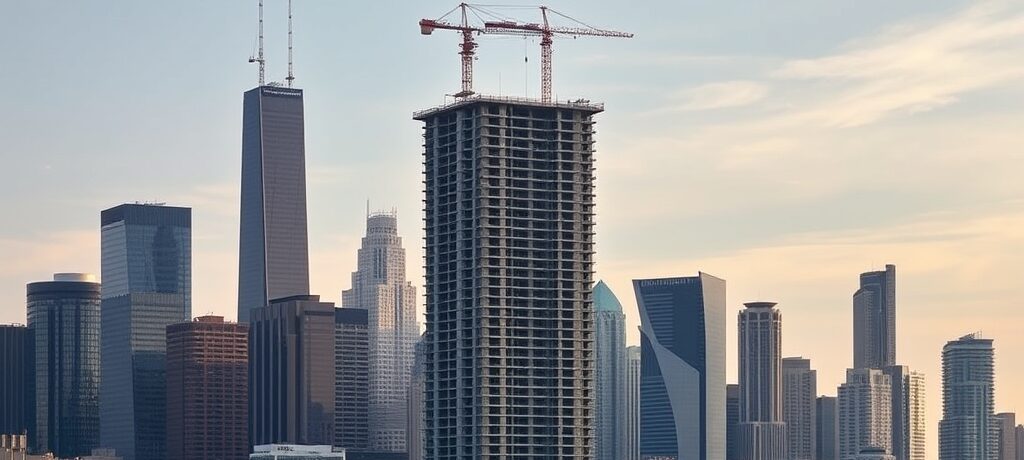
Chicago’s long-held reputation for urban affordability is rapidly diminishing as average monthly rents have climbed sharply, reaching approximately $1,956 by the end of Monday, Bloomberg News reported. This significant increase is primarily driven by a persistent shortage of new housing units and a notable slowdown in construction activity across the metropolitan area.
The erosion of Chicago’s status as a relatively accessible big city is a direct consequence of these market dynamics. A deepening housing deficit, coupled with a reported deceleration in new building projects, has created an imbalance between supply and demand. This prevents the necessary expansion of housing stock that would typically help stabilize or temper rental price growth in a major urban center.
For residents, the ascent to an average of $1,956 per month represents a substantial shift in living costs. This trend underscores a critical challenge for the city’s housing market, where the confluence of limited new supply and sustained demand continues to push rental expenditures higher, impacting affordability and potentially influencing demographic shifts.
The ongoing struggle to expand housing inventory remains a key factor in Chicago’s evolving economic profile, challenging its historical appeal as a more budget-friendly major city.