China’s economy demonstrated unexpected strength in the first three months of the year, registering a 5% increase in Gross Domestic Product (GDP) compared to the same period a year earlier. This figure surpassed economists’ expectations, who had anticipated growth of around 4.8%, even as countries worldwide grapple with the fallout from the US-Israel war with Iran.
The better-than-expected performance comes despite the Middle East conflict, which commenced on February 28, severely disrupting global energy supplies. Asian economies, in particular, have felt a pronounced impact. The latest official GDP release also follows Beijing’s recent adjustment of its annual economic growth target to a range of 4.5%-5%, marking its lowest expansion goal since 1991.
Manufacturing Drives Growth Amidst Global Headwinds
The rebound from a weaker 4.5% expansion in the previous quarter was primarily fueled by robust manufacturing activity. Exports, particularly cars, emerged as a “major bright spot” in the data, according to Kyle Chan, an analyst from the Brookings Institution. However, the world’s second-largest economy continues to face significant domestic challenges, including a persistent slump in property investment, weak consumption, and a shrinking population.
From an international perspective, China is also contending with an energy crunch exacerbated by the Iran war and ongoing global trade tensions. These include the tariff policies implemented by US President Donald Trump, which currently impose a 10% US tariff on most Chinese goods. US Treasury Secretary Scott Bessent indicated on Tuesday that these levies might be restored by early July to pre-Supreme Court levels, which had struck down many import taxes. A meeting between President Trump and Chinese President Xi Jinping is anticipated in China in May.
Iran War’s Complex Impact on Trade and Energy
The full ramifications of the Iran war are yet to unfold, as noted by Kyle Chan, who cautioned that next quarter’s GDP figures are likely to be weaker due to trade disruptions stemming from the conflict. The war has significantly driven up the cost of crude oil and related materials like plastics, largely due to Iran’s threats against vessels attempting to use the critical Strait of Hormuz shipping route.
While China is less dependent on oil from the Gulf region compared to other major Asian economies such as Japan and South Korea, which have been severely affected by the crisis, the impact is still felt domestically. Petrol prices in China have risen, and some Chinese airlines have reduced flights in response to surging jet fuel costs.
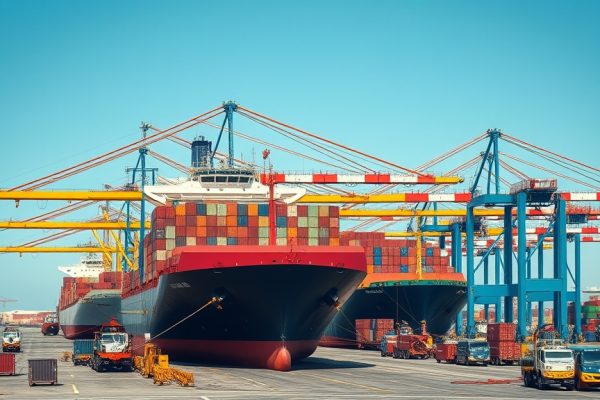
Recent trade data underscores the war’s influence. China published monthly export numbers for March, revealing a sharp slowdown in growth to 2.5% compared to the same period last year. This marks a six-month low and contrasts sharply with the combined exports for January and February, which jumped by over 20% year-on-year, boosted by strong demand for electronics and manufactured goods. The General Administration of Customs combines the first two months’ trade data to account for fluctuations around the Lunar New Year holiday.
March also saw China’s imports surge by nearly 28%, customs data showed. This left China’s monthly trade surplus at just over $50 billion (£36.85bn), its lowest in more than a year. Economics lecturer Yixiao Zhou from the Australian National University attributed the surge in import value to a global rise in costs resulting from the Iran war. Zhou also warned that the conflict could dampen China’s exports if higher prices globally curb consumer spending, stating, “Export growth ultimately depends on your trading partners’ economies. It is hard to sustain that growth at a very high rate continuously.”
Beijing’s Strategic Economic Reshaping
Beijing’s latest Five Year Plan, announced in March, outlined its GDP target and broader economic objectives. The ruling Communist Party is actively working to reshape the country’s economy, pledging substantial investment in innovation, high-tech industries, and initiatives to boost domestic spending. These efforts aim to address long-standing issues such as weak consumption and the prolonged property crisis, while also building resilience against external shocks.
Despite the immediate positive GDP figures, the confluence of global geopolitical tensions, rising energy costs, and existing domestic economic challenges presents a complex landscape for China’s economic trajectory. The coming quarters will be critical in assessing the full extent of the Iran war’s impact and the effectiveness of Beijing’s strategic interventions.