As the demand for electric vehicles and energy storage solutions continues its upward trajectory, understanding the geographical distribution of lithium reserves has become paramount for investors and industry stakeholders. While production figures often capture headlines, the underlying reserves offer a crucial indicator of a nation’s long-term potential in the critical battery metal market. Recent data from the US Geological Survey reveals that global lithium reserves have seen a substantial increase, reaching 37 million metric tons as of 2025, up from 30 million metric tons in 2024, driven by upward revisions across several countries.
Chile Dominates Global Lithium Reserves
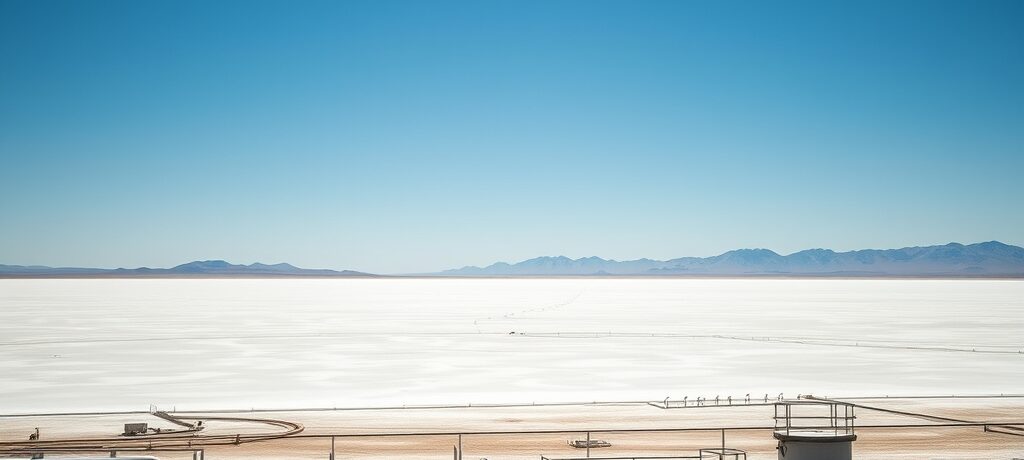
Chile stands at the forefront, boasting the world’s largest lithium reserves at 9.2 million metric tons. This figure represents approximately 25 percent of the global reserve base, with a significant portion concentrated in the Salar de Atacama. As a key member of the ‘Lithium Triangle’ alongside Argentina and Bolivia, Chile was the second-largest producer of lithium in 2025, extracting 56,000 metric tons. Major players like Sociedad Quimica y Minera (SQM) and Albemarle operate within the Salar de Atacama. Despite its vast resources, Chile’s mining concession framework has been cited as a factor limiting its market share. In a move to bolster its economy and environmental protection, Chile’s government announced plans in April 2023 to partially nationalize its lithium industry. State-owned Codelco is set to gain controlling interests in lithium operations in the Salar de Atacama. The country has also been actively awarding contracts for lithium operations, with partnerships involving international firms like Rio Tinto and CleanTech Lithium securing projects.
Australia: A Hard-Rock Powerhouse
Australia ranks second in lithium reserves, holding 8.4 million metric tons, primarily located in Western Australia. Unlike the brine-based deposits found in South America, Australia’s reserves are predominantly in the form of hard-rock spodumene. In 2025, Australia led global lithium production, yielding 92,000 metric tons from numerous operational mines. The Greenbushes lithium mine, a joint venture involving Tianqi Lithium, IGO, and Albemarle, is among the country’s most significant assets, operational since 1985. Emerging research suggests untapped lithium potential in Queensland, New South Wales, and Victoria, indicating a broader scope for future exploration and extraction.
China’s Expanding Reserves and Processing Prowess
China holds substantial lithium reserves amounting to 4.6 million metric tons, comprising a mix of lithium brines, spodumene, and lepidolite hard-rock deposits. The country’s production in 2025 reached 62,000 metric tons, a notable increase from the previous year. China is not only a significant producer but also the world’s largest importer of lithium, with Australia serving as its primary supplier. Its high domestic consumption is driven by its robust electronics manufacturing and electric vehicle industries, coupled with its dominance in global lithium-ion battery production and processing facilities. Recent reports indicate a significant bolstering of China’s lithium ore reserves, with national deposits now claimed to represent 16.5 percent of global resources. This expansion is attributed to discoveries like a 2,800-kilometer lithium belt in its western regions and advancements in extraction technologies from salt lakes and mica.
Argentina and the United States: Emerging Players
Argentina, another member of the Lithium Triangle, ranks fourth with 4.4 million metric tons of lithium reserves. In 2025, it was the fifth-largest lithium producer globally, with 23,000 metric tons. The country hosts numerous lithium operations and mining projects, with key sites including Cauchari-Olaroz and Fénix. Argentina’s ‘Incentive Regime for Large Investments’ (RIGI) is designed to attract substantial foreign investment in its mining sector, with companies like Rio Tinto and Argosy Minerals advancing expansion projects under this framework.
The United States also holds 4.4 million metric tons of lithium reserves, a figure that has seen a considerable increase from 1.8 million metric tons in 2024. While US production figures are not publicly disclosed by the USGS, the country’s primary source is Albemarle’s Silver Peak mine in Nevada, which produced 1,000 metric tons in 2025. The Silver Peak operation includes brine extraction and processing facilities. The Thacker Pass lithium mine in Nevada is currently under construction and is expected to commence production in 2028, with a projected annual output of 40,000 metric tons of lithium carbonate. This project is a joint venture between Lithium Americas and General Motors.
Other Notable Lithium Reserves
Beyond the top five, several other nations possess significant lithium reserves. Canada holds 1.6 million metric tons, Brazil has 540,000 metric tons, and Zimbabwe also features in the list of countries with substantial lithium deposits, underscoring the global distribution of this vital resource and its implications for future supply chains.