The United Arab Emirates’ (UAE) abrupt announcement of its exit from the Organisation of Petroleum Exporting Countries (Opec) marks a seismic shift in global energy politics. This move is particularly significant given the UAE’s long-standing membership, dating back to before its formation as a nation-state in 1971. Opec, for decades, has been the primary architect of crude oil prices through coordinated production adjustments and quota allocations, playing a pivotal role in historical energy crises that reshaped global policy.
Strategic Reorientation and Production Ambitions
While Saudi Arabia remains Opec’s dominant force, the UAE has consistently held the second-highest spare production capacity, positioning it as a crucial ‘swing producer’ capable of influencing market prices by increasing output. However, this very capacity has become a point of contention. The UAE has long sought to leverage its substantial investments in production infrastructure, which Opec quotas, limiting output to 3-3.5 million barrels per day, have constrained. The perceived disproportionate sacrifice in potential revenue due to these limitations has evidently led to a strategic re-evaluation.
The timing of this departure, however, is particularly noteworthy, hinting at broader geopolitical considerations. The escalating tensions in the Gulf, including the ongoing ‘Iran war’ context, have demonstrably impacted the UAE’s relationship with Iran and may further strain its already complex ties with Saudi Arabia. These regional dynamics appear to be a significant catalyst for the UAE’s decision to chart its own course.
Opec’s Coherence Questioned
For Opec, the UAE’s departure represents a substantial blow at a time when the organization’s long-term coherence is already under scrutiny. The UAE’s ambition is clear: to ramp up production to approximately 5 million barrels per day once it can freely access global markets via sea or pipeline. This could trigger a price war initiated by Saudi Arabia, a scenario the UAE’s more diversified economy might withstand, but which could prove devastating for poorer Opec member states. Much will hinge on Saudi Arabia’s response.
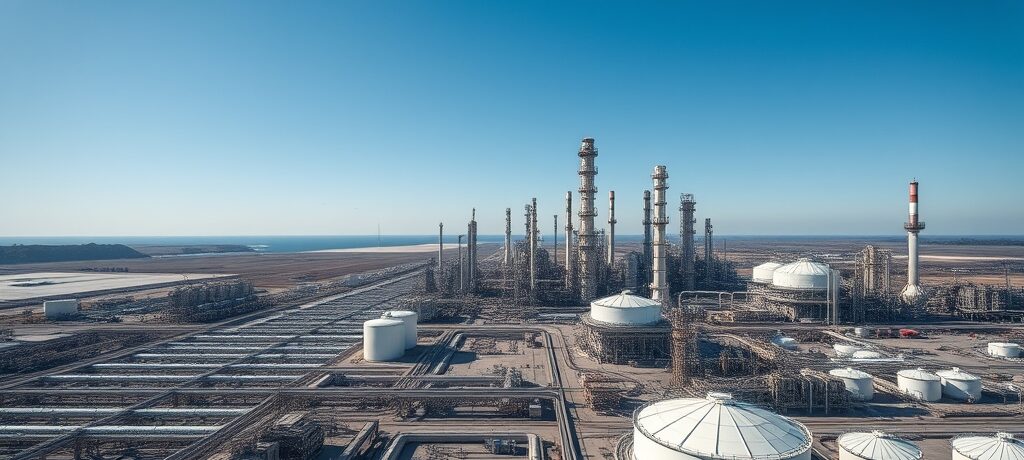
The UAE is actively pursuing new infrastructure to facilitate this increased production. Plans include new pipelines from its Abu Dhabi oil fields designed to bypass the Strait of Hormuz and reach the underutilized port of Fujairah. While a pipeline already exists and is heavily utilized, significant expansion will be necessary to accommodate higher output and to permanently alter the fluidity and cost dynamics of tanker traffic in the Gulf.
Current Blockades vs. Future Implications
Currently, the immediate impact of the UAE’s Opec exit on oil markets is muted. The global focus remains squarely on the double blockade of sea traffic in the Strait of Hormuz, which is driving up prices for oil, gas, petrol, plastics, and food. Analysts note that while oil prices are currently hovering around $110 per barrel, a resolution to the Strait’s disruptions, potentially before the US midterm elections, could see prices fall to closer to $50 next year.
Opec’s overall influence on world oil markets has diminished since its peak in the 1970s. Its share of internationally traded oil has fallen from 85% to approximately 50% today. Furthermore, oil’s criticality to the global economy is less pronounced than in previous decades. As the former Saudi Oil Minister Sheikh Yamani famously stated, ‘The Stone Age did not end because the world ran out of stones. The Oil Age will not end because the world runs out of oil.’ This sentiment underscores the inevitable transition towards alternative energy sources.
A Shift Towards Reduced Oil Reliance
The UAE’s decision can be interpreted as a strategic move in anticipation of this future of reduced oil reliance. Recent developments, such as China’s substantial investments in electrification, have already begun to cushion the economic impact of rising fossil fuel prices. Estimates suggest that China’s electrification of its transport sector has already reduced global oil demand by 1 million barrels per day. This trend, if it accelerates globally, could lead to a plateau in oil demand.
From this perspective, the UAE’s exit may be a strategy to maximize revenue from its oil reserves while demand is still robust, before it inevitably declines. The UAE possesses significant financial reserves and a partially diversified economy, with strengths in financial services and tourism. The ultimate impact of its Opec departure will depend on the evolving ‘new normal’ once regional hostilities subside and on the subsequent actions of key players like Saudi Arabia.
The UAE’s move could indeed trigger further shifts within the oil landscape, placing considerable pressure on Saudi Arabia. Once tankers resume unimpeded passage through the Strait of Hormuz, or if the UAE successfully expands its pipeline infrastructure, Emirati oil will flow to the market unhindered by Opec constraints. While this will have minimal effect on the current blockades, it has the potential to reshape the global energy market for years to come.