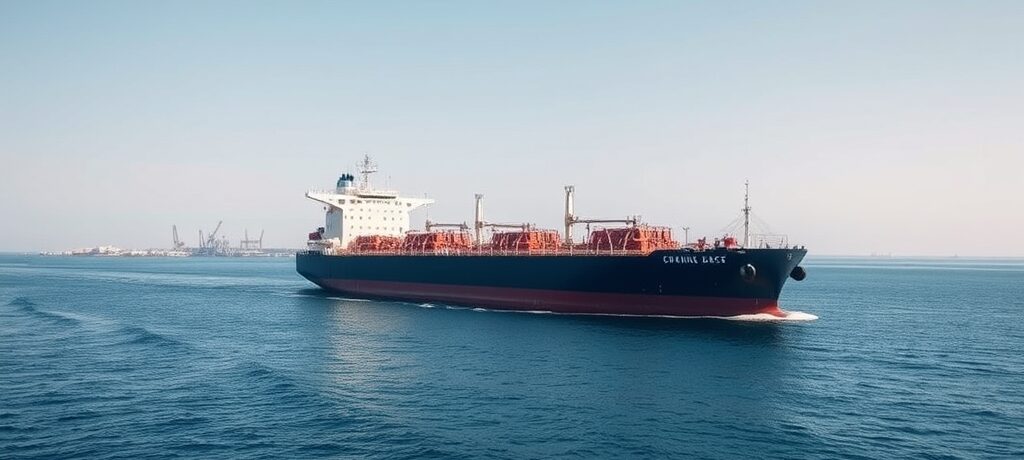
A Malta-flagged tanker, the Odessa, successfully delivered 1 million barrels of crude oil off South Korea’s west coast on Friday, May 8, 2026, weeks after its passage through the geopolitically sensitive Strait of Hormuz in mid-April. This substantial shipment, which a South Korean refinery confirmed represents 35-50% of the nation’s daily crude oil consumption, underscores South Korea’s deep reliance on Middle Eastern energy supplies and the critical, often precarious, role of the Strait in global energy markets.
Crucial Delivery Amidst Market Volatility
The Odessa, a Malta-flagged vessel, reached waters off South Korea’s western port city of Seosan, according to HD Hyundai Oilbank. The tanker is slated to berth at the company’s offshore mooring facility later on Friday to commence the unloading of its crude oil cargo. HD Hyundai Oilbank has outlined plans to refine this crude into essential petroleum products, including gasoline, diesel, and naphtha, leveraging its daily refining capacity of up to 690,000 barrels of crude oil. This delivery is particularly timely given the ongoing volatility in global energy markets.
Geopolitical Pressures and South Korea’s Response
The arrival of this crude shipment occurs against a backdrop of heightened geopolitical tensions, with Iran’s influence over the Strait of Hormuz continuing to exert pressure on the world economy. The prolonged Iran war has been a significant factor in the recent spike in global fuel prices, prompting concerns about a potential energy crisis in South Korea’s trade-dependent economy. In response, the South Korean government has taken unprecedented measures, introducing price caps on gasoline and other petroleum products for the first time in decades to mitigate soaring consumer costs. Additionally, authorities have instructed domestic refiners to divert naphtha exports for internal use, while simultaneously intensifying efforts to secure alternative oil supplies and diversify shipping routes to reduce dependency on the Strait.
The Strait of Hormuz: A Vital Choke Point
The strategic importance of the Strait of Hormuz to South Korea’s energy security cannot be overstated. Data from the previous year indicates that South Korea imported more than 60% of its crude oil and 50% of its naphtha—a key petrochemical feedstock essential for plastics manufacturing—through this critical maritime passage. The Odessa’s journey through the Strait in mid-April notably coincided with a period of ceasefire talks between Iran and the United States, a detail highlighted by HD Hyundai Oilbank, which underscores the complex interplay of energy logistics and international diplomacy in the region.
As South Korea, like many other Asian nations, continues to import a significant portion of its crude oil from the Middle East, the consistent and secure flow of these resources remains paramount for its industrial base and consumer markets. While the successful arrival of the Odessa provides immediate relief, the broader strategic imperative to enhance energy resilience through diversification and secure alternative supply chains will likely persist as a central tenet of the nation’s long-term economic and security planning.