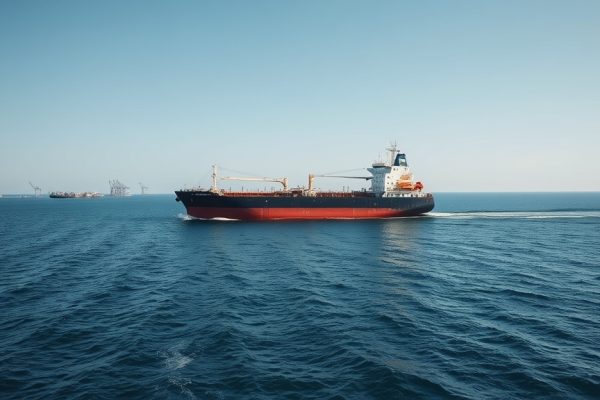
Chevron (NYSE: CVX) CEO Mike Wirth has issued a stark warning: physical oil shortages are starting, a direct consequence of the closure of the Strait of Hormuz. This critical waterway, which historically facilitated 20% of global oil supplies daily, is now reduced to a trickle, unleashing an oil supply shock of epic proportions. The ramifications are profound, not only for global economies facing potential slowdowns but also for Chevron’s stock, which stands to benefit from a prolonged period of elevated energy prices.
The Unfolding Supply Crisis
The global economy is currently consuming oil from stockpiles at an alarming rate, exceeding 10 million barrels per day. This drawdown has led to a significant depletion of global supply, with estimates suggesting a loss of between 500 million and 1 billion barrels since the onset of the conflict that led to the Strait’s closure. This deficit continues to grow daily.
According to an estimate by Goldman Sachs, Persian Gulf oil production has plummeted by 57% since the war began. While some oil is being rerouted through pipelines bypassing the Strait, it is insufficient to offset the massive shortfall. Global oil stockpiles have plunged to an eight-year low, currently standing at approximately 101 days of expected demand. Projections indicate this figure could further decline to 98 days by the end of May if the Strait of Hormuz remains closed. The situation for global refined products, such as gasoline, jet fuel, and diesel, is even more precarious, with stockpiles at around 45 days of demand, down from 50 days before the conflict, and now approaching critically low levels.
It is against this backdrop that Chevron CEO Mike Wirth, speaking at a discussion sponsored by the Milken Institute, stated, ‘We will start to see physical shortages.’ He further elaborated on the inevitable market adjustment, noting that ‘Demand needs to move to meet supply,’ which he believes will likely necessitate that ‘economies are going to have to slow.’
Regional Impacts and Economic Slowdown
Wirth anticipates that these shortages will not impact all regions simultaneously or equally. Asian markets are expected to experience the initial brunt of the crisis, given their substantial reliance on oil and refined products originating from the Persian Gulf. Europe is identified as the next region likely to face significant challenges, particularly concerning jet fuel, as the continent imports 75% of its jet fuel from the Middle East, leading to looming shortages.
The United States, while a net exporter of crude, possesses less direct exposure to Middle Eastern oil imports. However, specific regional markets, such as Southern California, do import some oil from the Middle East, suggesting localized impacts could still occur.
Market Reaction and Chevron’s Financial Outlook
The escalating global oil supply crunch has already triggered a sharp increase in energy prices. Brent crude, the international benchmark, has surged by 75% this year, reaching approximately $110 a barrel. The price of jet fuel has seen an even more dramatic increase, climbing from the $85-$90 a barrel range to between $150 and $200 a barrel.
Typically, such surging prices would immediately translate into a significant boost for integrated energy companies like Chevron, which produces both crude oil and refined products. However, Chevron’s first-quarter earnings saw a slight dip, falling from $3 billion in the fourth quarter to $2.8 billion last quarter, despite rising oil prices and increased production. This anomaly was attributed to unfavorable timing effects totaling $2.9 billion related to the marking of financial derivatives to their current value before the physical delivery of associated hydrocarbons. This timing mismatch is expected to reverse in subsequent periods, providing a future uplift to Chevron’s profits.
Looking ahead, the second quarter is poised to be a robust period for Chevron’s profitability. Brent crude, which averaged $81 in the first quarter, has consistently traded above $90 during the second quarter. Analysts largely concur, expecting crude prices to remain within the $90 to $100 a barrel range for the remainder of the year.
Sustained High Prices and Long-Term Recovery
The consensus within the industry is that the oil market will not recover to pre-crisis levels until 2027. This extended timeline is driven by several factors: the time required to restart wells that were shut down due to the Strait’s closure, which could take months, and the necessity for the global economy to replenish its severely depleted oil stockpiles. These factors suggest that higher oil prices are likely to persist for an extended period.
This sustained high-price environment bodes exceptionally well for Chevron. The company is anticipated to deliver robust earnings in the second quarter and maintain strong profitability throughout the rest of the year and into next. Despite this favorable outlook, shares of the oil giant have seen an increase of only about 22% this year, suggesting that the stock may have considerable upside potential remaining.