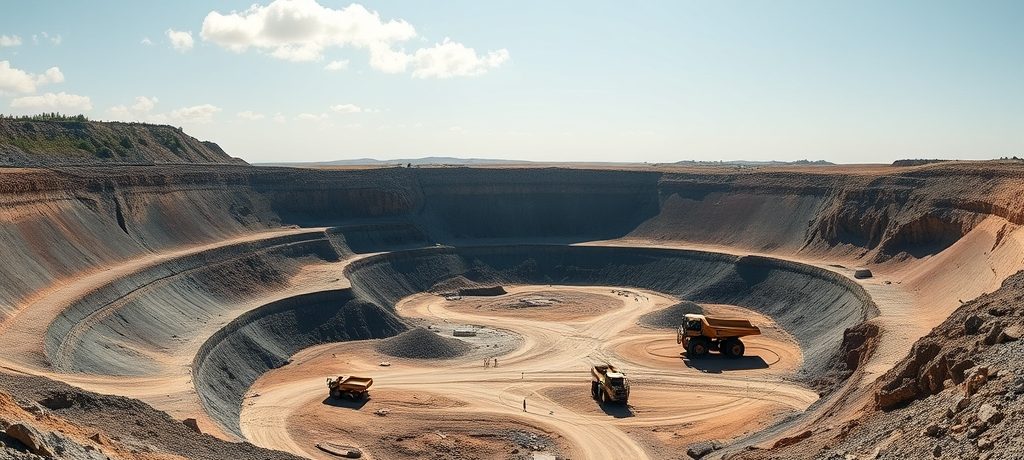
Global phosphate rock production reached 240 million metric tons in 2024, marking a period of growth alongside rising demand, according to the US Geological Survey (USGS). This essential mineral, predominantly used in fertilizers for crops and animal feed supplements, saw world consumption of P2O5 contained in fertilizers climb to an estimated 47.5 million tons in 2024, up from 45.8 million tons in 2023. As agricultural demand continues to expand, particularly in Asia and South America, the landscape of global phosphate supply is shaped by a handful of key producing nations.
The USGS projects a further increase in P2O5 consumption in fertilizers to 51.8 million tons by 2028, underscoring the strategic importance of phosphate rock. While 95 percent of global phosphate production is dedicated to agricultural uses, a smaller but significant 5 percent finds application in areas such as corrosion prevention and detergents. The leading countries in phosphate production are critical players in meeting this growing global demand.
Top Phosphate Producers by Volume
The following list, based on USGS data, highlights the top 10 phosphate-producing nations in 2024:
1. China: A Dominant Force with Policy Shifts
China solidified its position as the world’s leading phosphate producer in 2024, with output increasing to 110 million metric tons (MT) from 105 million MT in 2023. The nation also holds the second-largest phosphate reserves globally, estimated at 3.7 billion MT, and is the fourth-largest producer of potash. Despite an environmental crackdown on its mining industry, China’s output rose. The country has also implemented restrictions on phosphate exports, including halting new export applications in December 2024 due to rising sulfur costs, aiming to manage domestic fertilizer prices.
2. Morocco: The World’s Reserve Powerhouse
Morocco maintained its status as the second-largest producer, despite a slight dip in output to 30 million MT in 2024 from 33 million MT the previous year. Crucially, Morocco possesses the world’s largest phosphate reserves, an astounding 50 billion MT, accounting for over 67 percent of total global reserves. Production is primarily managed by the state-owned OCP Group, with operations like the Gantour mine. The nation anticipates increased output in the coming years, with capacity expansions expected to conclude by 2027.
3. United States: Domestic Production and Export Dynamics
The United States saw a modest increase in its phosphate mining production, reaching 20 million MT in 2024, up by 400,000 MT from the prior year. The country’s 10 active phosphate mines are spread across Florida, North Carolina, Idaho, and Utah. Major industry players include Mosaic (NYSE:MOS) and Nutrien (TSX:NTR). Mosaic’s Florida operations alone, encompassing the Four Corners, South Fort Meade, and Wingate mines, produced 8,900 MT of phosphate rock concentrate in 2024. Most US-mined phosphate rock is processed into phosphoric acid and superphosphoric acid for animal feed supplements, with approximately a quarter of these wet-process products being exported.
4. Russia: Adapting to Geopolitical Shifts
Russia’s phosphate production in 2024 stood at 14 million MT, a decrease of 1 million MT from the previous year, while its reserves total 2.4 billion MT. The country is also a significant potash producer, ranking second globally. Key operations include PhosAgro subsidiary Apatit’s Khibiny deposit and Acron Group’s North-Western Phosphorous Company (Oleniy Ruchey mine). While the conflict in Ukraine initially impacted phosphate prices and European exports, Russia successfully diversified its customer base, increasing shipments to countries like India and Brazil.
5. Jordan: A Key Exporter in the Middle East
Jordan produced 12 million MT of phosphate in 2024, a slight increase from the previous year, with reserves estimated at 1 billion MT. The state-owned Jordan Phosphate Mines Company is the sole producer, positioning itself as the second-largest phosphate exporter and sixth-largest producer globally, boasting an annual combined production capacity exceeding 11 million MT across its three mines.
6. Saudi Arabia: Expanding Industrial Footprint
Saudi Arabia’s phosphate output in 2024 was 9.5 million MT, a decrease of 400,000 MT from 2023, with reserves of 1 billion MT. The Saudi Arabian Mining Company (Ma’aden) is a major player, capable of producing up to 5 million MT of concentrated phosphate rock annually. The Wa’ad Al Shamal Minerals Industrial City, an integrated phosphate fertilizer production complex, represents a significant US$8 billion joint venture. In January 2025, Mosaic sold its 25 percent stake in this venture for US$1.5 billion in Ma’aden shares, increasing Ma’aden’s interest to 85 percent.
7. Brazil: Meeting Domestic Agricultural Demand
Brazil produced 5.3 million MT of phosphate in 2024, maintaining levels similar to the previous year. With 1.6 billion MT in reserves, Brazil is a major global fertilizer consumer and importer, driven by its booming agricultural sector. Additional phosphate production capacity is anticipated to come online by 2027. Mosaic is Brazil’s largest producer of both phosphate and nitrogen, and operates the country’s sole potash mine. In April 2024, Swedish fertilizer company Eurochem launched a new US$1 billion phosphate fertilizer production facility in Minas Gerais, adding 1 million MT of annual advanced phosphate fertilizer capacity.
8. Egypt: Harnessing Significant Reserves
Egypt’s phosphate mining production in 2024 matched 2023 levels at 5 million MT. The country holds substantial reserves, now estimated at 2.8 billion MT by the USGS. Misr Phosphate operates key mines such as Abu Tartour, Sibaiya, and Red Sea, known for their high-grade phosphate deposits.
9. Peru: A Crucial Supplier to the US Market
Peru’s phosphate production in 2024 was 4.7 million MT, a decrease of 300,000 MT from the prior year. The nation’s reserves stand at 210 million MT. Peru is a vital source for the US, accounting for approximately 98 percent of US phosphate imports. A significant investment of US$940 million was committed in mid-2024 by Peru’s investment agency ProInversión for the expansion of Fosfatos del Pacífico’s Bayóvar mine, aiming to bolster domestic production for the next decade.
10. Tunisia: Rising Production in North Africa
Tunisia’s phosphate output in 2024 totaled 3.3 million MT, down from 3.6 million MT in the previous year. Despite this, Tunisia possesses the fourth-highest phosphate reserves globally, at 2.5 billion MT. The state-owned Gafsa Phosphate Company has been actively increasing its production, supported by a US$76 million investment program in 2023, signaling its growing prominence among global phosphate producers.
The consistent demand for phosphate, driven by the global agricultural sector, ensures its continued strategic importance. As countries like China manage domestic supply through export controls and nations like Morocco and Brazil invest in capacity expansion, the dynamics of phosphate production will remain a critical factor for global food security and industrial applications.