TOKYO — Japan’s economy demonstrated resilience, expanding at an annualized rate of 2.1% in the January-March quarter, according to government figures released Tuesday. This growth marks the second consecutive quarter of expansion, indicating a strengthening economic picture despite headwinds from rising energy prices exacerbated by the conflict in Iran.
Robust Growth Driven by Domestic Demand
The nation’s real gross domestic product (GDP), a measure of the total value of goods and services produced, saw a seasonally adjusted increase of 0.5% from the previous quarter. The annualized figure projects this quarterly rate over a full year. This performance surpassed expectations, with increased spending by both consumers and businesses serving as key contributors to the positive results. Government expenditure also provided a supportive boost to the expansion.
Private consumption, a critical component of the Japanese economy, rose by 0.3% quarter-on-quarter, translating to an annualized rate of 1.1%. Public demand also contributed positively, increasing by 0.3% from the prior quarter. This follows a contraction in the July-September period of last year, with a modest 0.2% on-quarter growth recorded in October-December.
Navigating Energy Price Shocks
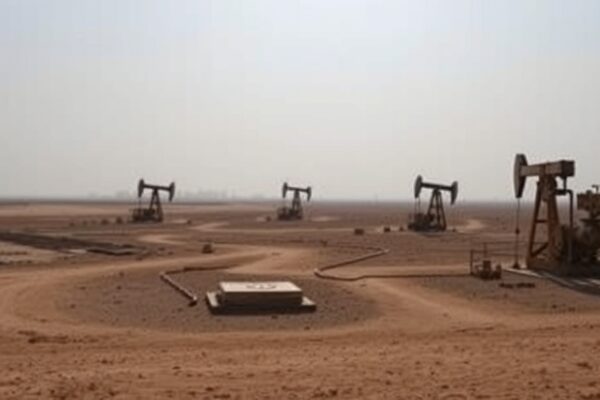
A significant challenge for Japan, a nation with limited natural resources, is the sharp increase in oil prices. Brent crude, which traded around $70 a barrel before the recent conflict, has surged to nearly $110 a barrel. The disruption to the Strait of Hormuz, a crucial oil transport route from the Persian Gulf to Asia, has been a primary driver of this price escalation. In response, Japan has initiated the release of some oil reserves and is actively exploring alternative supply routes.
The preliminary data also indicated that Japan’s overall imports grew by 0.5% during the quarter, while exports saw a more substantial increase of 1.7%. A specific concern that has garnered attention is the shortage of naphtha, an oil-derived product essential for manufacturing a wide range of goods, from bathtubs to plastics. Prime Minister Sanae Takaichi has publicly committed to ensuring ample supplies of this critical commodity to sustain economic momentum.
Analyst Outlook and Inflationary Pressures
Analysts at the Japan Center for Economic Research have projected moderate growth for Japan in the near future, citing anticipated increases in spending on artificial intelligence technology and defense as potential drivers. Naomi Fink, Chief Global Strategist at Amova Asset Management, commented on the breadth of demand, suggesting it points to a high-quality growth pattern that may provide further evidence of broadening inflation.
The rise in energy costs is contributing to upward price pressures. The stronger growth observed in the first quarter could influence the Bank of Japan’s monetary policy decisions, potentially leading to an increase in interest rates as the central bank moves away from its prolonged period of near-zero or negative rates. While Japan’s inflation rate remains lower than that of the United States, wage growth has lagged behind rising prices for workers.
In market reactions, Tokyo’s benchmark Nikkei 225 index experienced a slight decline of 0.6% in Tuesday morning trading, following a period of trading at record highs.