The home improvement retail sector is undergoing a significant structural shift, moving away from its traditional retail model and even its historical reliance on housing cycles and consumer spending. Both The Home Depot and Lowe’s are increasingly positioning themselves not just as suppliers of goods, but as integral infrastructure platforms for the burgeoning contractor economy. This evolution was a central theme in their recent first quarter 2026 earnings calls.
Contractors Emerge as the Strategic Core
For years, investors evaluated Home Depot and Lowe’s based on factors like housing market fluctuations and consumer discretionary spending. However, the narrative has changed. The focus has decisively shifted to the professional contractor, with the weekend DIY enthusiast taking a backseat in strategic importance. This pivot is driven by the attractive economics of the business-to-business (B2B) home improvement market. Professional contractors typically generate larger transaction values, exhibit higher purchase frequency, and maintain demand even during periods of weaker consumer spending.
Home Depot, in its first quarter 2026 earnings announcement on May 19, emphasized its commitment to industrial scale and contractor dominance. The company highlighted the Pro market opportunity at approximately $700 billion, with broader specialty distribution expanding its total addressable market to nearly $1.2 trillion. Home Depot is actively transforming into a hybrid retail-distribution platform, integrating branch networks, field sales teams, dedicated delivery fleets, and specialized contractor relationships. Recent acquisitions, such as the purchase of HVAC distributor Mingledorff’s and earlier expansions into SRS Distribution and other specialty businesses, underscore this strategy.
Lowe’s, reporting its first quarter 2026 results on May 20, detailed a strategy centered on operational modernization and customer ecosystem expansion. The company is pursuing a similar path through acquisitions like FBM and ADG, while simultaneously investing in “Pro Extended Aisle” capabilities. These initiatives aim to provide contractors with access to a wider product assortment without necessitating increased in-store inventory. The emphasis for contractors is increasingly on fulfillment speed, workflow integration, inventory reliability, and delivery precision, rather than solely on price advantages.
Fulfillment as the New Competitive Frontier
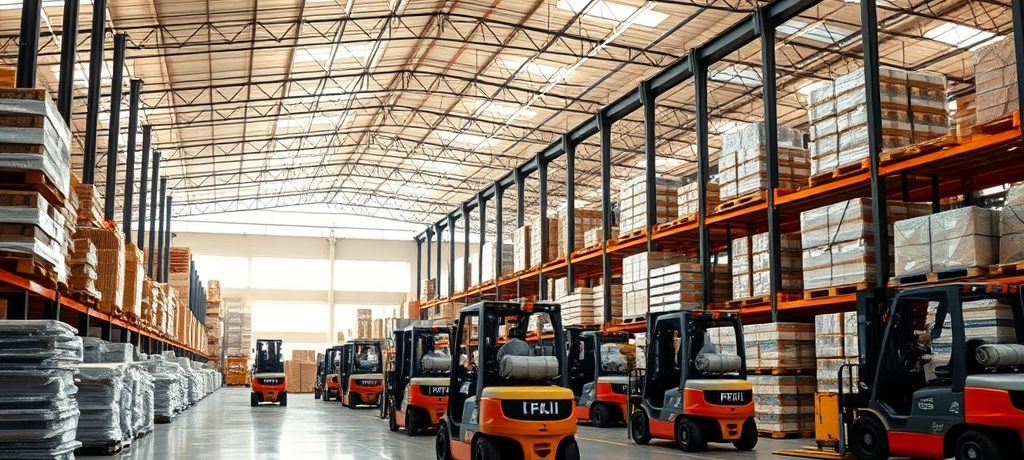
The traditional advantage in home improvement retail was often defined by location density. Today, the competitive edge is increasingly found in fulfillment orchestration. Both retailers stressed the importance of delivery speed, inventory optimization, and interconnected fulfillment capabilities during their earnings discussions. Home Depot showcased its proprietary “ship from best location” system, which dynamically routes orders based on inventory availability, desired speed, and proximity. The company’s infrastructure is substantial, comprising a combined network of over 2,360 stores, more than 1,300 branches, 16,000 delivery assets, and over 5,000 salespeople.
This evolution in infrastructure creates significant barriers to entry for competitors. While regional players might match pricing on specific product categories, replicating the integrated delivery networks, branch infrastructure, sophisticated inventory systems, and AI-enabled routing capabilities requires immense capital investment. Lowe’s is actively working to close the structural moat that Home Depot has cultivated over decades with its Pro customers. The company highlighted improvements in same-day delivery and upgrades to its omnichannel fulfillment infrastructure.
AI Integration and Workflow Tools
Artificial intelligence (AI) is playing a pivotal role in this transformation. Lowe’s showcased AI-powered quoting tools designed to convert various input formats—from handwritten notes and PDFs to spreadsheets and photos—into contractor-ready quotes within minutes. Internally, Lowe’s employees have utilized its AI-enabled Mylow Companion system for millions of queries, leading to measurable productivity gains in software development and operations. Camille Fratanduono, Lowe’s senior vice president of inventory replenishment and planning, noted in a recent interview with PYMNTS that AI is significantly impacting demand forecasting and inventory optimization by processing a greater number of variables than traditional methods. This enhanced precision in inventory positioning improves stock availability for high-demand items while reducing excess inventory.
Despite these strategic shifts and investments, investor sentiment remains focused on the broader economic outlook. When questioned about consumer demand, Home Depot described the environment as “no collapse. No rebound. Just steady, sluggish demand.” Lowe’s characterized the economic situation as a “K-shaped economy,” with cautious lower-income consumers contrasting with resilient higher-income homeowners, deeming the environment difficult but stable.
The clear takeaway from these earnings calls is that both Home Depot and Lowe’s are strategically pivoting, investing heavily in technology and logistics to become indispensable partners for professional contractors. This transformation into sophisticated software and distribution platforms signifies a fundamental reshaping of the home improvement retail sector.