In a week where much of the political discourse has been dominated by expected announcements, Chancellor Rachel Reeves delivered a notable surprise: a cut in Value Added Tax (VAT) on summer attractions. Branded by the government as the ‘Great British Summer Savings,’ this measure, alongside other cost-of-living initiatives, aims to demonstrate that ministers understand the financial pressures faced by millions of families.
A ‘Rabbit Out of the Hat’ Moment
While many elements of Ms. Reeves’ statement had been trailed in advance, including an extension of the fuel duty freeze and plans for jet fuel supply, the reduction in VAT for certain summer attractions was not leaked. This unexpected move, lowering the VAT rate from 20% to 5% for the next couple of months, was presented as a key element of the government’s strategy to provide tangible relief during the holiday period.
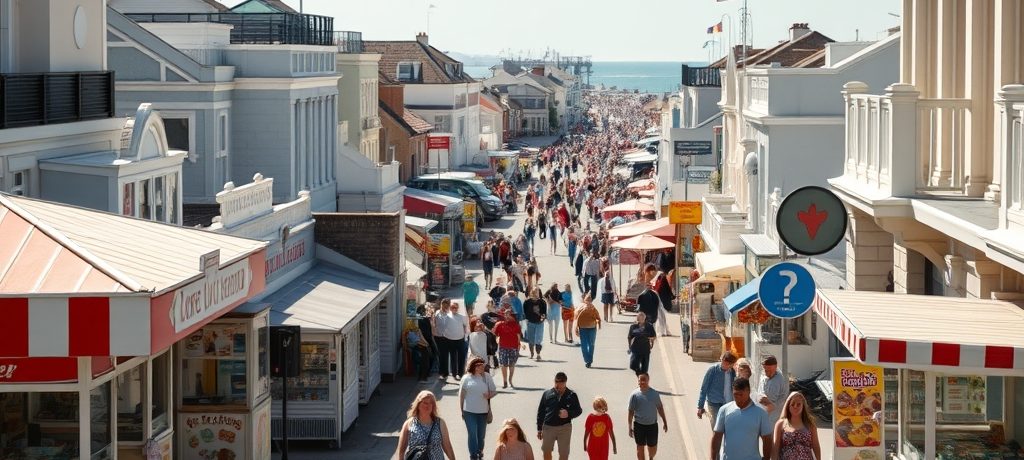
The specific attractions that will benefit from this temporary VAT cut are expected to include theme parks and potentially children’s meals, according to reports. This aims to make leisure activities more affordable for families looking to entertain children during school holidays.
Focus on Summer, Contingency for Winter
Notably absent from the announcements was a significant intervention to address energy bills. The government’s rationale for this approach is that the current focus is on the summer months, when energy consumption is typically lower. Instead, significant effort is being directed towards contingency planning for the winter, a period anticipated to bring renewed pressure on household budgets.
Ministers have expressed a strong conviction that repeating the broad, universal support packages seen under previous Conservative governments, such as Liz Truss’s energy bill cap, would be financially unsustainable and irresponsible given the impact on public finances. One government figure described such a broad approach as a ‘massive untargeted bung’ that would ‘cost people in different ways.’
Targeted Winter Support Expected
Consequently, any future support for the winter is expected to be highly targeted. However, the specifics of who will receive this support and the level of assistance remain unknown. A prevailing sentiment within government circles is one of uncertainty regarding the future economic landscape, encapsulated by the phrase ‘Who knows where we will be in October.’ This imponderable extends beyond international factors, such as the stability of global fuel supplies, to domestic political considerations, including the potential for a change in the Chancellor of the Exchequer.
The Evolving Role of Government Intervention
The recent package of measures also prompts a broader reflection on the role and scope of government intervention in the economy. Some analysts have questioned the actual impact of certain elements of the ‘Great British Summer Savings’ package when measured against the scale of the cost-of-living crisis. This sentiment may stem from a collective recalibration of expectations regarding state intervention, shaped by the unprecedented economic shocks of recent years, such as the furlough scheme during the pandemic.
While the appropriateness of such large-scale interventions is debated, their implementation may have fostered a societal expectation of significant government action during times of economic distress. This can lead to more modest interventions appearing less impactful by comparison. Ministers are navigating this complex terrain, balancing the need to address immediate cost-of-living pressures with the long-term fiscal consequences of past and potential future support measures.
The government’s strategy appears to be a phased approach, offering immediate, albeit targeted, relief for the summer while preparing for more substantial, but carefully considered, interventions for the winter. The success of this strategy will ultimately be judged by its effectiveness in alleviating financial hardship for families across the country.