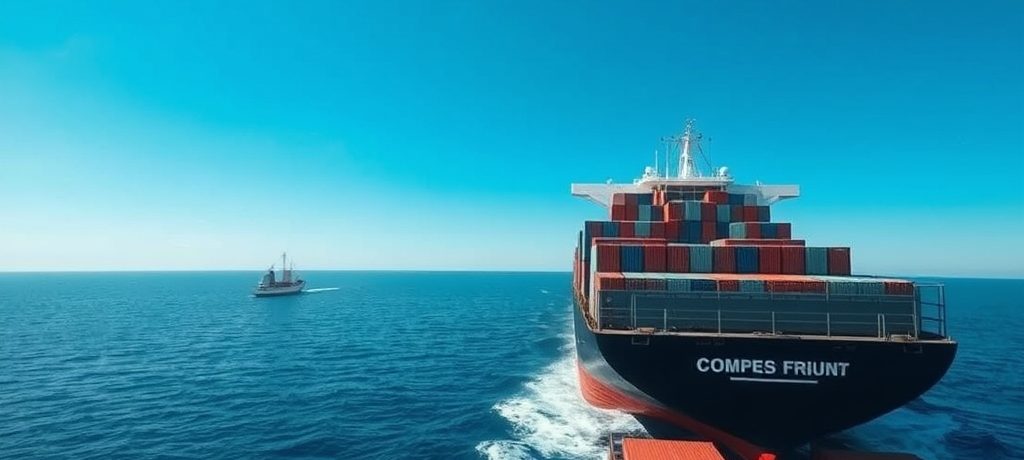
Global shipping routes are facing a renewed and costly threat as Somali piracy stages a significant comeback, driven by geopolitical shifts forcing vessels into dangerous waters. The confluence of Middle East conflicts, particularly Houthi attacks in the Red Sea, has compelled major shipping firms to reroute around southern Africa, inadvertently guiding them past Somalia’s extensive coastline—a region notorious for pirate activity that peaked in 2011.
Rerouting Escalates Risk and Costs
The strategic decision to bypass the Red Sea and Suez Canal, initially adopted by around half of vessels bound for Europe from Asia and the Gulf, stems from the escalating threat of attacks around the Bab el-Mandeb Strait. This narrow chokepoint, situated between the Red Sea and the Gulf of Aden, has become a flashpoint due to earlier strikes by Iran-backed Houthis and recent escalations involving the United States, Israel, and Iran. The alternative route around southern Africa, while avoiding immediate conflict zones, adds a substantial two to three weeks and thousands of nautical miles to each journey. This extended transit time not only inflates fuel costs by approximately a million dollars per voyage but also exposes ships to the very waters where Somali pirates previously operated with impunity.
Piracy’s Troubling Return
The maritime industry is now witnessing a troubling return of piracy with a vengeance. In the past three weeks alone, three ships—the Honour 25 and Eureka oil tankers, and the cargo ship Sward—have been hijacked off Somalia and nearby Yemen, all remaining under pirate control as of May 8, 2026. Experts attribute this resurgence to organized crime groups in Somalia capitalizing on the distraction provided by the Iran war. Tim Walker, a senior researcher for transnational threats and organized crime at South Africa’s Institute for Security Studies, notes that international naval patrols, initially deployed in 2008 to counter pirates, have been ‘stretched thin by current events around Hormuz and the Red Sea.’ This perceived reduction in deterrents along Somalia’s 3,300-kilometer (2,050-mile) coastline, the longest in continental Africa, has emboldened pirate kingpins. Walker stated, ‘Some groups, organized by … piracy kingpins, are now looking to seize vessels and hold them for ransom, along with the crew on board — sometimes demanding a high ransom for their safe return.’
Sophisticated Operations, Stretched Defenses
Maritime data company Lloyd’s List Intelligence identifies at least two active pirate groups, primarily based in Puntland, a semi-autonomous region in northeastern Somalia. These groups appear to be well-resourced, utilizing large traditional vessels known as dhows as ‘mother ships.’ These repurposed fishing and trade vessels allow pirates to extend their operational range, remaining at sea for weeks before launching attacks on commercial shipping. Troels Burchall Henningsen, assistant professor at Denmark’s Institute for Strategy and War Studies, explained that ‘Some of the latest hijackings involved large dhows, which need navigation kits, weapons and boarding equipment.’ He added, ‘It’s a large operation which requires investment.’ The European Union’s Operation Atalanta and the multinational Combined Task Force 151 maintain a presence in the western Indian Ocean, but their mandate is not escort-based, and they are responsible for patrolling vast areas, making comprehensive coverage challenging. Walker also highlighted that ‘There are a lot more ships in the area and some aren’t adopting the best security measures,’ citing a tanker hijacked close to the Somali coast where it was most vulnerable.
Economic Fallout for Global Trade
The re-emergence of Somali piracy threatens to compound already escalating shipping costs. Middle East conflicts have already driven up insurance premiums and freight rates significantly. Shipping industry leaders warn that a major resurgence in piracy could push these costs even higher, further disrupting global supply chains. The economic damage from the previous piracy crisis, which peaked in 2011, was estimated at approximately $7 billion (€5.98 billion) annually, according to the Sasakawa Peace Foundation, a Japanese think tank. This figure encompassed military operations, rerouting expenses, increased fuel consumption from faster travel, additional security equipment, and onboard guards. Ransoms, though a direct cost, constituted only a tiny proportion of this total, nearly $160 million.
Policy Shifts and Mitigation Strategies
Beyond the immediate distraction of the Iran war, a shift in Washington’s policy towards East Africa may have inadvertently contributed to the piracy resurgence. For years, the U.S. funded development projects in Somali coastal communities to alleviate poverty and deter young men from joining pirate groups. However, under the current Trump administration, nearly all non-security development aid has been suspended, with Washington focusing instead on direct counter-terrorism operations against the Islamist militant group al-Shabab. Burchall Henningsen lamented that ‘When you reduce those resources, the intelligence network and maritime patrols don’t have the same capability to work from.’
In response, maritime organizations are advising shipping firms to avoid Somali territorial waters, including ports. The deployment of armed guards onboard vessels is also highly recommended as a proven deterrent. Burchall Henningsen underscored this effectiveness, stating, ‘There has never been a successful hijacking of a ship [off Somalia] with armed guards on board.’
The return of Somali piracy represents a complex challenge, intertwining geopolitical instability, economic pressures, and regional development policies. As global supply chains grapple with unprecedented disruptions, the financial implications of this renewed threat are substantial, demanding a multifaceted response to safeguard international trade and mitigate further cost escalations for consumers worldwide.