Norway is confronting a paradox: while successive governments have long pledged to pivot its economy away from fossil fuels, recent global energy supply shocks are actively diminishing incentives to do so. The nation, a critical producer for Western Europe, finds its economic diversification efforts increasingly challenged as higher fuel prices, exacerbated by conflicts in the Middle East, solidify its role as a hydrocarbon powerhouse.
Reinforced Reliance on Hydrocarbons
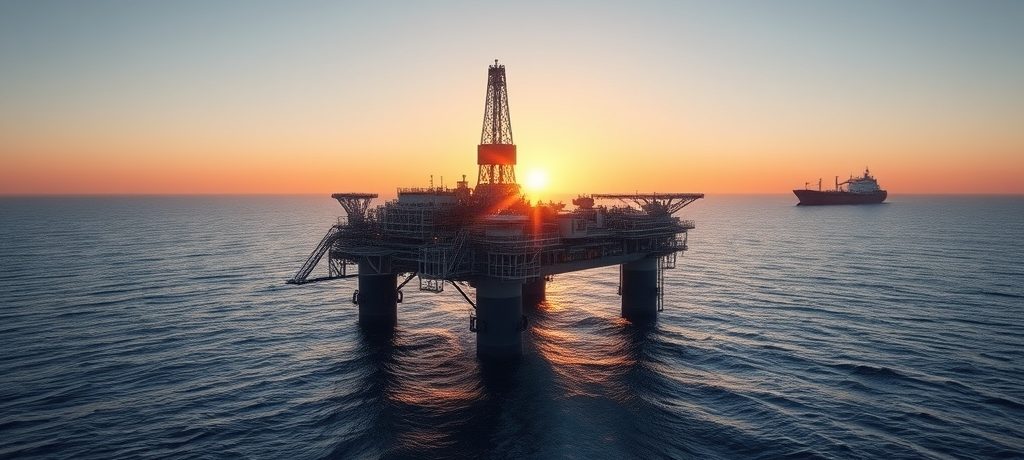
Just a few years after a significant boost to its fossil fuel exports following Ukraine war-related sanctions against Russia, demand for Norway’s resources is set to persist. The ongoing conflict in the Middle East has again heightened security of supply worries, making Norway’s oil and gas output even more crucial. Despite a decline in combined oil and gas shipment volume from its 2004 peak, petroleum remains the dominant export sector. Recent data indicates that oil and gas are projected to make up 57% of Norway’s goods sold abroad in 2025, with monthly crude sales revenue reaching a record after the outbreak of the Iran war.
While Norway has demonstrated relative success in reducing domestic carbon emissions through pioneering electric-vehicle adoption and carbon capture initiatives, its role as a major fossil fuel exporter exposes it to claims of war profiteering. This external demand for its resources, driven by geopolitical instability, creates a powerful disincentive for the nation to accelerate its economic transition.
Decades of Pledges, Lagging Results
For more than a decade, experts have highlighted economic diversification as a priority for Norway to crisis-proof its economy for a future when its vast oil and gas reserves eventually deplete. Governments across the political spectrum have consistently pledged to reduce this dependence since Norway first discovered oil in 1969. However, despite these long-standing commitments, the nation has struggled to foster a broad basis of industries to underpin its economy.
Norway has been more prudent than most other resource-rich nations, notably by investing its substantial fossil fuel revenue into its $2.3 trillion sovereign wealth fund. Yet, this financial strength has not translated into a robustly diversified economic structure. Oil and gas continue to provide more than a fifth of Norway’s total gross domestic product, with services accounting for most of the remainder, dominated by health, education, and public administration. The fishing and aquaculture industry, while a strong contributor to exports, represents only around 3% of GDP.
Declining Diversity and Economic Complexity
Recent analysis underscores Norway’s lagging performance in economic diversity compared to its Nordic peers. An index of economic complexity, developed by the Growth Lab at Harvard University, reveals that Norway’s gap with the rest of the Nordics has widened significantly since the early 2000s. This measure helps explain disparities in wealth development across countries, suggesting Norway’s reliance on a narrow economic base could pose long-term challenges.
Furthermore, increasing global trade protectionism and the krone’s recent strengthening to multi-year highs are likely to exacerbate the difficulties associated with export diversification. These external economic pressures add another layer of complexity to Norway’s efforts to build new competitive industries beyond its traditional strengths.
Green Ambitions Stumble
Efforts to cultivate new, sustainable industries have faced considerable headwinds. Initiatives in areas such as wind power, green hydrogen, and battery production have encountered various difficulties in recent years. A notable setback occurred earlier this month when Morrow Batteries ASA, a company manufacturing cells for energy-storage installations, filed for bankruptcy. This event marked the latest battery venture in Europe to fail, following the much-publicized demise of the Swedish group Northvolt AB last year.
These struggles in emerging green sectors highlight the significant challenges Norway faces in translating its wealth and environmental ambitions into a diversified, future-proof economy. As global energy markets remain volatile and demand for its primary exports stays robust, the immediate incentives to accelerate this transition appear to be diminishing, leaving Norway in a precarious position regarding its long-term economic structure.