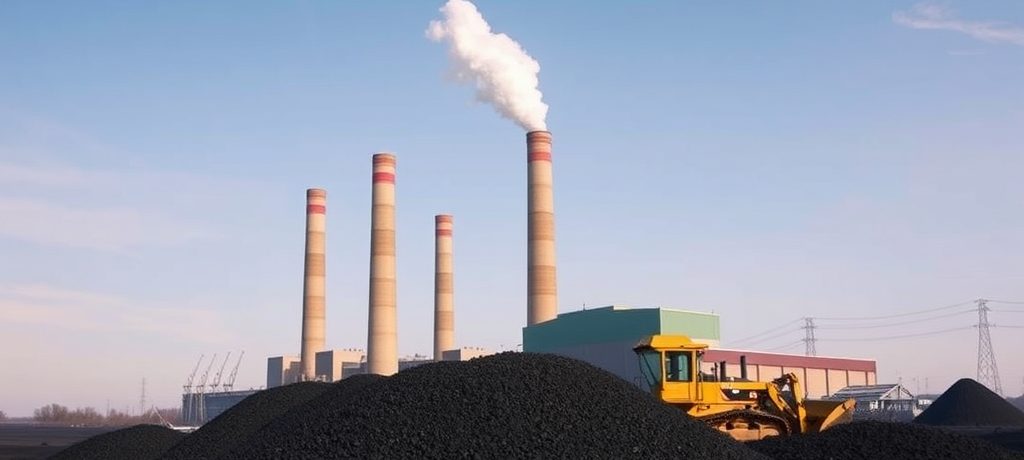
President Donald Trump is preparing to deploy Cold War-era authorities to channel hundreds of millions of federal dollars into supporting coal-fired electricity generation and expanding U.S. fossil fuel exports. The initiative, framed as a $700 million plan, underscores the administration’s continued commitment to the domestic coal industry.
Federal Funding Allocations Detailed
The core of Trump’s planned initiative involves specific allocations totaling $685 million. This includes a significant distribution of $425 million in Defense Production Act (DPA) funds directed towards 13 existing coal plants. Additionally, $185 million in separate Energy Department grants are earmarked to facilitate the construction of two new coal plants, one in Alaska and another in West Virginia. A further $75 million, also under the Defense Production Act, is designated for the proposed West Gateway export terminal in Oakland, California.
This Oakland terminal is projected to open a new pathway for shipping potentially 12 million tons of coal annually from states including Wyoming and Montana, extending beyond the traditional western U.S. markets. The announcement is anticipated during an Oval Office event on Thursday, where the president’s public schedule notes a 3 p.m. announcement focused on “Beautiful, Clean Coal.” Lawmakers and governors from coal-rich states, such as Wyoming and West Virginia, have been invited to the White House session.
Beneficiaries and Strategic Objectives
Key beneficiaries of this planned federal funding are set to include the long-planned Oakland Bulk and Oversized Terminal in California. Utilities such as Duke Energy Corp., Hallador Energy Co., Oklahoma Gas & Electric Co., and at least one subsidiary of American Electric Power Company Inc. are also slated to receive support. This move represents the latest in a series of efforts by the Trump administration to revitalize the fortunes of U.S.-mined coal and coal-generated electricity.
During his tenure, President Trump has consistently championed an “American energy dominance agenda.” This strategy is rooted in the increased production, utilization, and export of the nation’s extensive oil, gas, and coal reserves. The current funding plan aligns directly with this broader objective, aiming to strengthen domestic energy infrastructure while simultaneously expanding international market access for U.S. fossil fuels.
Prior Administration Actions to Bolster Coal
This initiative builds upon previous actions undertaken by the Trump administration to support the coal sector. The U.S. Energy Department, under Trump, has issued emergency orders directing coal plants to continue operations beyond their planned closing dates. These directives were justified by arguments that the sustained operations were essential for buttressing the reliability of the nation’s electric grid. Such interventions highlight a consistent policy stance prioritizing coal’s role in the national energy mix.
Furthermore, the Interior Department has taken steps to open more federal land for coal leasing in states like North Dakota, Montana, and Wyoming. In a related move, President Trump directed Defense Secretary Pete Hegseth to enter into agreements for the purchase of electricity from coal plants to power military operations. These actions collectively demonstrate a multi-pronged approach to reversing the decline of the coal industry, leveraging various governmental authorities and departments.
Environmental Concerns and Opposition
The administration’s continued support for fossil fuels, particularly coal, has drawn sharp criticism from environmental groups. These organizations argue that the U.S. is misallocating taxpayer dollars to prolong its reliance on energy sources that generate planet-warming pollution and exacerbate climate change. They advocate instead for investment in emission-free alternatives, which they contend are more cost-effective and environmentally responsible.
Conservationists, in particular, have actively opposed plans for an export terminal in California for nearly two decades. Their concerns center on the argument that such a facility would sustain global demand for fossil fuels, thereby contributing to climate change. Locally, they also raise alarms about potential pollution in communities adjacent to the terminal, citing the risk of coal dust filtering off uncovered rail cars that would supply the site. This planned federal funding for the West Gateway terminal is expected to intensify these long-standing environmental and community debates.
The proposed allocation of federal funds, utilizing Cold War-era legislation, marks a significant and contentious step in the Trump administration’s energy policy. It underscores a clear intent to prioritize the domestic coal industry and expand its global reach, setting the stage for renewed debate over energy independence, economic development, and environmental stewardship.