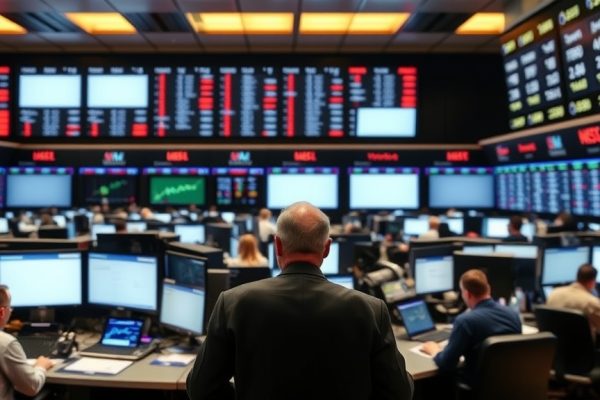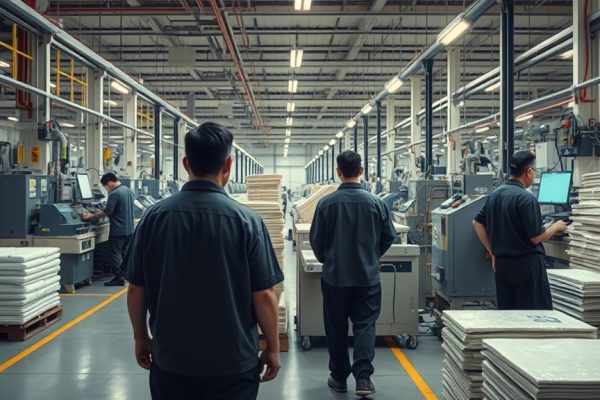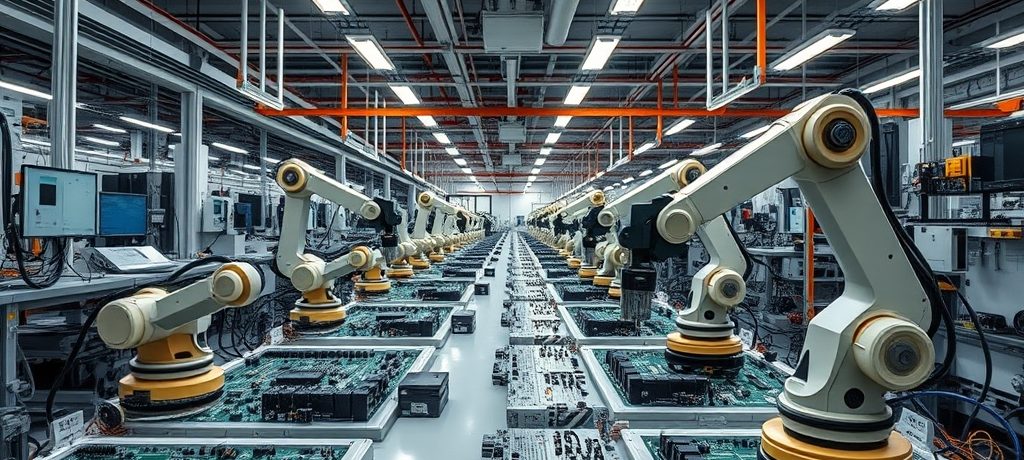
Global merchandise trade demonstrated unexpected resilience in the first half of the year, with robust investment in artificial intelligence (AI) related electronic components largely offsetting significant geopolitical headwinds, according to the World Trade Organization (WTO). In a Friday (June 5) press release, the WTO announced that its latest Goods Trade Barometer, an indicator of global trade momentum, registered an overall figure of 101.7. This value, while slightly down from January’s 102.3, remains above the baseline of 100, signifying above-trend trade volumes.
The organization specifically highlighted the surging demand for electronic components as a pivotal factor in this sustained performance. The barometer’s reading for electronic components stood at an impressive 105.5, significantly outpacing other categories and underscoring AI’s critical role in bolstering global commerce. This strong showing for AI-related hardware helped to mitigate the adverse effects stemming from the conflict in the Middle East and persistently high energy prices.
The Goods Trade Barometer assesses six key categories of goods trade, with values exceeding 100 indicating above-trend volumes. Electronic components, at 105.5, emerged as the strongest performer. Other categories also showed varying degrees of resilience: container shipping registered 102.4, air freight stood at 102.2, and export orders reached 100.5. However, not all sectors maintained above-trend growth, with automotive products recording 99.8 and raw materials at 98.9, both falling just below the baseline. Despite these mixed performances, the WTO’s release concluded that, ‘On balance, the indices show signs of resilience, signaling relatively stable global merchandise trade growth.’
The WTO explicitly attributed the overall positive trend to AI-driven demand. The press release stated, ‘The negative impact of the Middle East conflict may have been partly offset by surging demand for electronic components related to AI investment.’ This sentiment was echoed on social platform X, where the WTO posted on June 5, 2026, that ‘Goods trade holding up despite Middle East conflict and high energy prices,’ further emphasizing the counterbalancing effect of AI-related economic activity against global instability.
This recent assessment builds upon earlier analyses by the WTO that have consistently underscored AI’s growing influence on world trade. In October of the previous year (implied 2025), the organization released findings indicating that AI-related goods accounted for nearly half, specifically 43%, of the overall growth in world merchandise trade during the first half of 2025. This was a disproportionate contribution, considering that these products constituted only 15% of global imports and exports during the same period, as detailed in its Global Trade Outlook and Statistics report.
Furthermore, the October report highlighted a significant geographical shift in the momentum for AI-related trade. The WTO observed that this expansion was increasingly moving beyond the United States, with Asian suppliers and emerging markets playing a more prominent role in the supply chain. This shift suggests a broader, more distributed global engagement in the AI economy. The WTO commented at the time, ‘This reinforces the view that the expansion of AI-related trade is not entirely driven by recent trade policy developments but represents a broader structural wave of investment in digital infrastructure.’ This perspective frames AI investment not merely as a cyclical trend but as a fundamental, long-term transformation of global economic structures.
Looking further ahead, the WTO’s 2025 World Trade Report, published in September of the previous year, projected AI’s profound transformative potential for global trade by 2040. The report suggested that, with the implementation of appropriate policies, AI could lead to an increase in the value of cross-border flows of goods and services by nearly 40%. This substantial growth is anticipated to be driven by significant productivity gains across various sectors and a reduction in overall trade costs, fundamentally reshaping international commerce.
The latest Goods Trade Barometer findings from the WTO reinforce AI’s immediate and critical role as a stabilizer in a volatile global economic landscape. By sustaining demand for essential electronic components, AI investment has provided a crucial buffer against geopolitical and energy-related headwinds, ensuring that global merchandise trade continues to operate above its long-term trend. This ongoing momentum, coupled with the projected long-term transformative impact, positions AI as a central pillar for both current trade resilience and future economic expansion.