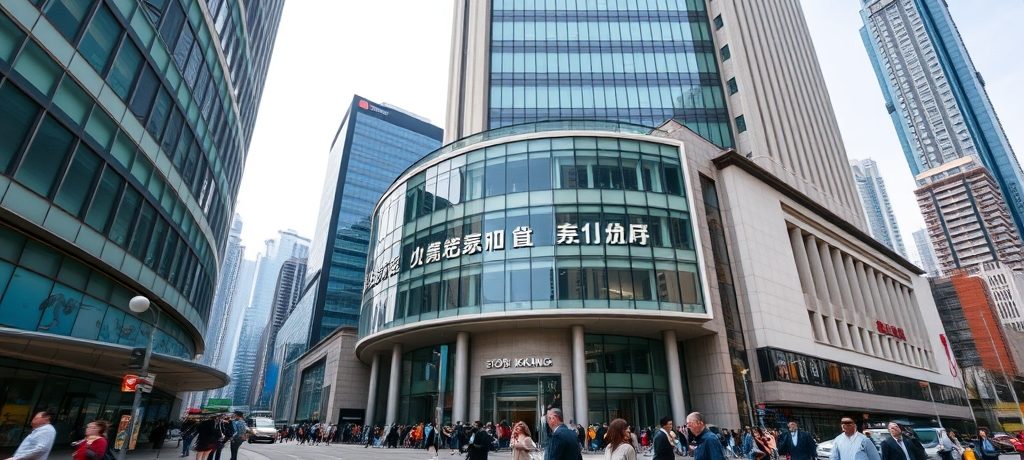
Hong Kong’s equity market is bracing for a challenging start to the trading week, with shares tipped to open ‘under water’ on Monday, June 10, 2026. The Hang Seng Index has already endured a significant downturn, shedding almost 1,000 points, or 4.3 percent, over three consecutive sessions of declines. Currently positioned just above the 24,960-point plateau, the market faces a broadly negative global forecast, with particular pressure anticipated among technology companies.
Hang Seng’s Recent Performance and Monday’s Outlook
The recent market performance in Hong Kong reflects a sustained bearish trend. The Hang Seng Index’s substantial drop of nearly 1,000 points over three sessions highlights a period of significant investor apprehension. This downward trajectory culminated in a sharp decline on Friday, as the index skidded 192.45 points, or 1.15 percent, to close at 24,961.85. Throughout Friday’s trading, the index fluctuated between a low of 24,928.14 and a high of 25,216.18, ultimately settling near its session lows.
The bleak outlook for Monday is largely influenced by the performance of major international markets. Both European and U.S. markets concluded the past week in negative territory, setting a precedent that Asian bourses are widely expected to follow. Analysts anticipate heavy pressure across the board, particularly impacting technology firms, which have been a focal point of recent market volatility.
Sectoral and Individual Stock Movements on Friday
Friday’s session saw broad-based weakness across key sectors in Hong Kong. Financials, properties, and technology stocks were predominantly in the red, contributing significantly to the Hang Seng’s decline. Several prominent companies experienced notable losses:
- Semiconductor Manufacturing plummeted 7.18 percent.
- AIA plunged 3.52 percent.
- Baidu cratered 3.46 percent.
- HSBC crashed 3.14 percent.
- NetEase tanked 2.33 percent.
- Sun Hung Kai Properties surrendered 2.26 percent.
- Xiaomi Corporation tumbled 2.04 percent.
- CNOOC stumbled 1.78 percent.
- CITIC declined 1.45 percent.
- China Petroleum & Chemical weakened 1.38 percent.
- Tencent Holdings slumped 1.26 percent.
- Hong Kong Exchange skidded 1.10 percent.
- China Shenhua Energy sank 1.03 percent.
- Zijin Mining dropped 1.08 percent.
- Alibaba Group shed 0.89 percent.
While the overall sentiment was negative, a few companies managed to post gains, demonstrating pockets of resilience:
- China Construction Bank jumped 1.99 percent.
- Meituan rallied 1.72 percent.
- Industrial and Commercial Bank of China vaulted 1.64 percent.
- Bank of China climbed 1.14 percent.
- China Merchants Bank collected 1.18 percent.
- WuXi AppTec gained 0.81 percent.
- JD.com added 0.70 percent.
- China Mobile rose 0.21 percent.
BOC Hong Kong, China Life Insurance, and PetroChina concluded the day unchanged, according to market data.
Brutal Lead from Wall Street
The ‘brutal’ performance of Wall Street on Friday is a significant factor contributing to the negative sentiment expected in Asia. Major U.S. indices opened lower and accelerated deeper into the red throughout the day, ultimately closing at session lows:
- The Dow plunged 695.15 points, or 1.35 percent, to finish at 50,866.78.
- The NASDAQ cratered 1,121.53 points, or 4.18 percent, to close at 25,709.43.
- The S&P 500 tumbled 200.57 points, or 2.64 percent, to end at 7,383.74.
For the entire week, U.S. markets also registered substantial losses, with the NASDAQ plummeting 4.7 percent, the S&P 500 diving 2.9 percent, and the Dow dipping 0.3 percent. The sell-off on Wall Street was primarily driven by persistent pressure on technology stocks, fueled by concerns over their valuations. Additionally, profit-taking contributed to the substantial weakness, following a period of recent strength that had lifted markets to record closing highs. A sharp increase in treasury yields, spurred by stronger-than-expected U.S. jobs data, further weighed on investor sentiment.
Commodity Market Movements
Beyond equities, the crude oil market also experienced a downturn on Friday. West Texas Intermediate (WTI) crude for July delivery was down $2.97, or 2.97 percent, settling at $90.07 per barrel. This decline was attributed to optimism surrounding the potential reopening of the Strait of Hormuz in the coming days, which could ease supply concerns.
As Hong Kong prepares for the trading week, the confluence of sustained local market weakness, a negative global outlook, and significant declines in major U.S. indices suggests a challenging environment. Investors will be closely watching for any signs of stabilization amidst the prevailing concerns over technology valuations and broader economic indicators.