U.S. retail sales advanced a better-than-expected 0.9% in May, signaling a rebound in consumer activity driven by improving weather conditions and a moderation in gasoline prices. This latest Commerce Department data, released Wednesday, follows a revised 0.4% gain in April, indicating a sustained, albeit cautious, willingness among consumers to spend.
The increase in May’s retail figures was broadly supported across several categories. Online sales saw a robust 1.5% rise, reflecting continued digital engagement. Home furnishing and furniture stores experienced a 1% boost in business, while clothing and accessories stores recorded a 0.3% increase. However, not all sectors shared in the growth, with electronics and appliance stores registering a 0.5% decline. Excluding sales at gas stations, retail sales in May climbed 0.7%, suggesting underlying strength beyond fuel purchases. The data provides a snapshot of spending on goods, notably excluding services such as travel and hotel stays, though the lone services category tracked—restaurants—saw a 0.1% decline.
Consumers remain the primary engine of the American economy, historically driving the majority of the nation’s economic growth. Their spending has demonstrated resilience throughout the year, even in the face of persistent inflationary pressures and a somewhat lackluster hiring environment. Government tax refunds provided a significant cushion for spending in both April and May, though economists note that this financial support is beginning to wane. Last week, U.S. data revealed that rising gas prices had pushed inflation to its highest level in three years, with consumer prices increasing 4.2% in May compared to the previous year.
A key factor influencing May’s retail performance was the easing of gasoline prices. According to motor club AAA, the national average for a gallon of gasoline fell about a penny overnight to $4.02, marking an 11% decrease from $4.51 a month prior. The national average had not been below $4 since March. This moderation in fuel costs comes amidst a tentative deal to end the Iran war and reopen the Strait of Hormuz, a development that could eventually ease the global supply crunch that has contributed to price spikes. Despite this encouraging news, industry leaders remain cautious. Steve Lamar, CEO of the American Apparel & Footwear Association, stated, “While the deal is encouraging, our industry is still holding its breath. Our question now is, will this agreement be strong enough for our global industry to begin recovering?”
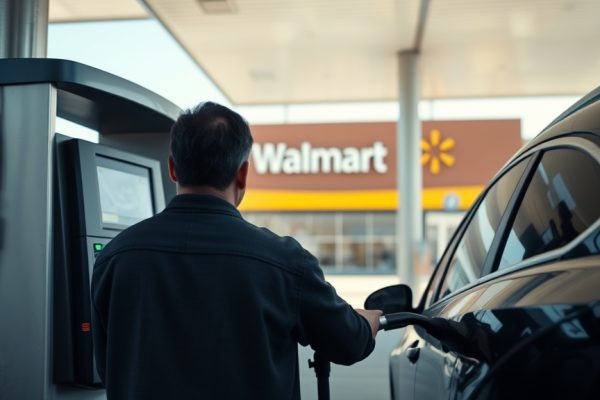
The volatility in gas prices this year, largely attributed to the Iran war, may also be instigating shifts in long-term consumer behavior. Analysts suggest that even as fuel costs decrease, some shoppers might retain habits adopted during periods of soaring prices, such as seeking discounts by filling up at big box stores. R.J. Hottovy, head of analytical research at Placer.ai, which tracks people’s movements via cellphone usage, observed that visits to gas stations operated by large chains like BJ’s, Costco, and Sam’s Club—which offer member discounts—began to accelerate in early March, coinciding with the sharp rise in fuel prices.
The May retail sales figures offer a nuanced view of consumer health, highlighting the immediate positive impact of external factors like weather and fuel costs, while also pointing to underlying economic currents such as inflation and evolving spending habits. As the effect of government refunds diminishes and geopolitical factors continue to influence commodity prices, the trajectory of consumer spending will be closely watched for its sustained resilience and adaptability.