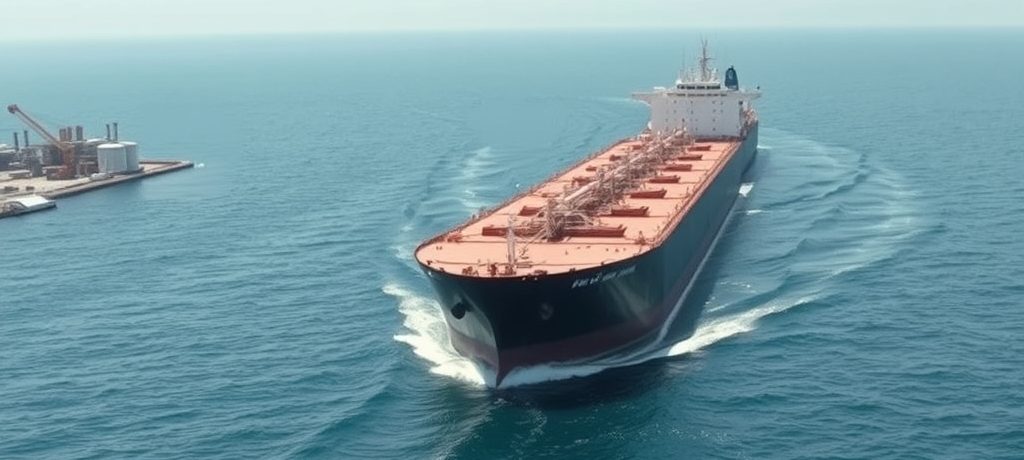
As the Iran war approaches its 100-day mark, a widespread but potentially flawed assumption has taken root among policymakers, businesses, and investors: that a rapid reopening of the Strait of Hormuz would swiftly reduce energy prices. However, top oil executives, shipping sector leaders, and economists are predicting a far more protracted recovery, cautioning that peace will not instantly normalize energy markets or global supply chains. The fallout, they contend, could persist for many more months and even years.
Amin Nasser, CEO of Saudi Aramco, the Gulf’s largest oil supplier, informed investors last month that even an immediate reopening of Hormuz would “take months for the market to rebalance.” He further warned that if the closure were sustained for just a few more weeks, “normalization will last into 2027.” Currently, traffic through the critical waterway between Iran and Oman remains at a fraction of normal levels, despite a fragile ceasefire and ongoing peace talks that have encountered repeated setbacks. Oil prices continue to hover roughly 30% above pre-war levels, contributing to significantly elevated costs for gasoline, diesel, and fertilizer. These additional expenses are fueling global inflation, disrupting supply chains, and driving up food prices worldwide as natural gas-derived fertilizer becomes more expensive for farmers.
Hormuz Reopening Faces ‘Stop-Start’ Reality
Even once a peace deal is formally reached, the process of restoring full shipping confidence in the Gulf region is expected to be gradual. Experts suggest that shipping firms will require an observation period of 30 to 45 days before committing crews to the area. Furthermore, robust security arrangements, including international navy patrols, will be essential to guard against any sporadic attacks on vessels. Shipowners and crews remain deeply cautious, a sentiment underscored by Chevron CEO Mike Wirth, who told Bloomberg on May 29 that strikes on shipping in Hormuz have continued, with multiple vessels hit in a single week. Wirth predicted that reopening Hormuz would likely be a “stop and start” process.
Neil Crosby, head of research at market intelligence firm Sparta Commodities, emphasized the psychological barrier, telling DW, “It only takes one attack on a ship to put the vast majority of them off.” He added that many shipping firms have already replaced Gulf revenues with other voyages, questioning, “why bother taking the risk?” Lloyd’s of London, the world’s leading marine insurance market, has observed war-risk premiums for Hormuz transits surge dramatically and remain elevated, even following the ceasefire that took effect on April 8. Once the Strait is deemed safe, the numerous tankers currently stranded inside the Gulf will need to exit safely, while fresh vessels from distant ports—some halfway around the world—will embark to load new cargoes. Crosby warned that this entire process “might take eight weeks, perhaps longer, depending on how long each step takes.”
War-Damaged Infrastructure Requires Years of Repairs
Beyond the logistical challenges of the Strait, extensive physical damage to Gulf energy infrastructure presents another significant hurdle. Dozens of oil fields, pipelines, refineries, and liquefied natural gas (LNG) plants have sustained hits. Repair costs were estimated in April to be between $25 billion and $58 billion, according to consulting firm Rystad Energy. Qatar’s giant Ras Laffan complex has been particularly hard-hit, with Iranian strikes reportedly knocking out 17% of the country’s LNG capacity. Qatari officials have cautioned that full repairs at the complex could take three to five years to complete.
LNG producers also face the prospect of spending years untangling complex contractual disputes over missed deliveries. Lawyers speaking to S&P Global Energy Platts, a leading energy and commodity price benchmark provider, indicated that backlogs could affect cargo schedules well into 2027. This includes contested “force majeure” claims, legal declarations asserting that the war rendered promised LNG deliveries impossible. Other energy facilities, offline since March, face weeks or months of work due to the necessity of thorough safety checks, complications arising from prolonged production halts, and the already existing shortage of replacement parts before the conflict began. Sites that have been offline have accumulated pressure, debris, and potential corrosion, demanding meticulous inspections and careful restarts to prevent accidents.
Global Buffers Dwindle, Threatening Deeper Crunch
The energy crunch is poised to worsen as global supply buffers run dry. Neil Crosby highlighted an “inventory problem” that could emerge by the summer. Since the war’s onset, other parts of the global oil market have provided temporary relief. The United States has ramped up oil production to record volumes, while China has cut its crude imports by 3.5 million barrels per day, relying more heavily on its strategic reserves. Members of the International Energy Agency (IEA) have also drawn from their oil reserves to mitigate supply shortages.
However, these measures are unsustainable. US oil stocks are projected to reach dangerously low levels in the coming months, and China will soon need to resume imports, intensifying competition for limited global supplies. Fatih Birol, head of the IEA, warned last month that while a pre-war oil surplus helped absorb the initial shock, the oil market could enter a “red zone” in July or August due to depleting stocks. Crosby underscored the implications, telling DW, “Once they [oil stocks] start to run dry, the only solution is higher prices because only with higher prices can you start to really destroy demand.” He hinted at prices potentially doubling, a trajectory that would inevitably lead to a global recession.