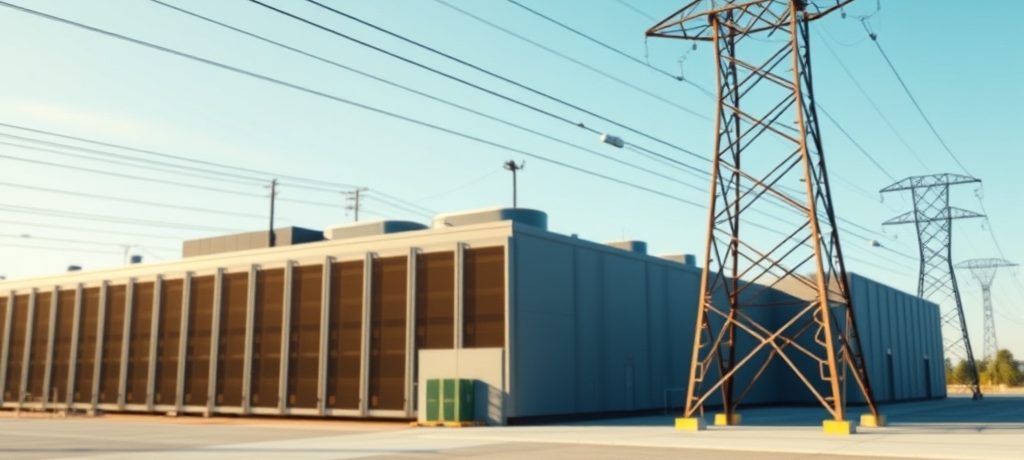
The artificial intelligence revolution, while promising unprecedented technological advancement, faces a critical bottleneck: a burgeoning demand for power. Wall Street, recognizing this fundamental challenge, is now channeling billions into companies poised to deliver energy infrastructure and clean technology solutions, even as some of these innovations remain in nascent stages of development. This aggressive investment strategy underscores a high-stakes race to capitalize on the foundational requirements of the AI boom.
The Growing Energy Appetite of AI
The scale of the impending energy demand is stark. According to BloombergNEF estimates, data centers across the United States are projected to require more than 77 gigawatts of capacity by 2030, a substantial increase from the 41 gigawatts estimated for 2025. This nearly doubling of energy needs in just five years is fueling an unprecedented surge in public market interest for energy-related firms.
IPO Boom and Early Market Successes
Indeed, the initial public offering (IPO) market has significantly heated up in this sector. So far in 2026, at least 10 power infrastructure and clean technology companies have successfully gone public, collectively raising upwards of $11.6 billion. This figure represents the most on record for the sector, highlighting the intense investor appetite. Among the notable debuts is geothermal firm Fervo Energy Co., which saw its shares soar by 35% on its first day of trading in May, following a $1.89 billion raise from eager investors. This occurred despite its geothermal technology not yet having reached commercial scale, illustrating the market’s willingness to bet on future potential. As Fervo’s chief financial officer, David Ulrey, noted, new technologies ‘don’t have access to the same capitalization tools’ as established firms, making public markets crucial for their growth.
Hyperscale Drivers and Inherent Risks
However, this enthusiasm is tempered by considerable risks. The wild swings observed in SpaceX stock following the historic debut of Elon Musk’s aerospace and AI conglomerate serve as a potent reminder of the perils investors face when making high-risk, high-reward bets in the clean energy space. Jeff Osborne, a managing director at TD Cowen, succinctly captured this dynamic, stating, ‘You’ll have likely some winners and roadkill along the way.’
The impetus for this investment rush is significantly driven by cash-rich technology giants. Firms such as Meta Platforms Inc., Amazon.com Inc., and Microsoft Corp., with their substantial capital and demonstrated willingness to tolerate risk and underwrite innovation, are actively juicing the rush to list. Jefferies analyst Julien Dumoulin-Smith emphasized this point, remarking, ‘There’s going to be more of it, and it’s going to be led and enabled by the hyperscale community.’ He further characterized this trend as ‘the culmination of years of grinding work to commercialize technologies and find offtakers,’ indicating a maturing landscape for these specialized energy solutions.
Broader Infrastructure and Political Tailwinds
Beyond clean energy, the demand extends to traditional power infrastructure suppliers. Forgent Power Solutions Inc., a manufacturer of electrical equipment and systems specifically designed for data centers, has seen its stock more than double since its February IPO. Similarly, Madison Air Solutions Corp., which provides liquid, hybrid, and air cooling products essential for data centers, made headlines by raising $2.23 billion in April. This marked the biggest US listing of an industrial firm in close to three decades, underscoring the critical importance of robust cooling solutions for energy-intensive AI operations.
A supportive political environment is also playing a role. The White House, under President Donald Trump, has been particularly vocal in promoting nuclear power plants as a key energy source for data centers. Even renewable technologies that have faced historical criticism from the administration, such as wind and solar, are now capable of exciting markets if they promise to reliably supply the burgeoning energy needs of AI data centers. This broad-based political and market support creates a fertile ground for diverse energy solutions.
The excitement has not only facilitated new listings but also enabled newly public companies to return to the market for additional capital. Forgent Power Solutions, for instance, has listed two more equity offerings for approximately $3 billion since its February IPO. Even industry stalwarts are seizing the opportunity to raise more cash; Constellation Energy Corp., the largest nuclear operator in the US, offered shares worth about $3.1 billion in June. This continuous flow of capital into both emerging and established energy providers highlights the profound and urgent need to power the next generation of artificial intelligence, transforming the energy sector into a crucial frontier for investment and innovation.