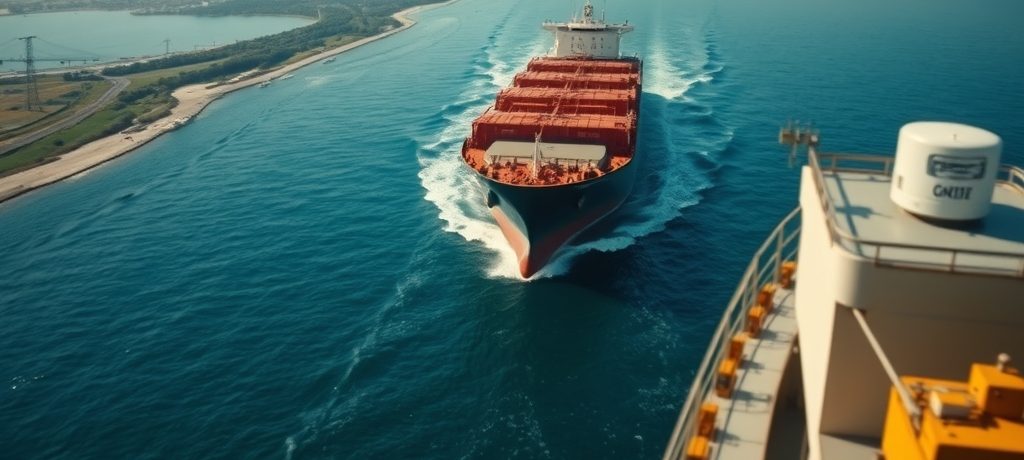
Crude oil prices experienced a significant surge on Monday, partially recovering from losses incurred during Friday’s session, as escalating tensions between the United States and Iran severely impacted shipping operations through the vital Strait of Hormuz. The strategic waterway witnessed a notable drop in vessel traffic, driven by heightened safety threats following a series of mutual attacks between the two nations over the weekend. West Texas Intermediate (WTI) Crude Oil for August month delivery was last observed trading up by $1.36, marking a 1.96% increase, to reach $70.59 per barrel, reflecting immediate market concerns over potential supply disruptions.
Escalating Tensions and Market Impact
The recent uptick in hostilities marks a concerning regression, especially given a prior Memorandum of Understanding (MoU) signed between the U.S. and Iran on January 17. This agreement aimed to halt mutual attacks for a 60-day period, paving the way for the immediate reopening of the Strait of Hormuz, which had been closed since the U.S.-Iran conflict erupted on February 28. The initial resumption of shipping traffic post-MoU had eased supply-related anxieties, leading to a decline in crude oil prices. However, the fragile peace was shattered by a series of incidents that have once again brought the critical chokepoint into focus.
Contested Control of a Vital Chokepoint
At the heart of the renewed instability lies a fundamental disagreement over the management and accessibility of the Strait of Hormuz. Iran continues to assert its authority, demanding that all ships, irrespective of whether they traverse Omanian or Iranian territorial waters, coordinate with Iran’s Islamic Revolutionary Guards Corps (IRGC) and adhere strictly to Iran-prescribed routes. Failure to comply, according to Iranian directives, could endanger vessel safety. Conversely, the U.S. administration steadfastly maintains that the Strait of Hormuz remains a free international waterway, accessible to all ships. The U.S. aims to assure stability in global oil and energy prices by keeping the strait open, while Iran seeks to maximize its leverage by bringing the passage under its total control.
Recent Maritime Incidents
The weekend’s surge in oil prices was directly precipitated by a series of alarming maritime incidents. On Thursday, a Singapore-flagged commercial tanker, the ‘Ever Loverly’, was struck by an unknown projectile while navigating Omanian waters. Although no casualties were reported, the incident was severe enough to prompt the suspension of a United Nations-led initiative for the safe evacuation of seafarers. Iran claimed the vessel was passing through an unauthorized route, a contention sharply refuted by U.S. President Donald Trump, who condemned the strike as a ‘foolish act of ceasefire violation.’ The escalation continued into Friday, with U.S. Central Command launching strikes against missile and coastal radar positions. In direct retaliation, Iran’s IRGC targeted U.S. military positions in Bahrain. The situation further deteriorated on Saturday when the Panama-flagged tanker ‘Kiku’, carrying 2 million barrels of crude oil, was struck and damaged by another unidentified projectile, again without reported casualties. In response to what it termed Iran’s aggression against commercial shipping, the U.S. military subsequently targeted Iran’s surveillance infrastructure, communication systems, air defense sites, drone storage facilities, and mine-layer mechanisms. Iranian media reported explosions near Tahrui village in southern Iran, close to the port of Sirik, following these U.S. actions.
Military Responses and Diplomatic Maneuvers
The immediate aftermath of these incidents saw a significant reduction in maritime traffic. Data from maritime intelligence firm Kpler, which monitors ships with active transponders, revealed a stark decline: while 29 commodity vessels crossed the strait on Saturday, only 12 transited on Sunday. This quantifiable drop underscores the tangible impact of the heightened security risks. Amidst the military exchanges, diplomatic channels remained fraught with tension. President Trump issued a stern warning to Iran via Truth Social, urging compliance with their previous understanding and cautioning that failure could lead to ‘intense fighting’ and the ‘destruction of Iran.’ Trump also announced that Iran had requested a meeting, slated to take place in Doha, Qatar, the following day. However, Iran promptly denied any schedule of immediate technical negotiations. Despite these public contradictions, media reports, citing U.S. officials, indicated that both the U.S. and Iran had agreed to ‘stand down’ ahead of a planned next round of talks scheduled for later in the week.
The renewed confrontations have injected considerable uncertainty into global energy markets, highlighting the precarious balance in a region critical for international oil supply. As leaders from both nations concluded the first round of preliminary discussions in Switzerland on Monday, hailing the talks as productive, the immediate future of the Strait of Hormuz remains contingent on de-escalation. Experts are closely monitoring whether the U.S. and Iran can achieve a consensus during the current 60-day negotiation window, working towards a permanent settlement that would ensure the unimpeded flow of crude oil and stabilize energy prices worldwide.