Global oil markets are poised for their fourth consecutive weekly loss, despite crude prices holding steady on Friday. This downward trend is largely attributed to a significant easing of concerns regarding potential supply disruptions in the Middle East, according to market observations.
Market Performance and Drivers
On Friday, Brent crude futures registered a modest gain of 0.4 percent, settling at $72.11 a barrel. This price point hovers near levels last observed before the onset of the Middle East conflict in late February, signaling a return to pre-escalation valuations. Similarly, West Texas Intermediate (WTI) crude futures edged up by 0.2 percent, reaching $68.84.
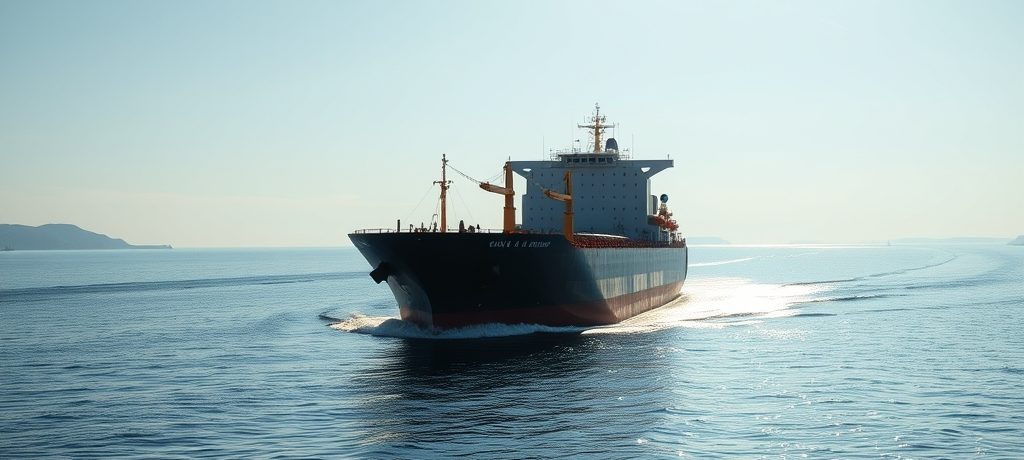
The primary catalyst for the sustained weekly decline, despite Friday’s minor uptick, is the perceived reduction in geopolitical risk. Analysts point to two key developments: improved shipping activity through the critical Strait of Hormuz and reported progress in U.S.-Iran talks. These factors have collectively alleviated fears of potential bottlenecks or interruptions to global oil flows, which had previously supported higher prices.
Geopolitical Developments and U.S.-Iran Dialogue
The narrative of de-escalation has been significantly shaped by statements surrounding U.S.-Iran relations. U.S. President Donald Trump, in an interview with CNBC, indicated that discussions with Iran are advancing, claiming that Tehran has agreed to “just about everything we need.” Trump further asserted that Iran would commit to purchasing U.S. agricultural products as part of a prospective peace agreement aimed at ending the conflict. However, this specific claim regarding agricultural purchases has been directly refuted by Iran, introducing a degree of uncertainty into the reported progress.
Strait of Hormuz and Regional Security Posturing
Despite the reported progress in talks, Iran’s military command has issued strong warnings regarding the Strait of Hormuz, a vital global oil transit chokepoint. The Khatam al-Anbiya Central Headquarters, Iran’s main military command, declared that the Strait of Hormuz is not an “aggressive U.S. playground” and cautioned that any U.S. interference in the waterway would be met with a “decisive and swift” response. This statement underscores the persistent underlying tensions in the region, even as diplomatic efforts proceed.
Further highlighting regional friction, Iran’s Foreign Minister Abbas Araghci publicly criticized the U.S. CENTCOM’s regional security dialogue held in Bahrain, which saw participation from 12 countries. Araghci questioned the legitimacy of the U.S. role in the region, stating that lasting peace in West Asia could only be achieved without external interference. He further claimed that “outsiders cannot even protect themselves,” challenging the efficacy and intent of U.S.-led security initiatives.
Broader Global Context
While the focus remains on the Middle East, other global events continue to contribute to a complex geopolitical landscape. Separately, Ukrainian President Volodymyr Zelenskyy announced that his country would “definitely” retaliate following a major drone and missile attack launched by Russian forces on Kyiv overnight, which resulted in the deaths of at least 30 people. While not directly impacting oil supply in the same manner as Middle East disruptions, such conflicts contribute to overall global instability, which can indirectly influence market sentiment.
The current trajectory for oil prices reflects a market recalibrating its risk premium in response to perceived improvements in Middle Eastern stability. While diplomatic overtures and increased shipping activity have tempered immediate supply fears, the strong rhetoric from Iran’s military and diplomatic corps indicates that underlying geopolitical sensitivities in the region remain acute, suggesting that market volatility could resurface with any renewed escalation.