The South Korean won commenced its inaugural 24-hour trading session with a stable performance against the U.S. dollar, marking a significant stride in Seoul’s ambitious strategy to integrate its financial markets more deeply with global investors. The currency initially gained ground before settling slightly lower, underscoring the milestone as a centerpiece of years-long reforms aimed at enhancing foreign access.
On its first day of continuous operation, the won saw an early uptick, rising as much as 0.2% when trading commenced at 6:00 a.m. local time. However, it subsequently eased, closing down 0.1% at 1,531.40 against the greenback. This initial movement, while modest, was closely watched by market participants, with other major currency pairs exhibiting little change during the same period. The launch of round-the-clock trading represents a tangible outcome of the government’s sustained efforts to modernize its foreign exchange infrastructure.
Strategic Rationale for Market Opening
This shift to 24-hour trading is not merely an operational adjustment but a foundational element of South Korea’s broader initiative to open its financial markets. It is designed to significantly improve foreign investor access to local markets, a long-standing objective that has been central to Seoul’s campaign for an upgrade to MSCI Inc.’s developed-market index. Accessibility has historically been cited as a stumbling block in this pursuit. Furthermore, the move acknowledges the evolving nature of the South Korean economy, which now sees increasing overseas investment, making the previous limitation of trading to Korean business hours increasingly difficult to justify in a globally interconnected financial system.
Official Endorsement and Future Commitments
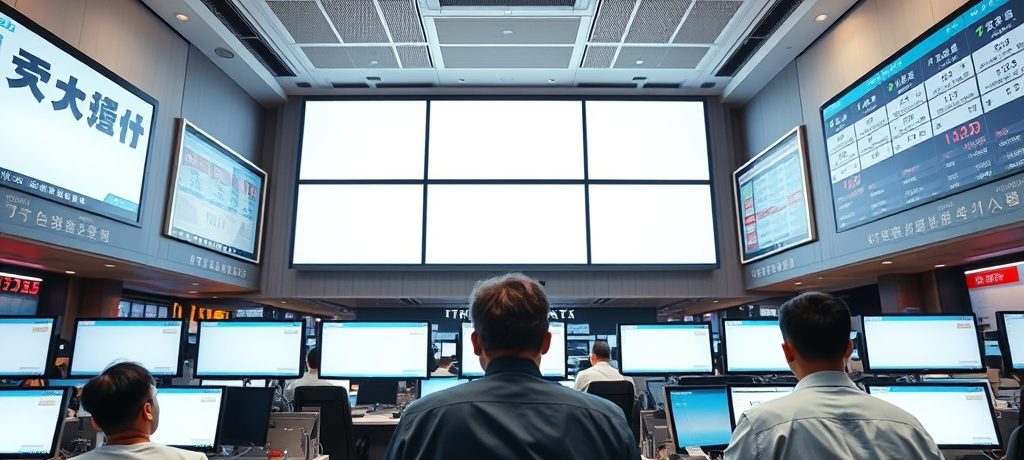
Finance Minister Koo Yun Cheol emphasized the profound implications of this market reform during a visit to a local bank’s trading floor on Monday. “This is the starting point for the won’s global leap,” Koo stated, highlighting the government’s vision for the currency. He further elaborated that the initiative represents “core infrastructure designed to provide the level of accessibility and convenience in FX trading comparable to advanced markets.” The government, Koo affirmed, is committed to ensuring the smooth functioning of the new system, pledging to “monitor the market seamlessly and support frictionless 24/7 trading, while continuing to push forward with the other FX market reforms.” This commitment signals a sustained drive towards further liberalization and integration.
Broader Market Context and Recent Volatility
The won’s debut in 24-hour trading occurs against a backdrop of recent volatility and broader market trends. Last week, the currency had approached its weakest level since 2009, before experiencing a rebound following a Bloomberg report indicating that officials were preparing for currency flows related to SK Hynix Inc.’s US offering of American depositary receipts. This year, the won has been categorized as one of Asia’s weakest currencies, a performance attributed to factors such as higher energy prices stemming from the Iran war and foreign investors rebalancing portfolios by selling domestic stocks after experiencing stellar gains. Despite these currency pressures, the benchmark Kospi index has notably remained the world’s biggest gainer among major equity gauges this year, showcasing a divergence in performance between the equity and currency markets. The move also carries historical weight, with past reports noting Korea’s cautious approach to market openings, scarred by the 1997 financial crash.
Vigilant Monitoring and Ongoing Reforms
Anticipating the complexities of extended trading hours, Deputy Finance Minister Moon Jisung had stated on Friday that authorities would strengthen monitoring of the night trading session ahead of Monday’s opening. This proactive stance underscores the government’s commitment to maintaining market stability and integrity during the expanded operational window. The launch of 24-hour trading is presented not as an endpoint, but as a critical step within a broader agenda of foreign exchange market reforms. The government’s continuous monitoring and support for frictionless trading are expected to be key in the successful long-term implementation of these changes.
The initiation of 24-hour trading for the South Korean won represents a pivotal moment in the nation’s financial evolution, signifying a determined effort to enhance its global financial standing and attract greater international investment. While the initial trading day saw a measured performance, the strategic implications of this move are far-reaching, positioning the won for increased liquidity and accessibility on the global stage. This infrastructure upgrade, coupled with ongoing reforms and vigilant oversight, aims to solidify South Korea’s position as a more open and integrated participant in the global financial system.