Major coffee trader ECOM Agroindustrial Corp. is dramatically scaling up its climate resilience efforts in Vietnam, targeting a fivefold increase in the number of growers covered by its specialized weather insurance this year. This ambitious expansion, from 500 to 2,500 farmers, directly addresses the escalating climate risks faced by thousands of smallholder farmers in the world’s largest robusta coffee producing nation, particularly as a strong El Niño threatens significant heat and dryness across Southeast Asia, posing a fresh threat to coffee supplies and other vital crops.
ECOM’s Strategic Insurance Expansion
Laurent Bossolasco, ECOM’s Vietnam-based sustainability manager, confirmed the ambitious target to expand coverage to 2,500 farmers from the current 500. The company, recognized as the world’s second-biggest coffee trader, initiated this innovative parametric insurance program five years ago. Unlike traditional insurance requiring proof of crop losses, this model is designed to trigger payouts automatically if predefined weather parameters, such as excessive or insufficient rainfall, are met. This streamlined process is a key advantage for smallholder farmers who often lack the resources or documentation for complex claims. Bossolasco underscored the strategic imperative behind this expansion, stating in an interview, “When we look at supply and demand, we have more demand than supply. We need to make sure that we keep as much coffee around.” This highlights ECOM’s dual objective: safeguarding farmer livelihoods and securing future coffee supply amidst growing global demand.
Vietnam’s Vulnerability to Climate Volatility
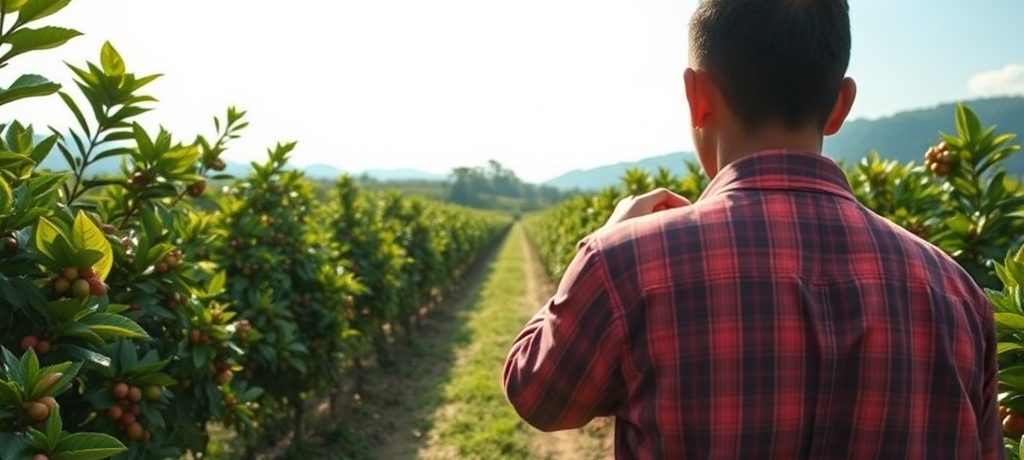
Vietnam holds the position as the world’s largest producer of robusta beans, a variety crucial for instant coffee and espresso blends globally. The backbone of this industry is comprised of thousands of smallholder farmers, who typically cultivate relatively modest plots. These farmers possess limited financial and structural capacity to absorb the increasingly frequent and severe weather-related disruptions. The mounting climate pressures, coupled with shifting economic incentives, have already led some growers to diversify into or even replace coffee with alternative crops such as black pepper and durian, signaling a potential long-term shift away from coffee production if risks are not mitigated. This year, the prospect of a strong El Niño looms large, expected to bring significant heat and dryness to much of Southeast Asia. For Vietnam’s key coffee-growing region, the Central Highlands, the latest seasonal outlooks point to a roughly 50% chance of below-normal rainfall from July through September. Such conditions could severely impact coffee yields and quality, exacerbating supply concerns.
Parametric Insurance: A “Game Changer” for Farmers
The parametric insurance model offers a crucial safety net, providing a direct and efficient mechanism for risk transfer. Growers with coverage stand to at least partially recoup losses from adverse weather, a critical factor in preventing them from starting the subsequent planting season heavily in debt. This financial stability, Bossolasco suggested, could be a “game changer for farmers,” enabling them to invest in their farms and maintain production rather than being forced out of the market. The program’s effectiveness has already been demonstrated through real-world payouts. The first payouts under ECOM’s program were triggered in 2024 after a season impacted by poor rainfall. In the subsequent year, growers faced torrential rains, and all farmers who had purchased wet-season coverage received payouts, according to insurance brokerage WTW, which has played a pivotal role in designing these specific policies for Vietnam’s coffee growers.
Broader Applications and Expert Endorsement
Christopher Au, senior director of climate practice and alternative risk transfer solutions at WTW, emphasized the particular suitability of Vietnam’s climate for parametric products. He noted that the country’s distinct wet and dry seasons, and their significant impact on the yield and quality of the coffee crop, present a “particularly strong use case.” Au elaborated, stating, “They are very distinct risks and they’re very closely correlated with weather. The parametric application here is quite strong.” The growing popularity of parametric insurance extends beyond agriculture, reflecting its utility in managing risks associated with extreme weather across various sectors. Renewable energy firms, for instance, employ these products to manage swings in wind and sunshine, while other companies leverage them to protect property and goods from tropical cyclones and floods that can severely disrupt global supply chains. This broader adoption underscores the innovative nature and increasing relevance of parametric solutions in a world grappling with climate volatility.
Securing Livelihoods and Global Supply
ECOM’s expanded insurance program represents a proactive financial instrument aimed at bolstering the resilience of Vietnamese coffee farmers against the undeniable and intensifying impacts of climate change. By providing a critical buffer against weather-induced losses, the initiative not only safeguards the livelihoods of thousands of smallholders, offering them a path to financial recovery and sustained operation, but also plays a vital role in ensuring the stability of global robusta coffee supplies amidst increasing demand and volatile environmental conditions. This strategic investment in climate adaptation for smallholder farmers underscores a growing recognition within the commodity trading sector of the interconnectedness between environmental sustainability, social equity, and long-term market stability.