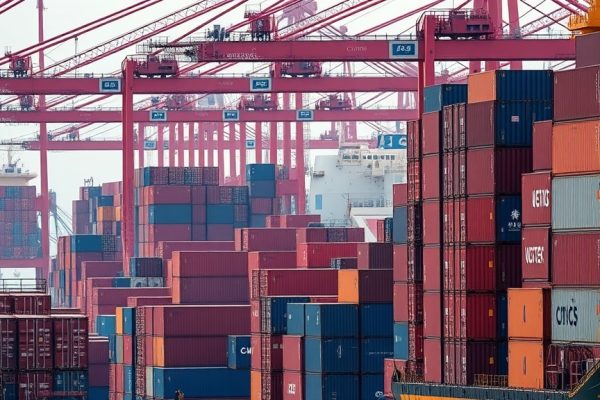
The landmark free trade agreement (FTA) between India and the United Kingdom, the world’s fifth and sixth largest economies respectively, officially came into effect on Wednesday, setting the stage for a recalibration of bilateral trade relations. Businesses on both sides are now gearing up to leverage the new terms, which promise to remove or significantly reduce tariffs on a substantial portion of goods.
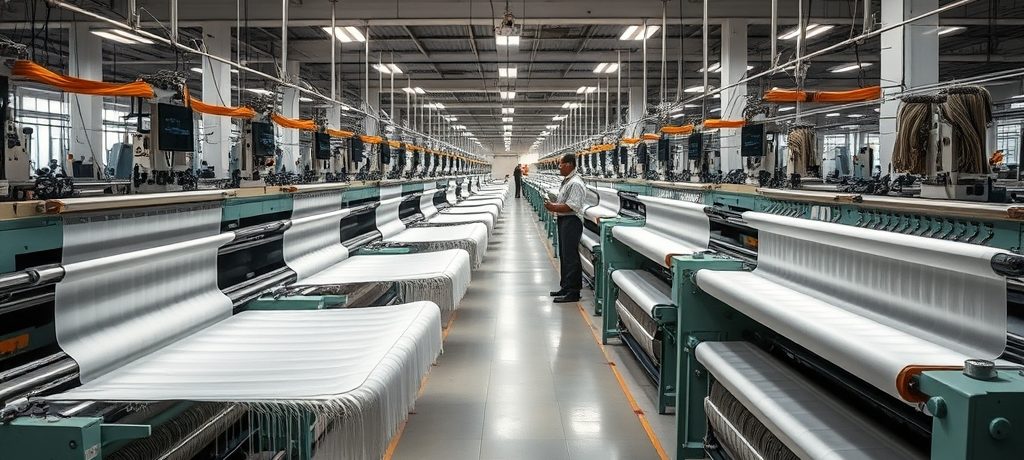
For Indian exporters, the deal is particularly impactful. Welspun Living, the Indian home textile manufacturing giant known for producing championship towels for Wimbledon and supplying major British high-street retailers like John Lewis and Tesco, is already seeing heightened engagement. Dipali Goenka, CEO of Welspun Living, told the BBC that British brands have been in India recently to “chart a business roadmap for the next few years,” a level of joint forward planning previously reserved mainly for US customers. “In fact, as we speak, our supply chain team in London is sitting in the John Lewis office,” Goenka added.
Goenka anticipates a “double digits” growth in exports to the UK. She highlighted a critical shift for India’s textile sector, which previously faced a 12% tariff disadvantage compared to countries like Bangladesh and Pakistan, whose exports entered the UK duty-free under the Developing Countries Trading Scheme (DCTS). This disparity meant Pakistan held approximately 55% of the UK’s home textile exports, while India’s share was a mere 6-7%. The FTA is expected to help India bridge this gap.
Scotch Whisky Sees Significant Tariff Reduction
On the import side, British alcohol and spirits companies are poised for a substantial boost in the Indian market. The agreement slashes customs duties on Scotch whisky from a prohibitive 150% to 75% immediately, with a further gradual reduction to 40% over the next decade. Avneet Singh of Modern Drinks Pvt Ltd, a Delhi-based import house, described this as a “real shift, not a small tweak.”
While the full impact on import volumes will become clearer in the coming months, Singh noted that the focus has been on operational readiness. This includes ensuring “certificates of origin and other trade documentation are in place, reviewing customs and compliance requirements, and co-ordinating with logistics and clearing partners so shipments can benefit from the revised tariff structure from day one.” He characterized the period leading up to the deal’s implementation as one of “careful preparation rather than rapid expansion,” with bigger changes expected once businesses observe actual savings on imported goods.
Economic Projections and Implementation Challenges
The British government has hailed the FTA as “the UK’s biggest and most economically significant bilateral trade pact” since leaving the EU. It estimates the UK’s GDP will increase by 0.13%, equivalent to £4.8bn ($6.4bn), and India’s by 0.06%, or £5.1bn per year in the long run. The agreement removes or reduces tariffs on 99% of Indian exports to the UK and 90% of UK imports into India, with labour-heavy sectors such as textiles, garments, footwear, cars, and marine products expected to see significant growth.
However, trade experts suggest the overall impact might be “incremental rather than transformational.” Data from the Delhi-based Global Trade Research Initiative (GTRI) think-tank indicates that India exported $13.4bn worth of goods to the UK in the financial year 2025-2026, with over half already entering duty-free under the UK’s most favoured nation regime. Conversely, India imported $11.7bn from the UK, but over 45% consisted of silver, which remains on India’s exclusion list and outside the agreement.
Ajay Srivastava of GTRI emphasized that the “real test is whether products that previously faced UK tariffs of 4-16% – such as textiles, garments, footwear, carpets, cars, seafood, grapes and mangoes – see higher export orders, larger export volumes and better profit margins.” He expects the FTA’s impact to become visible over the next one to three years.
Overcoming Hurdles for Full Potential
Several unresolved challenges could impede the full utilization of the deal. Srivastava pointed to the UK’s maintenance of tariffs on steel imports above a specific quota to protect domestic producers. Additionally, the UK’s proposed carbon tax, known as CBAM, could reduce some FTA gains. Even if tariffs “fall to zero under the FTA, carbon-related border charges could increase the effective cost of Indian exports in sectors covered by the CBAM, creating new trade frictions,” he noted.
Non-tariff barriers also persist, alongside a historical challenge of low FTA utilization in India. Small businesses often lack awareness of new rules, leading to an estimated 20-30% of India’s eligible exports utilizing FTA preferences, despite higher import-side utilization rates. Srivastava stressed the need for “the government and industry associations to be proactive in dealing with these issues because otherwise tariff reductions will not automatically translate into higher exports.” This includes training for origin requirements and documentation to claim preferential tariffs.
Strategic Opportunities and Future Outlook
Despite these challenges, the FTA presents a timely opportunity for India, particularly in ready-made garments (RMG). CareEdge Research highlights that China, while holding the largest market share in UK’s RMG imports, has been losing ground due to declining competitiveness and higher labour costs. Furthermore, brands are diversifying sourcing away from countries like Bangladesh, which recently experienced socio-political turmoil. In this scenario, CareEdge projects India’s market share in the UK’s RMG imports could double from 6% in 2024 to 12% in the near to medium term.
Overall bilateral trade is projected by CareEdge to increase by 15% annually, surpassing the current growth rate of 10-12%. This expansion is expected to benefit consumers in both countries through improved product quality and broader choice. While the initial phase focuses on operational adjustments and targeted gains, the long-term trajectory suggests a significant deepening of economic ties, contingent on effective implementation and proactive engagement from all stakeholders.