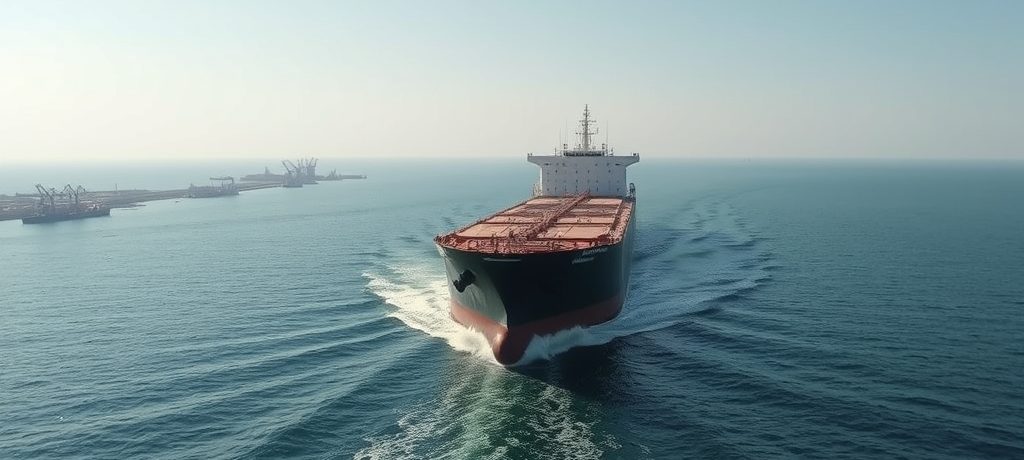
Crude oil futures experienced significant volatility on Tuesday, initially extending the previous session’s sharp gains before pulling back from their day’s highs. This market adjustment occurred after President Trump announced he had scrapped a contentious plan to charge a 20% fee for ships transiting the Strait of Hormuz.
The proposed 20% levy was designed to cover the substantial costs associated with protecting maritime traffic through the strategically vital Strait of Hormuz. This narrow waterway is a critical chokepoint for a significant portion of the world’s crude oil shipments, making any policy or security development there a direct driver of energy market sentiment and prices.
President Trump’s decision to nix the proposed transit fee immediately eased the upward pressure on crude oil prices, which had seen a sharp rise. The market’s swift reaction highlights the extreme sensitivity of oil futures to geopolitical developments and policy shifts affecting global supply routes, particularly those as crucial as the Strait of Hormuz.
The cancellation of the 20% fee removes a potential new cost burden for shippers and, by extension, consumers, contributing to the stabilization observed in oil prices after their earlier ascent. This move underscores the administration’s direct influence on global commodity markets through executive decisions impacting international trade and security.