HONG KONG – China’s economy experienced a notable deceleration in the second quarter of 2026, with official data revealing an annualized growth rate of 4.3%. This performance marks the weakest expansion in over three years and the slowest pace recorded since the lockdown-impacted fourth quarter of 2022, according to government figures released Wednesday. The Q2 growth fell short of forecasts and represented a significant drop from the robust 5% pace observed in the first three months of the year, despite a surge in exports driven by the artificial intelligence boom and strong global demand for Chinese electric vehicles.
The latest statistics underscore a growing imbalance within the world’s second-largest economy. While China has largely managed to shrug off wider economic impacts from the Iran war, which pushed up global inflation, domestic spending and investment have consistently lagged. This internal weakness has limited the overall boost from the nation’s powerful export manufacturing sector, an economy that has struggled to regain consistent momentum since parts of the country faced stringent COVID-19 pandemic lockdowns.
Export Engine Powers Ahead, But Domestic Demand Stalls
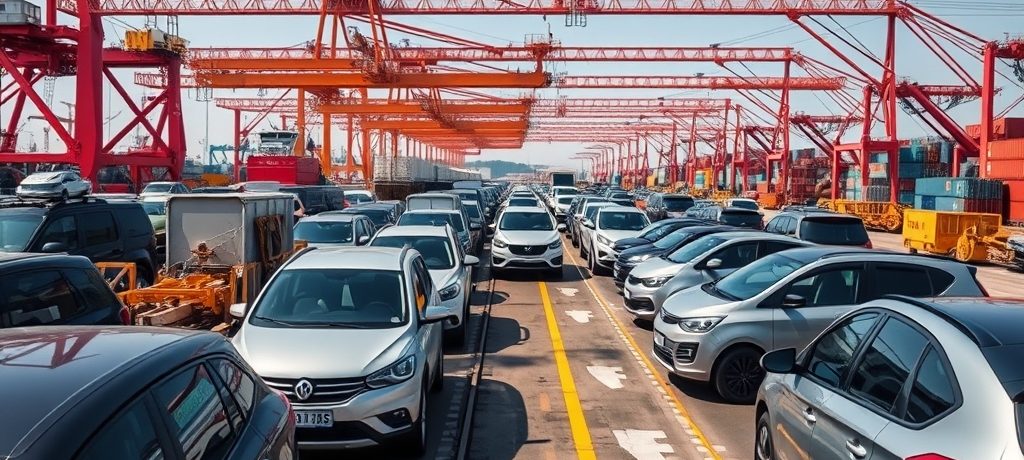
Exports have indeed been a bright spot, with customs data indicating a 17.6% rise in the first half of the year compared to a year earlier, and a substantial 27% increase in June alone. This export strength is partly attributed to the burgeoning artificial intelligence sector and robust global appetite for Chinese electric vehicles. China’s leaders have made the development of advanced technologies a top priority, leading to hefty government support that has fueled sharp rises in exports of high-tech products such as computer chips and other electronic equipment.
This export-driven strategy contributed to China running a record $1.2 trillion global trade surplus last year. However, this has also drawn criticism from policymakers in other countries, who point to heavy state subsidies as contributing to an oversupply of manufactured goods that are then exported overseas, creating trade imbalances. Industrial output by value, a key indicator of manufacturing health, rose 5.4% in the first half of the year from a year earlier.
Despite the strong external performance, the internal components of China’s economy present a challenging picture. “This was the slowest growth in any quarter since the lockdown-impacted fourth quarter of 2022,” noted Lynn Song, chief economist for Greater China at ING Bank, in a recent analysis. The primary drag on growth has been the reluctance of Chinese families to engage in significant purchases, their spending appetite constrained by a prolonged property slump and persistent uncertainties surrounding jobs and wages.
Mounting Imbalances and Weak Confidence
Evidence of this domestic weakness is stark. Investment in fixed assets, which includes crucial areas like factory equipment, saw a year-on-year fall of 5.7% in the first half of the year. Retail sales of consumer goods climbed a meager 1.3%, reflecting the cautious consumer sentiment. Adding to these concerns, housing prices have continued their downward trend, further eroding household wealth and confidence.
Economists are increasingly highlighting the structural imbalances within China’s economic model. Eswar Prasad, a professor of economics and trade policy at Cornell University, stated that as China remains reliant on its exports to sustain overall growth, “China’s growth model has become increasingly imbalanced.” He further cautioned that “Substantially increasing domestic demand will be tough as confidence remains weak.” This sentiment is echoed by domestic officials, with Mao Shengyong, deputy head of China’s National Bureau of Statistics, telling reporters that given the “increasingly unstable and uncertain global situation,” the imbalance between strong supply and weak demand “remains acute” at home.
The expansion of AI and robotics, while boosting high-tech exports, has also raised domestic worries about whether businesses will create enough jobs to sustain long-term growth. This concern over employment stability adds another layer of complexity to the nation’s economic challenges.
Government Response and Future Trajectory
In response to these challenges, Mao Shengyong affirmed that China is focused on high-tech manufacturing and pursuing “higher-quality economic growth.” He indicated that the government would work to build a robust domestic market and offer support to keep employment stable. Wei Li, Head of Multi-Asset Investments at BNP Paribas Securities (China), characterized China’s economy as going through a “significant transition,” acknowledging the profound shifts underway.
For the entire year of 2026, Chinese leaders have set a growth target ranging from 4.5% to 5%, a slightly slower pace than the 5% achieved last year. The overall economic growth for the first half of the year stood at 4.7%, according to the data released Wednesday. The International Monetary Fund recently adjusted its forecast for China’s annual growth upwards by 0.2 percentage point to 4.6% for 2026, though it anticipates a further slowdown to just 4.1% in 2027.
The path forward for China’s economy appears to be one of navigating internal structural shifts while maintaining its external competitive edge. The challenge lies in fostering a resilient domestic demand base that can complement its export prowess, thereby ensuring more balanced and sustainable growth in the years to come.