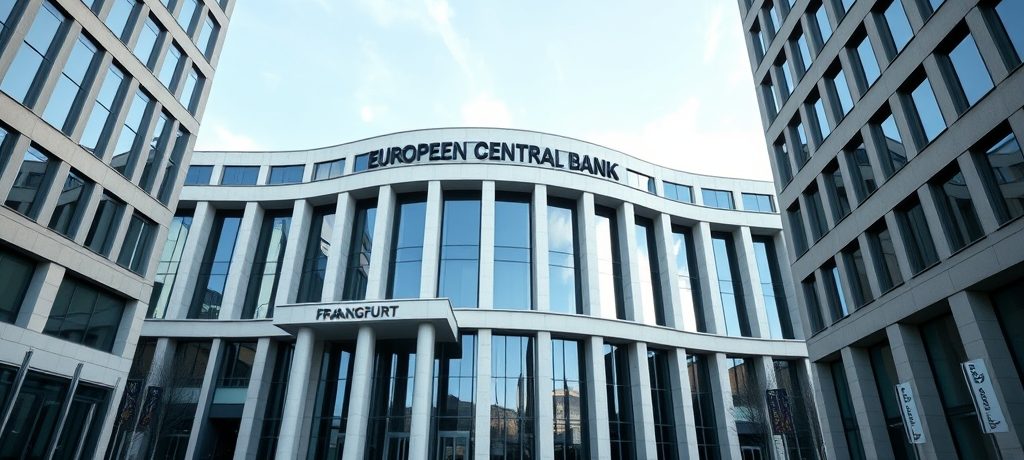
The European Central Bank is widely expected to maintain its current interest rates next week, according to a recent Bloomberg survey of economists, before implementing what is broadly anticipated to be a final quarter-point increase in September. This strategic decision to pause is designed to afford policymakers the necessary time to thoroughly assess evolving inflation dynamics and integrate fresh quarterly economic forecasts into their crucial decision-making process.
Survey Points to September Peak at 2.5%
The consensus among all economists polled by Bloomberg indicates no change in borrowing costs at the upcoming meeting scheduled for next Thursday. Subsequently, a significant majority of these experts project a 25-basis-point increment to the deposit rate, elevating it to 2.5% in September. This specific rate level is largely where economists predict the ECB will conclude its aggressive tightening cycle. This period of monetary tightening was initiated in response to the euro zone’s most severe inflationary pressures since 2023, a phenomenon largely exacerbated by a dramatic surge in oil prices following the onset of the Iran war.
Strategic Pause for Data Assessment
The rationale behind a pause at the imminent meeting is rooted in prudence. It allows the Governing Council to avoid premature action, instead opting to gather more comprehensive data and await the release of new quarterly forecasts. These forecasts, which will become available in September, are considered vital. They are expected to furnish a clearer, more updated perspective on the euro area’s economic trajectory, particularly concerning the persistence of inflation and the robustness of growth prospects. This data-driven approach aims to ensure that any subsequent policy adjustments are made with the fullest possible understanding of the economic landscape.
Geopolitical Volatility Fuels Uncertainty
Despite the clear outlook presented by the survey, analysts express a notable degree of caution and uncertainty, a sentiment that closely mirrors recent communications from the central bank itself. This prevailing fluidity is primarily attributed to the highly unpredictable and volatile geopolitical situation in the Middle East. Events surrounding the Iran war have demonstrated significant swings over the past month, transitioning from a precarious ceasefire to renewed hostilities, directly impacting global commodity markets. Dennis Shen, a lecturer at TU Berlin’s International School of Management, underscored this critical dependency, stating, ‘The key question now is whether renewed US-Iran tensions prove temporary.’ Shen further elaborated on the potential implications, noting that a contained episode would ‘support rates being on hold,’ whereas more widespread disruption ‘could revive second-round effects and put inflation expectations under pressure,’ highlighting the delicate balance the ECB must strike.
ECB’s Assertive Stance in G7
Should the anticipated September rate hike materialize, it would significantly reinforce the European Central Bank’s position as arguably the most hawkish central bank among the Group of Seven (G7) nations. The ECB already demonstrated its assertive stance last month by becoming the first member of this influential club to raise rates in the wake of the Iran war. This proactive move signaled a strong commitment to combating inflation, even as other major central banks might have adopted a more cautious approach. This distinction underscores the ECB’s perceived urgency in addressing price stability within the euro zone, setting it apart from its global peers.
Communication as Key for Market Guidance
The upcoming deliberations by policymakers next week are expected to play a crucial role in shaping financial-market expectations, particularly given the impending long summer break. Kristian Toedtmann, an economist at Dekabank, suggests that the primary focus of Thursday’s outcome will be on the central bank’s messaging and forward guidance. Toedtmann observed that ‘The supply shock is working its way through the economy,’ implying that the initial inflationary impulses are gradually dissipating. He further predicted that ‘The ECB will explain that it is monitoring the situation, it feels well positioned, and it is ready to act if needed,’ indicating a strategy of vigilant observation coupled with a readiness to intervene should economic conditions warrant it, thereby managing market sentiment effectively.
Inflation Trends and Official Reassurance
Recent economic indicators have provided some measure of relief, with euro-area inflation easing more than anticipated in June. This deceleration was also observed in a closely watched gauge for services, suggesting a broader moderation in price pressures. Furthermore, high-ranking officials, including Austrian central-bank Governor Martin Kocher and ECB Executive Board member Piero Cipollone, have publicly stated this week that there is currently no discernible evidence indicating that wage dynamics pose a significant risk of further entrenching price pressures. Despite these positive developments, Bundesbank President Joachim Nagel insisted that the ECB will maintain ‘its vigilant stance.’ Speaking on Wednesday, Nagel affirmed that borrowing costs are presently at an ‘appropriate’ level, while reiterating the Governing Council’s commitment to meticulously considering all relevant incoming data at future meetings, signaling continued caution.
Bloomberg Economics’ Outlook Aligns
Aligning with the broader expert consensus, an analysis from Bloomberg Economics noted that ‘The deceleration of euro-area inflation in June eliminated any need for urgent action.’ However, their assessment also underscored a critical counterpoint: ‘buoyant commodity prices keep the Governing Council on track to raise borrowing costs again in September, when it’s armed with fresh forecasts from the staff economists, for a final time in this short tightening cycle.’ This perspective highlights the delicate balance between immediate inflationary relief and the persistent underlying pressures, particularly from energy markets, which necessitate a final policy adjustment to ensure long-term price stability.
The Geopolitical Fulcrum
For economists, the ultimate determinant of any policy move in the autumn remains inextricably linked to the developments in the Iran war. The associated repercussions on global flows of oil and gas are seen as the pivotal factor that could either solidify the current trajectory or force a reassessment. The volatility in energy markets, directly influenced by geopolitical tensions, continues to be a primary concern for the ECB as it navigates its mandate for price stability.
While the immediate focus is firmly on next week’s anticipated pause and the accompanying forward guidance, the market’s attention will swiftly pivot towards September. That month is expected to bring not only new economic forecasts but also the final interest-rate adjustment in a tightening cycle profoundly shaped by geopolitical volatility and the persistent challenge of inflation.