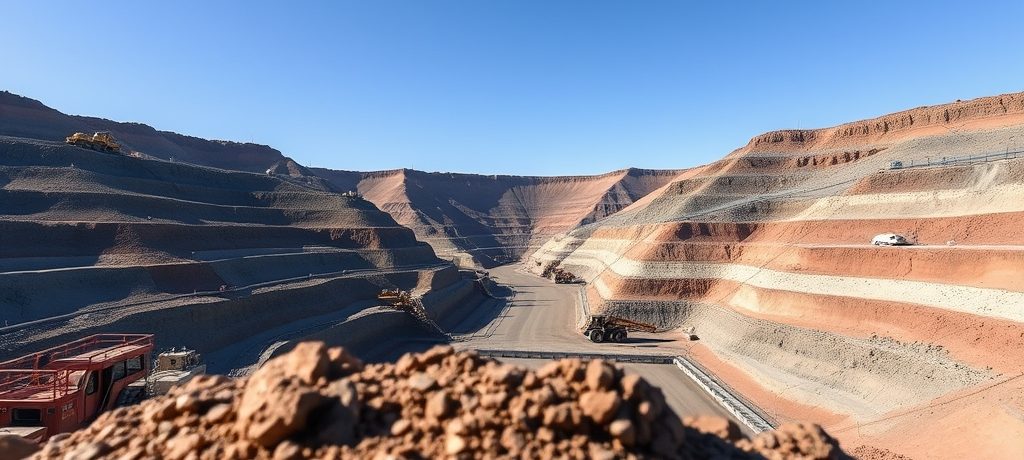
The global race to secure critical raw materials for a rapidly electrifying world, burgeoning artificial intelligence (AI) sector, and expanding energy infrastructure faces a formidable challenge: a looming copper supply deficit. This stark warning comes from Craig Parry, CEO and Chair of Vizsla Copper (TSXV:VCU,OTCQB:VCUFF) and co-founder of Inventa Capital, who, speaking to the Investing News Network at the Rule Symposium, underscored the industry’s ill-preparedness to meet escalating demand.
As reported on July 17, 2026, by Georgia Williams for the Investing News Network, Parry highlighted that copper has become one of the most closely monitored commodities globally. Governments and industries alike are acutely aware of its indispensable role in the foundational technologies of the future. The push towards electrification, encompassing everything from electric vehicles and charging infrastructure to smart grids and renewable energy systems, inherently demands vast quantities of copper due renowned for its superior electrical conductivity and durability. Concurrently, the exponential growth of artificial intelligence requires extensive data centers and advanced electronics, all heavily reliant on copper. The ongoing development and modernization of global energy infrastructure further intensify this insatiable demand.
Decades of Underinvestment and Permitting Hurdles
Parry’s analysis points to a critical disconnect between this surging demand and the industry’s capacity to supply. He attributes this gap to years of systemic underinvestment in new copper projects and increasingly protracted permitting timelines. This dual challenge has left the mining sector struggling to bring new production online at the pace required by global consumption trends. The implication is clear: the foundational capital expenditure needed to discover, delineate, and develop new copper deposits has been insufficient, leading to a pipeline of projects that is too thin to address future needs.
Furthermore, the regulatory environment has become a significant bottleneck. Lengthy and complex permitting processes extend the lead time for new mines from discovery to production by many years, sometimes even decades. This bureaucratic inertia exacerbates the supply problem, creating a lag that the market cannot easily absorb. Parry argues that the fundamental question is no longer whether demand for copper will materialize—that is a certainty—but rather whether enough new mines can be developed and brought online swiftly enough to avert a substantial and potentially crippling supply deficit.
Strategic Importance and Policy Influence
The conversation with the Investing News Network also delved into the evolving landscape of mineral demand, particularly how AI is reshaping requirements for various materials. Copper, in this context, is set to maintain its status as one of the most strategically important commodities for the coming decades. Its versatility and essential properties make it irreplaceable in a wide array of applications critical to modern society and technological advancement.
Parry further elaborated on how changing government policies are exerting a profound influence on project development within the mining sector. Policy shifts, whether related to environmental regulations, taxation, or national resource strategies, can significantly impact the economic viability and timeline of new mining ventures. Such policy uncertainties add another layer of complexity for companies attempting to plan and execute long-term capital-intensive projects, potentially deterring investment precisely when it is most needed.
Investment Philosophy and Future Outlook
Beyond the immediate supply-demand dynamics, Parry reflected on the core principles that have guided his extensive investment career. He also shed light on Inventa Capital’s project generation model, which focuses on identifying and developing promising mineral assets. A cornerstone of his philosophy, and that of Inventa Capital, is the emphasis on disciplined exploration. This approach is crucial for systematically de-risking projects and, ultimately, for creating sustainable shareholder value in a volatile commodity market.
The discussion concluded with Parry offering his outlook on several critical aspects of the mining sector. This included his perspectives on future copper prices, the urgent need for permitting reform to streamline project approvals, the broader implications for critical minerals beyond copper, and the potential for AI-driven exploration to revolutionize discovery processes. He also shared his vision for where the mining sector is headed over the next decade, suggesting a period of significant transformation driven by both technological advancements and pressing global material requirements.
The insights from Craig Parry paint a clear picture of an industry at a crossroads. While the demand for copper is robust and growing, the structural impediments of underinvestment and regulatory delays threaten to create a severe supply crunch. Addressing these challenges will require concerted effort from governments, industry, and investors to ensure that the world has access to the essential raw materials needed for its ambitious electrification and technological goals.