Ford Motor Co. has announced a significant C$700 million (approximately $499 million) investment in its Essex Engine Plant in Windsor, Ontario, following the ratification of a new collective agreement with Unifor, the union representing its Canadian workforce. This strategic commitment, detailed in a news release on Sunday, aims to bolster Ford’s North American manufacturing capabilities and comes alongside a strong defense of the US-Mexico-Canada Agreement (USMCA) by the automaker’s chief executive.
The newly ratified contract secures a 9% wage increase for hourly workers over its three-year duration. Additionally, eligible full-time permanent employees will receive a C$10,000 ratification bonus, while temporary employees are set to qualify for C$2,000. Unifor represents approximately 5,000 Ford workers across Canada, making this agreement a substantial development for the automaker’s Canadian operations and its labor relations.
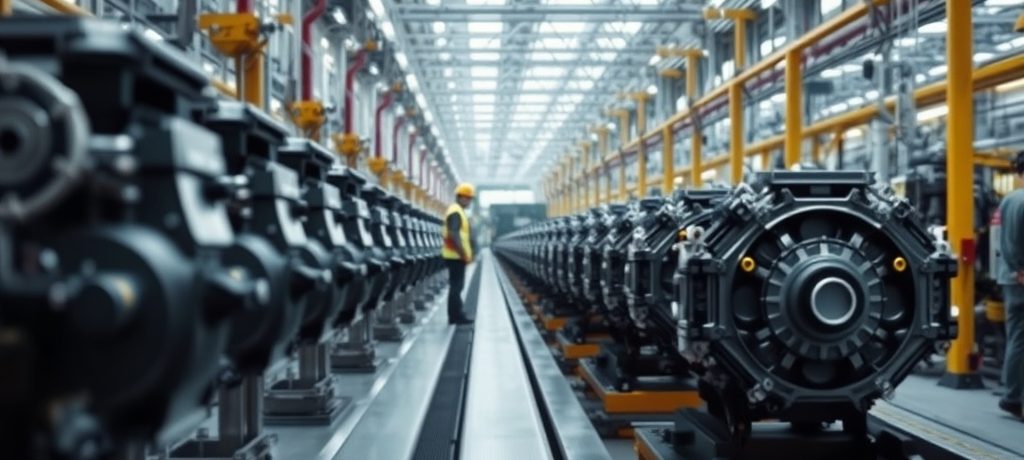
The C$700 million investment at the Essex Engine Plant is specifically earmarked to “maximize 5.0-liter engine production” and support the manufacturing of even larger engines. A significant portion of these engine components are subsequently shipped to Ford’s assembly plants located in the United States, underscoring the integrated nature of the company’s North American supply chain. This new funding complements a previously planned C$550 million investment for Ford’s Oakville assembly factory, which is preparing to ramp up production of large pickup trucks.
The Essex engine facility’s location in Windsor, Ontario, places it a short distance from the Gordie Howe International Bridge. This new span, which is scheduled to open this month, is designed to significantly enhance and expedite trade flows between Canada and the United States, benefiting the automotive sector and other industries crucial to cross-border commerce.
Jim Farley, Ford’s Chief Executive Officer, emphasized the broader implications of the agreement and investment. In a statement, Farley declared, “This agreement is about investing in our people and Canada’s future.” His remarks highlight the company’s commitment not only to its operational footprint but also to the economic well-being of its Canadian employees and the region.
Beyond the immediate investment, Farley also used the opportunity to advocate for the renewal of the US-Mexico-Canada Agreement, a trade pact that the Trump administration has thus far declined to extend. Farley articulated a clear strategic rationale, stating, “A strong, integrated North American manufacturing system is essential to our competitiveness, and a revised USMCA is critical to fending off the cost and currency advantages enjoyed by imported vehicles from Korea and Japan.” This stance underscores Ford’s view that the trade agreement is vital for maintaining a competitive edge against international rivals.
The automaker’s dual focus on significant capital investment and proactive trade policy advocacy reflects a comprehensive strategy to fortify its North American production base. By enhancing engine manufacturing capabilities in Canada and ensuring a stable, integrated supply chain across the border, Ford aims to optimize efficiency and cost-effectiveness within the region.
This substantial commitment to its Canadian operations, coupled with a forceful defense of the USMCA, positions Ford to leverage North American industrial synergies while navigating the complexities of international trade and geopolitical dynamics.