President Donald Trump has signaled a significant shift in his trade policy, abandoning a period of relative quiet to unleash a whirlwind week of tariff threats. This aggressive stance, which many believed would be postponed until after the U.S. midterm elections in November, suggests a renewed commitment to his protectionist agenda.
Tariff Wall Rebuilt, Analysts Say
The recent flurry of activity has led analysts to conclude that Trump’s trade war is far from over. “What we learned this week was that’s not true,” Josh Lipsky, vice president and chair of international economics at the Atlantic Council, told MS NOW on Friday. “Donald Trump is committed to rebuilding the tariff wall.”
Lipsky elaborated in a New York Times essay that the long-term viability of Trump’s import duties may not hinge on legal challenges, but rather on the financial markets’ growing reliance on tariff revenue to help manage the national deficit. “America’s financial markets went from hating tariffs to being able to live with them to needing them to help cope with the country’s deficit,” Lipsky wrote.
However, Chad Bown, a senior fellow at the Peterson Institute for International Economics and co-author of the book ‘How to Win a Trade War,’ expressed concern that the administration is missing a larger strategic opportunity. “The Trump administration continues to impose tariffs on partners and allies and not dealing with the bigger challenge of China,” Bown told BBC News.
A Week of Escalating Trade Tensions
The week’s events unfolded as follows:
Monday: Canada Faces 50% Tariff Threat
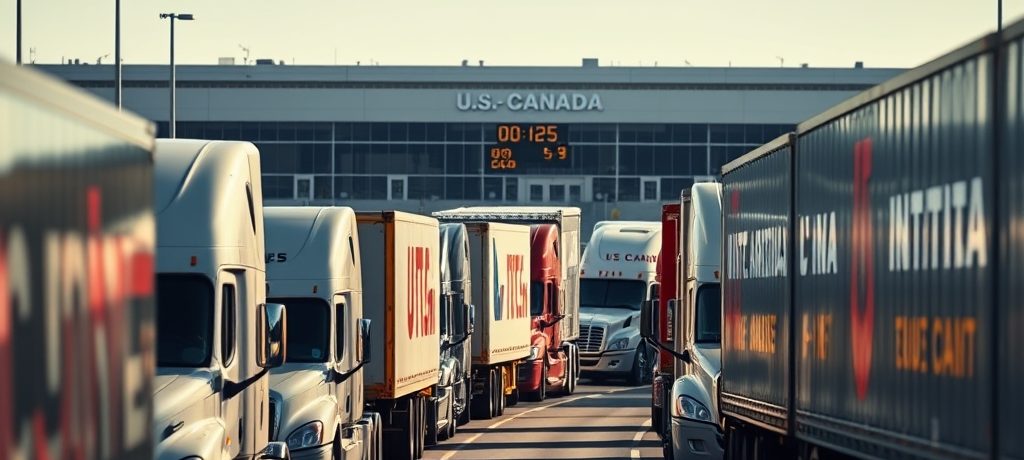
The White House announced a proposed 50% tariff on approximately $20 billion worth of Canadian imports. This measure, equivalent to about 5% of the annual trade volume between the two nations, is contingent on Canada addressing U.S. grievances concerning autos, dairy, and alcoholic beverages. The levies are slated to take effect on August 19th if no resolution is reached.
Notably, the administration invoked Section 338 of the 1930 Tariff Act, a provision historically associated with the Smoot-Hawley Tariff. This marks the first time this specific section has been employed to impose tariffs. Chris Kennedy of Bloomberg Economics suggested in a research note that this move could be a test run for Section 338 becoming a primary tool for the administration in international disputes.
Tuesday: Generic Drug Supply Chain in Crosshairs
President Trump took aim at the generic drug manufacturing sector, issuing a two-year ultimatum for companies to relocate production to the United States. Failure to comply could result in a 100% duty imposed starting in August 2028. This potential policy shift threatens to disrupt the global supply chain that ensures the affordability of generic medicines for Americans.
The vast majority of off-patent drugs, ranging from common painkillers and antibiotics to treatments for cholesterol and cancer, are manufactured in facilities located in India, Europe, and China. The proposed tariff could significantly increase the cost of these essential medications.
Wednesday: Brazil Hit with Additional Tariffs
An additional 25% tariff on imports from Brazil took effect under Section 301 of the Trade Act of 1974. While certain shipments of coffee, beef, and specific ethanol products are exempt, Bloomberg Economics indicated that Brazil now faces the most substantial tariff increase among its top U.S. trading partners relative to the end of 2024.
The renewed emphasis on tariffs, coupled with the invocation of less-common trade statutes, suggests a strategic recalibration by the Trump administration. The focus on allies and partners, alongside the ongoing trade friction with China, indicates a broad and potentially long-lasting shift in U.S. trade policy.