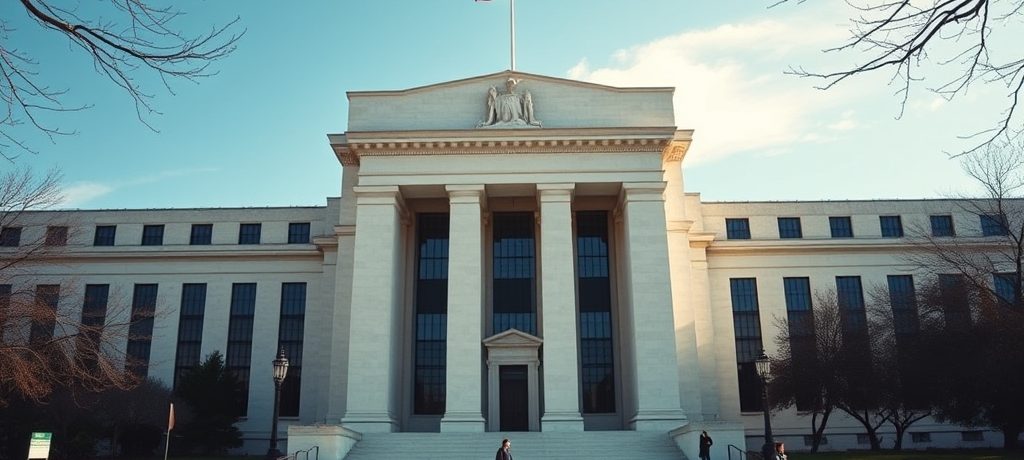
Policymakers at the Federal Reserve are convening this Wednesday, July 29, 2026, to deliberate on the future of interest rates, facing a critical decision that balances persistent inflationary pressures against a broadly stable labor market and the burgeoning, yet uncertain, impact of artificial intelligence on the economy. While the central bank is largely anticipated to hold rates steady, the possibility of a rate hike remains on the table to combat what Chairman Kevin Warsh has termed ‘stubborn inflation.’
The Immediate Rate Decision and Inflationary Pressures
The prevailing expectation among investors and analysts is that the Federal Reserve will opt to hold interest rates at their current levels. This stance comes despite earlier signals from the June meeting, where committee members indicated that their next move on interest rates would ‘likely be up — not down.’ The decision point arrives as the economy grapples with inflation that, while showing some recent moderation, has been a significant concern.
Chairman Kevin Warsh, who assumed his role two months prior, has maintained a cautious public posture regarding his specific leanings on rates. However, he has unequivocally communicated the Fed’s commitment to price stability. Addressing the Senate Banking Committee earlier this month, Warsh stated, “My colleagues and I recognize that high inflation has been an undue burden on American households and businesses.” He further emphasized, “The members of our committee have no tolerance for persistently elevated inflation and we share a resolute commitment to restore price stability.”
The urgency of this commitment is underscored by recent inflation data. The annual inflation rate surged to 4.2% in May, marking its highest level in over three years, largely driven by a “wartime spike in gasoline prices.” While inflation “cooled somewhat last month,” this moderation may provide policymakers with “some breathing room to hold rates steady for now.” Nevertheless, the source notes, “there’s no guarantee,” and investors acknowledge a “possibility that the Fed raises rates on Wednesday in response to stubborn inflation.”
Labor Market Stability and Past Policy Moves
The state of the labor market presents a contrasting picture to the inflationary concerns, potentially offering the Fed flexibility in its immediate rate decision. Higher interest rates typically exert a drag on job growth, whereas lower rates are generally seen as a stimulant for hiring. This dynamic played out last year when “weakness in the job market prompted the Fed to cut interest rates three times.”
However, the labor market has shown signs of resilience and stability more recently. Chairman Warsh informed lawmakers that “America’s labor force appears to be broadly stable.” He elaborated, “Job creation has kept pace with the workforce. The unemployment rate [is] quite low and has changed little, quite frankly, over the last year.” This stability in employment metrics could alleviate some pressure on the Fed to prioritize job growth over inflation control, allowing them to focus more intently on price stability.
Artificial Intelligence: A New Economic Variable
Adding another layer of complexity to the Fed’s deliberations is the growing influence of artificial intelligence (AI) on the economy. AI is identified as “one of the forces propping up the economy, and the stock market,” primarily through the “huge investment that tech companies are making” in the sector. Chairman Warsh generally expresses optimism regarding AI’s potential, believing it will “eventually make workers more productive.”
However, the rapid expansion of AI also introduces new economic pressures. The growth of data centers, for instance, is “putting upward pressure on the price of building materials and electricity and computer chips.” Furthermore, the long-term benefits of AI are tempered by considerable “uncertainty about how AI will affect workers” in the short to medium term. Warsh acknowledged this dual impact at the Congressional hearing, stating, “Over the long term, my best guess is this will improve the real wages and will help us on full employment. But between the short-term and the long-term, it can have a disruptive effect.”
Recognizing the profound implications of AI, Warsh has established several task forces to advise the central bank, with AI being the focus of one such group. These task forces, composed of economists and business leaders from outside the Fed, are expected to deliver their recommendations by the end of this year, providing crucial insights into how AI might shape future monetary policy considerations.
As the Federal Reserve navigates these multifaceted economic currents, its decision on interest rates this Wednesday will be closely watched. The delicate balance between taming inflation, maintaining labor market stability, and understanding the evolving impact of technological advancements like AI underscores the intricate challenges facing Chairman Warsh and his colleagues in their pursuit of sustainable economic health.