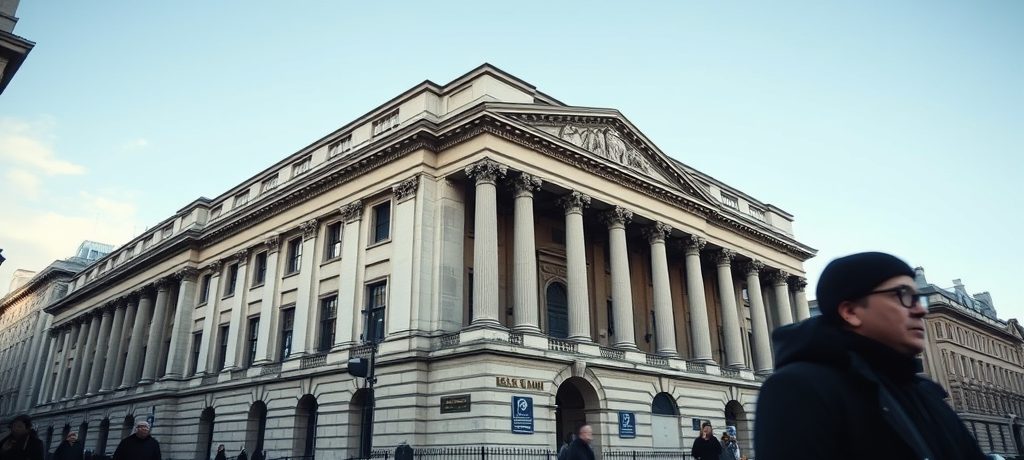
The Bank of England has held its benchmark interest rate at 3.75% for the fifth consecutive meeting, marking the lowest level since February 2023. This decision comes as global economic fallout from the US-Israeli war with Iran has significantly altered the outlook, pushing up inflation worldwide and making previously anticipated rate cuts in 2026 increasingly unlikely.
Interest Rates and Inflationary Pressures
The Bank of England’s base rate, which dictates the cost for banks and building societies to borrow money, directly influences mortgage, credit card, and savings rates for millions across the UK. The primary objective of the Bank’s monetary policy is to maintain UK inflation, the rate at which prices increase, at or near its 2% target. Historically, when inflation exceeds this target, the Bank typically raises rates to curb spending and reduce demand, thereby limiting price rises.
The UK’s main inflation measure, the Consumer Prices Index (CPI), has seen a notable decline from its peak of 11.1% in October 2022, a consequence of the war in Ukraine. By June 2026, CPI had fallen to 2.6%, down from 2.8% the previous month. The Office for National Statistics (ONS) attributed this drop to lower fuel and food costs, though these reductions are widely considered temporary.
However, new inflationary pressures have emerged. The US-Israeli war with Iran has driven up energy and fuel costs globally, accelerating the pace of price rises more broadly. Bank of England governor Andrew Bailey acknowledged on 18 June that price falls following recent ceasefires were ‘encouraging’. Yet, he cautioned that the higher energy prices over the preceding four months meant ‘there [was] already some inflationary pressure in the pipeline’, stressing the Bank’s commitment to prevent this from escalating into ‘sustained inflation above our 2% target’. Further increases in UK household energy bills, effective 1 July due to the latest price cap adjustment, are also expected to contribute to higher inflation.
Mortgage Market Implications
The stability of the base rate at 3.75% has varied impacts across the UK’s mortgage landscape. According to the government’s English Housing Survey, just under a third of households hold a mortgage.
- Approximately 500,000 homeowners with ‘tracker’ mortgages directly benefit from any rate cuts, seeing an immediate reduction in their monthly repayments.
- Another 500,000 homeowners on standard variable (SVR) rates depend on their individual lenders choosing to pass on any Bank rate adjustments.
- The vast majority, some 87% of mortgage customers, are on fixed-rate deals. While their monthly payments are not immediately altered by a base rate change, the cost of their future deals is significantly affected.
Recent data from financial information service Moneyfacts highlights this shift. As of 29 July, the average rate for a new two-year fixed deal stood at 5.62%, an increase from 4.83% at the start of March. Similarly, the average rate for a five-year fixed deal rose to 5.66% from 4.95% over the same period. The average two-year tracker rate was recorded at 4.51%.
A critical concern for the market is the substantial volume of expiring fixed-rate mortgages. An average of 800,000 fixed-rate deals, many with interest rates at 3% or below, are projected to expire annually until the end of 2027. Borrowers transitioning from these historically low rates are likely to face sharply increased borrowing costs.
Broader Financial Impacts
Beyond mortgages, the Bank of England’s interest rate decisions also influence other lending and saving products. Credit card, bank loan, and car loan rates are affected, though lenders tend to adjust these more slowly in response to base rate changes. For savers, a stable or falling base rate typically translates to reduced returns on their deposits. As of 29 July, Moneyfacts reported the average rate for an easy access savings account with a £10,000 balance at 2.55%, while an easy access cash ISA offered an average of 2.73%. For those willing to lock their money away for a year, the average rate was 4.27%. These rates are particularly crucial for individuals who rely on savings interest to supplement their income.
International Context
The UK’s interest rate stance contrasts with some of its G7 counterparts. In recent years, the UK has maintained one of the highest interest rates among the world’s seven largest advanced economies. The European Central Bank (ECB) began cutting its main interest rate for the eurozone in June 2024, bringing it down from an all-time high of 4% to 2% by June 2025. However, in June 2026, the ECB reacted to the Iran conflict by raising rates to 2.25%. Meanwhile, the US central bank, the Federal Reserve, has cut interest rates three times since September 2025, reaching a current range of 3.5% to 3.75%, its lowest since 2022. The Fed opted to hold rates at its June meeting, the first under new chair Kevin Warsh, who is expected to be generally more supportive of cuts but must also navigate the economic fallout from the Iranian conflict.
Given the persistent global uncertainties and the Bank of England’s commitment to its inflation target, many analysts now anticipate that UK interest rates are likely to remain at 3.75% for the foreseeable future, diverging significantly from earlier expectations of multiple rate cuts in 2026.