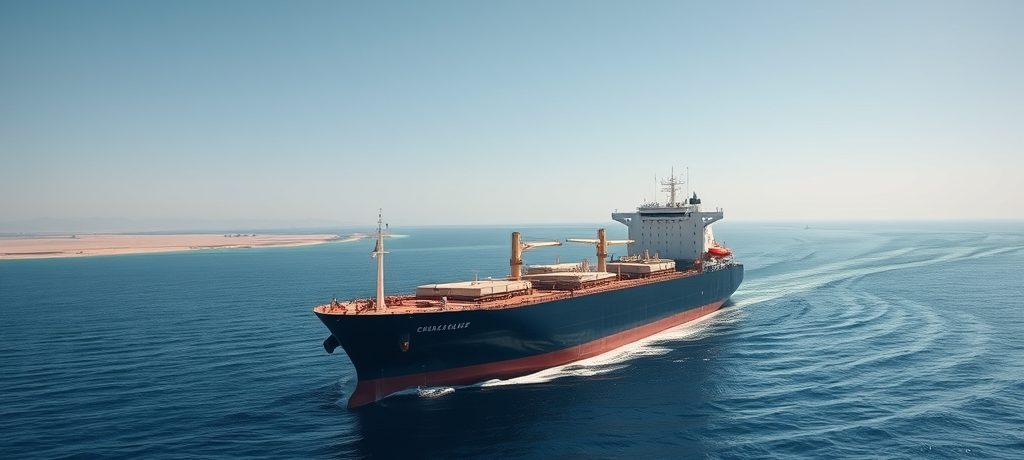
Crude oil prices experienced a notable decline on Thursday, with West Texas Intermediate (WTI) for September delivery falling by $0.65, or 0.77%, to settle at $83.81 per barrel. This downward movement was primarily attributed to two converging factors: ongoing diplomatic discussions between Iran and Oman concerning the management of the critical Strait of Hormuz, and a wave of profit-taking by investors following a robust 7% gain in the previous trading session. The talks between the two Gulf nations have reportedly ‘induced positivity on the resumption of the free flow of gulf oil,’ according to market observers, tempering recent geopolitical risk premiums.
Hormuz Diplomacy Fuels Market Optimism
The prospect of a more stable passage through the Strait of Hormuz, a vital chokepoint for global energy supplies, has begun to revive investor confidence, which had been significantly shaken since Iran’s closure of the waterway on February 28. This closure followed a series of U.S. attacks, escalating tensions in the region. Iran’s Foreign Minister Esmaeil Baghaei confirmed that negotiations with Oman are progressing through ‘several rounds,’ signaling a concerted effort to de-escalate maritime security concerns. Baghaei characterized the initial closure of the Strait as a direct consequence of ‘military aggression’ by U.S.-Israeli forces, which he stated ‘has led to the prevailing insecurity on the waterway.’
Contested Control Over a Critical Waterway
At the heart of the ongoing diplomatic efforts is Iran’s proposal for a joint arrangement to oversee shipping transit. Iran’s Deputy Foreign Minister Kazem Saeed Gharibabadi outlined a plan where Iran would manage vessel traffic in one direction, specifically the northern route bordering Iranian waters, while Oman would oversee transits in the opposite direction, utilizing the southern route that runs through its territorial waters. This proposal emerged after Iran reportedly rejected an earlier plan from Oman advocating for a 50-50 joint management agreement. The divergent interests are clear: Oman seeks an ‘open Strait of Hormuz,’ while Iran aims to ‘maintain its grip on the strait.’ This position is further complicated by other Gulf nations, which have ‘unitedly called for free passage to ships from all nations and resisted any measure to collect tolls by any country,’ underscoring the broader regional interest in unimpeded maritime trade.
Geopolitical Volatility and Recent Escalations
The diplomatic discussions surrounding the Strait of Hormuz unfold against a backdrop of persistent and volatile U.S.-Iran tensions. A Memorandum of Understanding (MoU) signed on June 17 had initially brought a halt to the conflict that began on February 28, yet this peace proved short-lived, with attacks recommencing in less than four weeks. During the subsequent flare-up, Iran initiated strikes on several U.S. bases in the Gulf, concurrently shutting the Strait of Hormuz. The U.S. military responded with ’13 consecutive nights of attacks on Iran,’ demonstrating the intensity of the renewed hostilities. Although U.S. President Donald Trump ordered forces to cease attacks last Friday, a brief four-day lull was shattered when Iran’s Islamic Revolutionary Groups Corps targeted U.S. bases in Jordan with ballistic missiles, which U.S. forces successfully intercepted and destroyed. Trump, while stating that Iran ‘must be hit harder,’ also acknowledged allowing talks with Iran to continue, offering a ‘glimmer of hope for the possible success of diplomatic resolution to the conflict.’ Today, the U.S. Central Command confirmed the completion of ‘heavy strikes on Iran,’ indicating the ongoing military pressure despite diplomatic overtures.
Broader Market Influences: OPEC and Currency Dynamics
Beyond the immediate geopolitical concerns, market attention is also gravitating towards the upcoming meeting of the Organization of Petroleum Exporting Countries (OPEC) scheduled for Sunday. The cartel is widely expected to announce an output hike for September, projecting an increase of 188,000 barrels per day. However, this anticipated boost in supply is tempered by reports that the group plans to ‘pause the production increases for three months from October,’ suggesting a more cautious approach to supply management in the medium term. Concurrently, the U.S. dollar index, a key indicator for commodity pricing, was observed trading at 99.90, marking a decline of 0.89 points, or 0.88%, during today’s trading session. A weaker dollar typically makes dollar-denominated commodities like crude oil more attractive to international buyers, potentially offering some counter-balance to the downward pressure from other factors.
The current dip in crude oil prices reflects a complex interplay of immediate profit-taking, cautious optimism stemming from diplomatic efforts to secure the Strait of Hormuz, and the anticipation of future supply adjustments from OPEC. While talks between Iran and Oman offer a potential pathway to de-escalation in a critical shipping lane, the persistent military tensions between the U.S. and Iran underscore the fragility of regional stability. Investors will closely monitor both the progress of these diplomatic discussions and OPEC’s definitive output decisions, as these factors are poised to significantly influence global oil markets in the coming weeks.