Crude oil prices entered a steep decline on Tuesday, extending heavy losses from the previous session, as U.S. officials expressed optimism over a potential agreement with Iran to reopen the critical Strait of Hormuz. The prospect of increased oil flow through the vital waterway, coupled with confirmation of progressing mediatory efforts from Qatar, sent benchmark prices tumbling.
WTI Crude Oil for September month delivery was last observed trading down by $4.66, or 5.80%, settling at $75.68 per barrel. This sharp downturn reflects market reaction to the potential resolution of a long-standing geopolitical flashpoint that has severely impacted global shipping and energy markets.
U.S. Optimism Fuels Market Reaction
The catalyst for Tuesday’s market movement stemmed from U.S. Treasury Secretary Scott Bessent, who confirmed ongoing talks with Iran. Speaking on CNBC’s ‘Squawk Box’ program, Bessent stated there was a chance an agreement between the U.S. and Iran could be reached by Tuesday or Wednesday concerning the reopening of the Strait of Hormuz. He further remarked that, following such an agreement, talks could progress towards a more normalized position in the ongoing conflict.
Addressing concerns about potential tolls, Bessent clarified that the agreement would ensure ‘freedom of movement,’ indicating that traffic through the strait would be free for all international ships. He predicted that the eventual movement of ‘hundreds of ships stranded in the Persian Gulf’ would lead to a subsequent fall in oil and energy prices, a forecast that appears to have immediately influenced market sentiment.
A Shifting Diplomatic Landscape
The current diplomatic overtures follow a period of heightened tension and conflicting signals from both sides. Just last Friday, U.S. President Donald Trump had announced plans to strike Iran on a ‘never-before-seen scale.’ However, by late Saturday, he called off the planned attacks to ‘offer diplomacy a chance.’ On Sunday, Trump stated that fresh talks with Iran would resume from Monday afternoon.
This narrative was complicated by Iran’s swift denial. Iran’s Foreign Ministry stated that it was engaged in talks only with Oman regarding the management of the Strait of Hormuz, and not with the U.S. This denial prompted a strong reaction from President Trump, who, through Truth Social, labeled the ruling regime ‘duplicitous.’ He asserted that whether Iran acknowledged it or not, the U.S. was indeed in talks for a resolution of the crisis and claimed the U.S. was in ‘complete control’ of the Strait of Hormuz region.
Later, Trump further elaborated that he had cancelled the planned attacks on Iran at the request of leaders from Qatar, Saudi Arabia, and the United Arab Emirates, specifically to allow talks to proceed. However, he issued a stern warning, stating that this would be the ‘last chance for Iran.’
Previous Agreements and Ongoing Obstacles
The current diplomatic efforts are not without precedent, nor are they without a history of setbacks. The U.S. and Iran had previously agreed to halt attacks and resolve disputes through peace talks when they signed a Memorandum of Understanding (MoU) on June 17. However, this agreement proved short-lived, as both sides began trading attacks within less than a month, effectively rendering the MoU null and void.
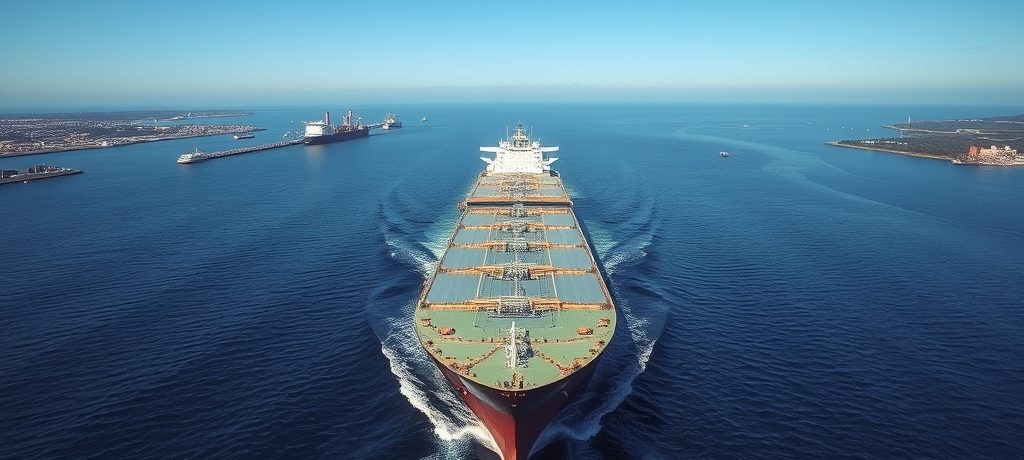
As a direct consequence of these renewed hostilities, the Strait of Hormuz has remained largely shut for shipping traffic. While a few ships have reportedly traveled either without disclosing their locations or by coordinating with Iranian authorities, the broader shipping industry has refrained from allowing fleets to move. This reluctance stems from persistent fears of attacks by drones or missiles, despite assurances of safety from the U.S. Central Command. Bloomberg reported that traffic at the Strait of Hormuz remained subdued as of Tuesday due to these ongoing safety concerns.
Qatar’s Mediatory Role
Amidst the fluctuating rhetoric and market volatility, Qatar has played a pivotal mediatory role. Tensions eased further following an announcement by Qatar’s Foreign Ministry spokesperson, Majed al-Ansari. Al-Ansari stated that the mediation efforts aimed at resolving the U.S.-Iran conflict are making tangible progress, and diplomatic contacts have reached ‘very progressive stages.’ This confirmation from a neutral party has added credibility to the U.S.’s optimistic outlook, further contributing to the market’s downward pressure on oil prices.
The significant drop in crude oil prices underscores the profound impact that geopolitical developments, particularly those affecting critical shipping lanes like the Strait of Hormuz, have on global energy markets. While U.S. optimism and Qatari confirmation have provided a temporary reprieve, the history of failed agreements and Iran’s conflicting statements suggest that the path to a stable resolution and sustained free flow of oil may still face considerable challenges.