TORONTO — Canadian Prime Minister Mark Carney stated Thursday that trade negotiations with the United States have devolved into a ‘nasty’ affair, a sentiment he attributed to President Donald Trump’s recent disparagement of Canada and its leadership, coupled with escalating tariff threats.
Escalating Tensions in Trade Negotiations
Despite the acrimonious rhetoric, Carney affirmed Canada’s continued engagement in the talks, framing the ongoing discussions as a critical effort to safeguard Canadian jobs and businesses. ‘This is a tough negotiation,’ Carney remarked in French. ‘You can say ‘nasty.’ But this is a question of Canadian jobs. It’s a question of the future of Canadian businesses.’
The comments from the Canadian Prime Minister came in the wake of President Trump’s direct criticism during a speech in Las Vegas on Wednesday. ‘Canada’s nasty. They are. They’re nasty,’ Trump declared. ‘I love the people, but they’re nasty. Nasty leadership.’
Carney acknowledged the ongoing ‘tariff war with the Americans’ but responded with a laugh when questioned about Trump’s specific characterization of Canada. He noted that Canadian negotiators were present in Washington D.C. this week and anticipated further dialogue with Trump, following a conversation between the two leaders last week.
Tariff Threats and Economic Repercussions
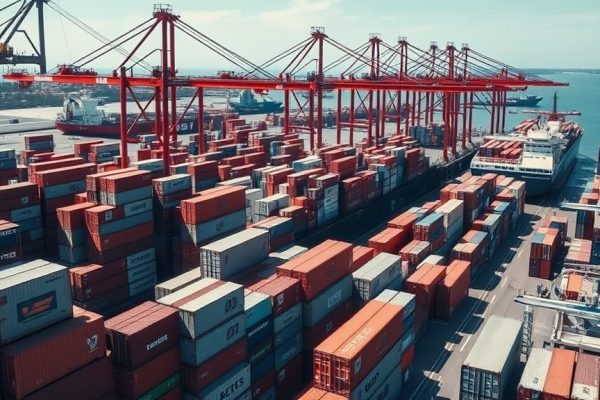
The United States has already implemented tariffs on Canadian steel, aluminum, and automobiles. President Trump has further threatened to impose a substantial 50% tariff on a broader range of Canadian goods, with a potential implementation date of August 19.
Tariffs, which are essentially taxes on imported goods, can lead to increased costs for businesses, which are often passed on to consumers in the form of higher prices. While President Trump asserts that these tariffs will incentivize manufacturing to return to the U.S., economic data has provided limited evidence to support this claim.
The escalating tariff threats and President Trump’s repeated suggestions that Canada should consider becoming the 51st U.S. state have reportedly angered many Canadians, leading to a reported increase in cancellations of trips to the United States.
Retaliation and Countermeasures
U.S. Trade Representative Jamieson Greer has contended that Canada and China are the sole countries to have retaliated against the Trump administration’s tariffs. Among his stated concerns are restrictions on U.S. alcohol sales in certain Canadian provinces. Canadian officials, however, maintain that their countermeasures are a direct response to existing U.S. tariffs.
These latest exchanges follow a period of mounting tensions between the two North American nations. In January, at the World Economic Forum in Davos, Switzerland, Carney criticized major global powers for employing economic coercion against smaller nations. This criticism prompted a sharp retort from President Trump, who stated, ‘Canada lives because of the United States. Remember that, Mark, the next time you make your statements.’
Economic Interdependence and Consumer Impact
Canada stands as one of the United States’ most significant trading partners. The ongoing trade dispute carries the potential to drive up prices for American consumers at a time when many are already grappling with the high cost of living, particularly in the lead-up to the November 3 midterm elections.
Carney highlighted the tangible economic impact of existing U.S. tariffs, pointing out that tariffs on aluminum have contributed to a significant 58% increase in aluminum prices within the United States. ‘That’s not a good situation for American companies,’ Carney stated, underscoring the detrimental effects on U.S. businesses.