Cotton futures experienced a notable downturn as markets closed on Monday, August 10, 2026, with contracts shedding between 46 and 55 points on the day. This decline occurred amidst a mixed broader commodity landscape, characterized by a significant rise in crude oil prices and a strengthening US dollar, factors that often introduce volatility into agricultural markets.
The specific performance of key contracts underscored the bearish sentiment. The October 2026 cotton contract settled at 82.72 cents per pound, marking a decrease of 50 points from its opening. The December 2026 contract, often a benchmark for the upcoming harvest, followed suit, closing at 83.86 cents per pound, down 54 points. Further out, the March 2027 cotton futures contract registered a 46-point drop, ending the session at 85.72 cents per pound. These consistent declines across multiple contract months suggest a broad-based pressure on cotton valuations, as detailed in reports by Austin Schroeder for Barchart.
The broader macroeconomic environment presented a contrasting picture that likely influenced trading decisions. Crude oil prices saw a substantial increase of $4.12 per barrel. While not directly correlated, higher energy costs can impact the expenses associated with farming, processing, and transporting cotton, potentially squeezing margins for producers and processors. Concurrently, the US dollar index climbed $0.272 higher. A stronger dollar typically makes dollar-denominated commodities, such as cotton, more expensive for international buyers utilizing other currencies, which can suppress export demand and contribute to price weakness.
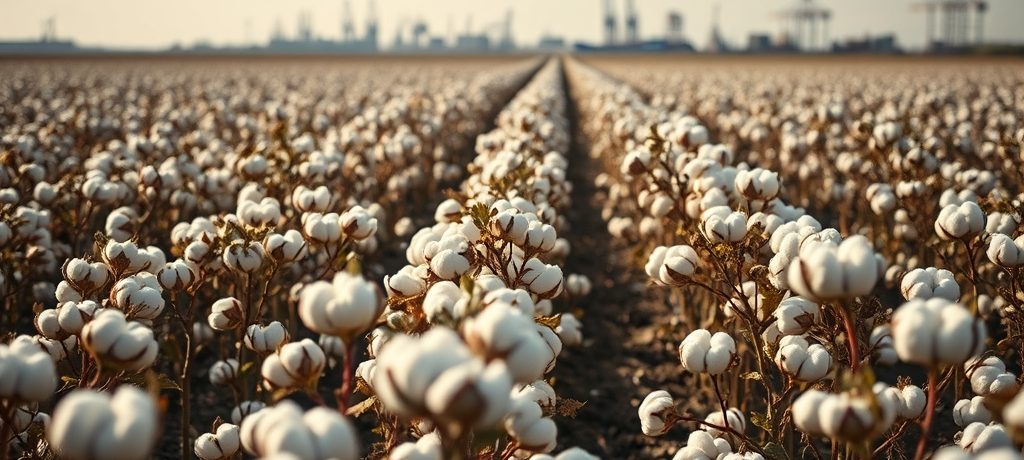
Adding to the market’s considerations was the release of the latest Weekly Crop Progress data, offering a snapshot of the US cotton crop’s development. As of Sunday, 65% of the US cotton crop was reported to be setting bolls, indicating a significant stage of growth. Additionally, 10% of bolls were already opening, suggesting that some early harvest activity might be on the horizon. However, the overall health assessment of the crop showed a slight deterioration. Condition ratings were pegged at 40% good/excellent, representing a 2 percentage point decline from the previous week. This downward revision in crop health was further corroborated by the Brugler500 index, a widely watched measure of agricultural conditions, which fell 6 points to 319.
Further insights into recent market activity came from The Seam, an online cotton trading platform, which reported 246 bales sold in its August 7 sale, with an average price of 81.82 cents. This transactional data provides a glimpse into actual physical market pricing. Globally, the Cotlook A Index, a key indicator of international cotton prices, showed an increase of 20 points on August 7, reaching 93.70 cents, suggesting some underlying strength in global benchmarks despite the futures market dip. Meanwhile, ICE certified cotton stocks, a measure of readily available supply, remained steady on Friday, holding at 84,632 bales. The Adjusted World Price, a crucial reference for US cotton loan rates and marketing, was raised by 163 points last week, settling at 66.29 cents per pound. These varied data points underscore the complex interplay of fundamental supply-demand factors and broader macroeconomic trends influencing cotton prices.
The consistent slip in cotton futures on Monday suggests that despite some mixed signals, including a rise in the Cotlook A Index and an adjusted world price increase, concerns over domestic crop conditions and the strengthening dollar weighed heavily on trader sentiment. This aligns with recent analyses from Barchart, which have indicated a prevailing bearish outlook for cotton prices, advising caution among market participants and highlighting the potential for further downward movement.