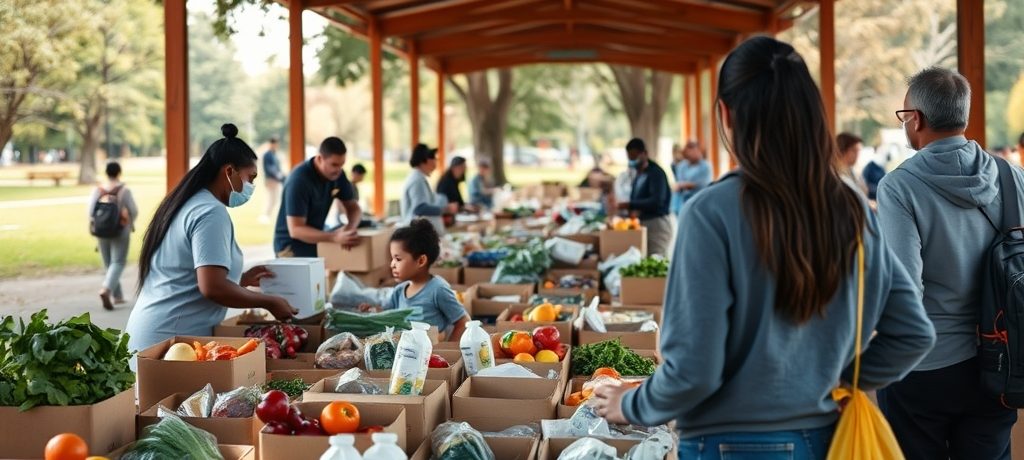
Families across Gloucestershire and Somerset are confronting significant financial strain this summer, as the school holidays intensify pressure on household budgets to provide consistent, healthy meals. Charities report a marked increase in demand for food assistance, highlighting the pervasive issue of food insecurity affecting children during the break from school-provided meals, a period often referred to as ‘holiday hunger’.
The YMCA Cheltenham, for instance, has initiated ‘family fun days’ designed to offer free, nutritious food alongside recreational activities in local parks. Rob Charsley, head of communities, health and wellbeing at the charity, noted the immediate and substantial impact of these events. In a single week, 67 children and their families attended one such event, underscoring the acute need within the community. Charsley articulated the core challenge parents face: “Summertime is a great and fun time for children, but it’s also a difficult time for parents [dealing] with financial pressures and food poverty.” He further emphasized the comprehensive nature of these struggles, stating, “There can be real pressures for families to find those positive activities and be providing healthy food for children, and it all comes at a cost.” The charity’s efforts are designed to mitigate these costs, providing both sustenance and positive engagement.
Escalating Food Insecurity and Community-Led Relief
The regional data paints a stark picture of escalating food insecurity. According to figures cited by Charsley, 18% of children in Cheltenham and 17% of Gloucester children experience very low food security. This means a substantial proportion of the youth population in these areas faces inadequate access to food, a problem that intensifies when the safety net of school meal programs is removed for several weeks.
In response to this growing need, community-led initiatives are expanding their operations and witnessing unprecedented demand. In Somerset, the Radstock Food Club, managed by Sofia Perkins, has reported a significant uptick in families requiring assistance. The club, which strategically sources and distributes surplus food from supermarkets and various suppliers, now provides essential provisions to more than 100 families, alongside older individuals in need. Perkins observed a notable shift in public perception regarding food banks, indicating a reduction in social stigma. “There definitely seems to be less stigma when it comes to food banks than previously,” she stated, adding, “There’s more people [going to food banks] – people are less worried about accessing it.” This suggests that the financial pressures are so widespread that seeking help has become a more normalized, albeit concerning, necessity for many households.
The Economic Imperative: Cost Versus Nutritional Value
The financial pressures on families extend beyond merely acquiring enough food; they also critically influence the nutritional quality of meals. Atlanta, a parent attending a YMCA event with her two children, provided a firsthand account of this difficult trade-off. She voiced concerns about both the price and the perishability of healthier food options. “It just goes off really quickly,” she remarked, referring to fresh produce, which often has a shorter shelf life than processed alternatives. She elaborated on the economic dilemma: “It is quite difficult because it’s so pricey to get all the healthy stuff, whereas the cheap stuff – the junk food – is just cheap, so it’s easier to buy that.” This highlights a systemic challenge where affordability often trumps nutritional value for struggling families.
This observation is strongly corroborated by Sofia Perkins from the Radstock Food Club, who provided a broader economic context for these dietary choices. Perkins characterized Radstock as “one of the lowest income places in the country,” a factor that directly dictates household purchasing power and, consequently, food choices. “People can’t afford your standard healthy food, which means people are eating quick, convenient food, which is no good for them,” Perkins explained. This reliance on less nutritious, more convenient options can have long-term health implications, underscoring the critical role of food assistance programs in providing access to a balanced diet. Perkins emphasized the profound impact of their work, stating, “Being able to provide this for everybody really does make a big difference.”
The efforts of organizations like YMCA Cheltenham and Radstock Food Club are proving to be “a real help for our community,” as Rob Charsley noted. These initiatives offer a vital lifeline, addressing not only the immediate need for food but also confronting the deeper financial challenges that compel families to make difficult choices between cost and nutritional value during the extended summer break. As the cost of living continues to impact household budgets, the sustained provision of such community support remains indispensable for safeguarding the well-being and health of children in these vulnerable regions.