Prime Minister Andy Burnham has received stark warnings that the UK economy could experience near-stagnation next year, with internal Treasury modelling projecting a mere 0.3% GDP growth in 2027. This bleak outlook is predicated on a ‘reasonable worst-case scenario’ involving continued disruption in the Strait of Hormuz until the end of 2026, exacerbated by the ongoing conflict in the Middle East, specifically referenced as the ‘Iran war’ in the source. This geopolitical tension has already driven up global oil and fuel prices, while simultaneously severely impacting crucial international supply chains, creating a challenging economic environment for the UK.
Stark Economic Headwinds and Forecast Downgrades
The internal Treasury analysis, first reported by Bloomberg and subsequently confirmed by government sources, indicates a significant downgrade from previous, more optimistic forecasts. For the current year, 2026, the modelling suggests the UK economy would expand by 0.9%. While this figure is already notably below the 1.1% forecast made by the independent Office for Budget Responsibility (OBR) in March, the prospect for the following year, 2027, is considerably grimmer. The projected 0.3% growth for 2027 represents a dramatic reduction, falling far short of the OBR’s more optimistic 1.6% forecast for the same period. Such a low growth rate would effectively mean the UK economy is barely expanding, with potential implications for employment, investment, and overall prosperity.
Government officials have underscored that routinely planning for all possible scenarios, including adverse ones, is a standard practice. The economic landscape has already shown tangible signs of strain throughout the year. After a relatively strong start, UK growth faltered distinctly as the conflict in the Middle East began to affect various businesses across sectors. Official figures due on Thursday are expected to provide further insight, with economists anticipating that the economy grew by a modest 0.4% between April and June of this year, reflecting this discernible slowdown.
Escalating Inflationary Pressures and Geopolitical Risks
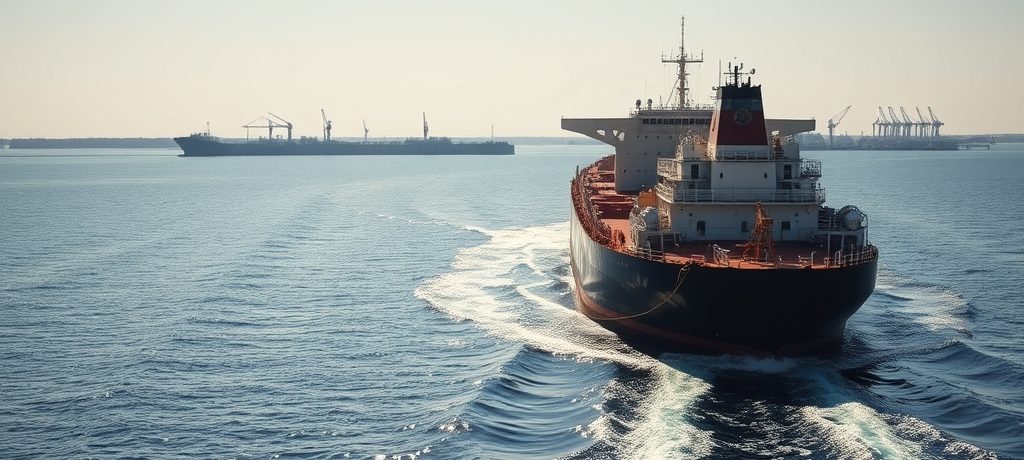
The ‘reasonable worst-case scenario’ presented to Prime Minister Burnham and Chancellor John Healey outlines a critical geopolitical situation: the Strait of Hormuz, a vital chokepoint for global oil shipments, remaining effectively closed for the next five months, coupled with the absence of a permanent US-Iran peace deal until the new year. Such prolonged and severe disruption in this critical shipping lane would inevitably continue to exert intense upward pressure on global energy costs and logistics expenses, directly feeding into broader domestic inflationary trends.
Under this Treasury modelling, inflation is projected to peak at a concerning 4.3% in the first three months of next year. This represents a substantial increase from its current level of 2.6%, which already sits just above the Bank of England’s 2% target. A combination of minimal economic growth and significantly elevated inflation would undoubtedly intensify the financial burden on UK households, eroding purchasing power, and simultaneously increasing operational costs for businesses. This dual challenge places considerable pressure on the government to formulate effective counter-measures.
Budgetary Tightrope: Cost of Living vs. Fiscal Discipline
With the upcoming Budget scheduled for 28 October, Prime Minister Burnham and Chancellor Healey confront the formidable task of devising impactful measures to ease the persistent cost of living crisis, all while rigorously adhering to strict fiscal commitments. Since taking office just three weeks ago, Burnham has already initiated policies aimed at alleviating immediate financial pressures, notably including the removal of VAT from domestic electricity bills and bringing forward an already planned end to ‘subscription traps.’
However, the Prime Minister himself has openly acknowledged that these initial interventions may not be sufficient to address the scale of the challenge. Speaking to the BBC’s Wake up to Money, Burnham hinted strongly at the necessity for further support, explicitly stating that the current announcements are ‘not enough on their own.’ He has specifically tasked Chancellor Healey with thoroughly exploring additional government actions on the cost of living ahead of the Budget, a mandate which Healey has confirmed will be his ‘main focus.’
Despite the evident urgency to provide relief to struggling households and businesses, the Chancellor has also firmly underscored his unwavering commitment to ‘strong fiscal discipline.’ This resolute stance will inevitably limit the government’s capacity for extensive new spending or significant tax cuts. Burnham’s administration is further constrained by its party’s 2024 manifesto pledges, which include explicit commitments not to increase income tax, VAT, or National Insurance contributions. Moreover, the government has pledged to adhere to the fiscal rules established by former Chancellor Rachel Reeves, which mandate balancing day-to-day spending with tax revenues by the end of the decade, adding another layer of complexity to their budgetary decisions.
The confluence of external geopolitical instability, domestic inflationary pressures, and self-imposed fiscal constraints presents a profoundly complex economic challenge for the new government. As the UK economy navigates these turbulent waters, the forthcoming Budget will be a critical test of the administration’s ability to safeguard economic growth and support living standards against a backdrop of potentially severe global disruption, while maintaining its long-term financial credibility.