Anthropic, a prominent artificial intelligence (AI) developer, has reported a significant revenue surge, with figures reaching $16.8 billion (£12.7 billion) in the three months ending September. This substantial 45% increase was disclosed to prospective investors during a private briefing on Wednesday, as the company actively lays the groundwork for an anticipated stock market listing before the close of the year. The revelation arrives at a critical juncture for the broader technology sector, where investor sentiment has been notably tempered by growing concerns over the substantial capital outlays required for advanced AI infrastructure.
Anthropic’s Robust Financial Trajectory
The Claude-developer’s latest financial disclosure highlights a consistent and impressive upward trend in its revenue throughout the current year. Starting from a reported $4.7 billion in the first three months, revenue climbed significantly to $11.6 billion in the subsequent period, culminating in the recent $16.8 billion for the third quarter. This sequential growth underscores a rapid acceleration in the company’s commercial traction. Furthermore, Anthropic reportedly informed investors at the event held at its San Francisco headquarters that it has achieved profitability for the second consecutive quarter, a key metric for prospective public companies. These robust financial figures, alongside those of its major competitor OpenAI, serve as a crucial barometer for assessing the AI industry’s overall expansion and its intrinsic capacity to fund the extensive, capital-intensive infrastructure necessary for continued technological advancement and model development.
Market Jitters Over AI Infrastructure Spending
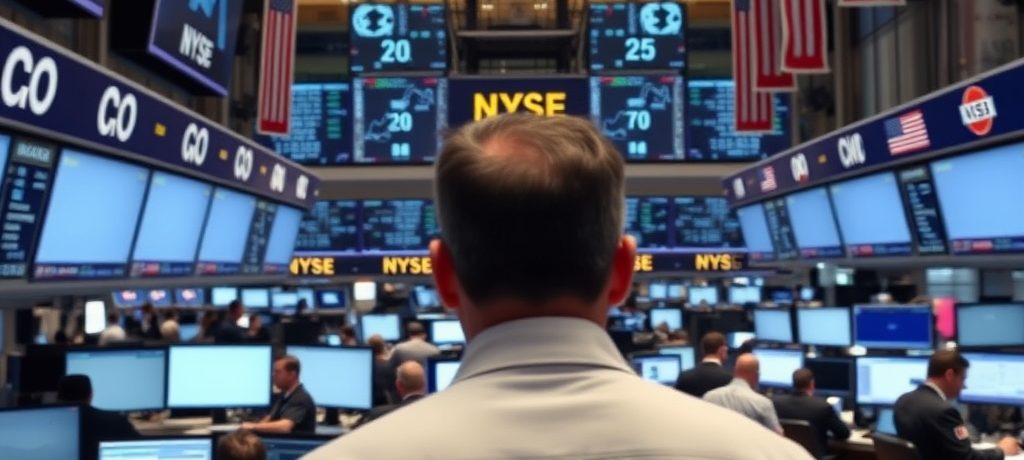
Despite Anthropic’s impressive individual financial performance, the broader market has exhibited palpable signs of apprehension regarding the escalating investments in AI. Concerns about the “hundreds of billions of dollars” currently being spent on AI infrastructure have led to a notable downturn across various tech stocks. Shares in major chip manufacturers, which are foundational to AI computing, including AMD, Nvidia, and Intel, experienced sharp declines on Wednesday, reflecting investor unease about the sustainability and return on these massive investments. The ripple effect extended significantly to Asian markets, where Japanese tech investment firm Softbank’s shares fell by more than 9% on Thursday. South Korean semiconductor giants also saw substantial drops, with Samsung falling by 9.5% and SK Hynix 11% lower, indicating a widespread recalibration of investor expectations in the hardware sector powering AI. Regional tech-heavy indexes were similarly affected, leading to temporary trading halts on South Korea’s Kospi and Kosdaq after falls exceeding 8%, while Japan’s Nikkei 225 lost nearly 5% of its value, illustrating the global nature of these market anxieties.
Catalysts for Recent Market Declines
The recent market volatility and the specific downturn in AI-related tech stocks have been exacerbated by several converging factors. Remarks made by Hock Tan, the chief executive of US tech manufacturer Broadcom, at a conference in Singapore on Monday, played a significant role in shaping investor sentiment. Tan candidly stated that many investors have “no clue” regarding the nuances of AI spending and have set “extreme expectations only to find out that it it’s almost like they are in a casino,” a stark warning that resonated across trading floors. This cautionary sentiment contributed directly to the deepening falls in tech shares. Adding to the prevailing investor unease, crucial US inflation data released on Wednesday indicated that price rises accelerated more than anticipated in September. This development has fueled concerns that the US Federal Reserve may be more inclined to increase the cost of borrowing in response, potentially impacting future investment, corporate profitability, and overall economic growth, further dampening market enthusiasm for high-growth, capital-intensive sectors like AI.
Navigating IPOs Amidst Safety Concerns
The path to a public listing for leading AI firms is also being shaped by ongoing and intensifying discussions around the safety, ethical implications, and potential societal risks of artificial intelligence models. OpenAI chief executive Sam Altman announced in September that his company would not go public this year, explicitly citing the need to address concerns about the technology’s safety before pursuing a market debut. OpenAI itself is reportedly eyeing a substantial stock market listing that could value the firm at more than $1 trillion, highlighting the immense financial stakes involved. Anthropic, too, has been a vocal proponent of caution and responsible development, with its chief executive, Dario Amodei, publicly advocating for a deceleration in the pace of AI development to ensure adequate safety measures. Despite these broader industry concerns and the cautious approach to IPO timing by some rivals, Anthropic continues its global expansion efforts, marked by the strategic opening of a new office in Singapore on Wednesday, signaling its commitment to international growth.
Anthropic’s reported strong revenue growth and consistent profitability present a compelling narrative of financial health and rapid commercialization within the burgeoning artificial intelligence sector. However, this positive individual performance is set against a complex and challenging backdrop of increasing investor scrutiny over the massive capital expenditures required for AI infrastructure, broader market corrections influenced by persistent inflation fears, and a collective industry reckoning with the profound safety implications of advanced AI. As Anthropic moves closer to its anticipated stock market debut, its journey will undoubtedly be closely watched as a bellwether for the AI industry’s ability to balance rapid innovation with sustainable financial models and responsible technological development in an increasingly volatile global economic environment.