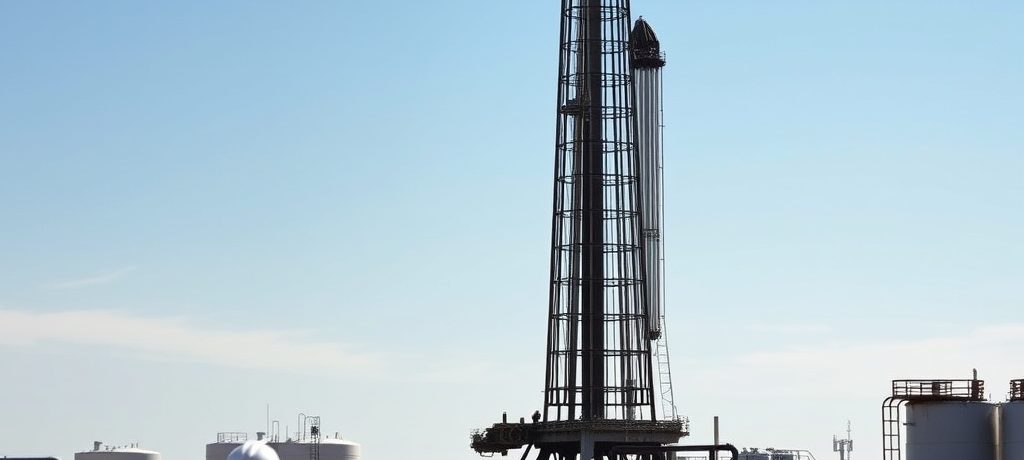
Kolibri Global Energy Inc. (TSX: KEI, NASDAQ: KGEI) has reported a substantial operational uplift from its Tishomingo field in Oklahoma, with its latest wells demonstrating significant production gains. The company’s three Clifton Mack wells, in which Kolibri holds a working interest ranging from 97.45% to 99.03%, have shown a combined production rate of approximately 2,100 barrels of oil equivalent per day (BOEPD). This figure represents a notable 55% increase from the prior week’s output, including approximately 925 barrels of oil per day.
Clifton Mack Wells Drive Production Growth
The three Clifton Mack wells have been undergoing fracture stimulation fluid flowback for roughly three weeks. Kolibri notes that a new fracture stimulation design implemented in these wells has led to a different flowback profile compared to its previous Caney wells. Specifically, the company has recovered a significantly higher volume of fracture stimulation fluid in the initial three weeks, with two of the wells recovering just over 15% and one recovering just over 7% of the fluid. Daily frac fluid recovery rates have remained nearly consistent, even as production rates have climbed.
This altered flowback dynamic has meant that achieving peak oil and gas production rates is taking longer than observed in earlier wells. Despite a recent slowdown in the rate of increase, Kolibri management expresses confidence that the wells will continue to clean up and improve further, citing the sustained higher daily fracture stimulation fluid recovery as a key indicator.
Lovina 5-8-1HF: A Strategic New Bench Test
Beyond the immediate gains from the Clifton Mack wells, Kolibri Global Energy is also advancing its strategic exploration efforts with the Lovina 5-8-1HF well. This well has successfully undergone fracture stimulation, utilizing the same new design employed in the Clifton Mack wells. Flowback operations are anticipated to commence early next week, following the drilling out of fracture stimulation plugs.
The Lovina 5-8-1HF well holds particular significance as Kolibri’s inaugural “False Caney test.” Should this test prove successful, it could validate a new hydrocarbon-bearing bench, potentially unlocking numerous future drilling locations not currently accounted for in the company’s reserves. Such an outcome would be instrumental in expanding Kolibri’s reserve base and, consequently, enhancing shareholder value.
Management Optimism for Continued Growth
Wolf Regener, President and CEO of Kolibri Global Energy, conveyed his satisfaction with the recent operational performance and future prospects. “We are pleased that the flowback rates are remaining high and with the large BOEPD improvement these wells have had in the last week. We are looking forward to seeing how they progress as they continue to clean up,” Regener commented, highlighting the ongoing potential of the Clifton Mack assets.
Regener further expressed enthusiasm for the Lovina 5-8-1HF well, stating, “I’m also excited that we will be flowing back the fracture stimulation fluid from the Lovina 5-8-1HF well, our first False Caney test, which will hopefully prove up a new bench. Successful results from this well could add many future drilling locations not currently booked, which would increase our reserves and thus value for our shareholders.” He concluded by emphasizing the anticipated financial benefits: “We are looking forward to the additional production and cash flow from all of these wells, which we expect will significantly increase the Company’s cash flow and add incremental value to our shareholders.”
Kolibri Global Energy Inc. operates as a North American energy company, primarily focused on identifying and developing oil and gas projects within the United States. The company leverages its technical and operational expertise to acquire and manage energy properties, with its shares traded on both the Toronto Stock Exchange and NASDAQ. The current operational update underscores Kolibri’s strategic execution in its Tishomingo field, pointing towards a trajectory of increased production, enhanced cash flow, and potential long-term value creation for its investors through both existing assets and promising new exploration ventures.