New government regulations aimed at capping the number of logoed school uniform items, set to take effect this September, are being critically assessed by charities who argue the measures do not go far enough to alleviate the financial burden on families. Clothing Coventry, a local charity, contends that while the new limits are a “start,” the government “needs to go further” to address the significant costs parents face annually, particularly amidst a challenging economic climate.
From September, schools will be restricted to requiring a maximum of three items with a school logo, such as a blazer, jumper, or sportswear, in addition to a tie for secondary school pupils. This policy shift, according to government data, will necessitate changes to uniform lists in approximately 23% of secondary schools. The government projects these changes could yield modest savings for some families, estimating “up to £50 per child.”
However, Zia Lee from Clothing Coventry highlights a stark contrast in the perceived financial impact. “To have three compulsory logo items I mean you’re still looking at a lot of money, you know, one to two hundred pounds for one child,” Lee stated, underscoring the persistent high expenditure despite the new limits. This perspective is echoed by parents grappling with the reality of back-to-school expenses, which often far exceed the government’s projected savings.
Eniole Okwuosa, a mother of three, described secondary school uniform costs as particularly prohibitive, detailing how the requirement for branded items significantly inflates the overall bill. “Uniforms are usually over £200 because the blazers alone are about £40 or £45,” she explained. Okwuosa noted that two of her daughters attend schools where both blazers and jumpers must be logoed, preventing them from opting for more affordable, generic alternatives available on the high street. While she expressed cautious optimism for the limits on logoed items as a “brilliant idea if it works,” the immediate financial strain on her household remains a pressing concern.
Another parent, Angelica Jaros, whose son is starting school this year alongside her six-year-old daughter, estimated the total outlay at “about £300 per kid.” Jaros articulated the compounded financial pressure, not only from the uniform itself but also from the social expectation to provide new items. She explained, “you wanted to go to school with brand new things, you want the same thing for your kids as well,” highlighting how psychological factors can drive up expenditure beyond basic necessity.
The charity’s intervention comes amidst a broader economic climate marked by escalating living costs and high inflation, which have severely impacted household budgets. Meme Horner, 21, a volunteer at Clothing Coventry, emphasized the severity of the situation for many families. “The crisis of money nowadays, the inflation has gone up so dramatically, and parents are struggling to do the basic necessities, let alone get children three pairs of logoed clothing for school,” Horner explained. She firmly believes that even three branded items are “still too many” for families already stretched thin by current economic pressures.
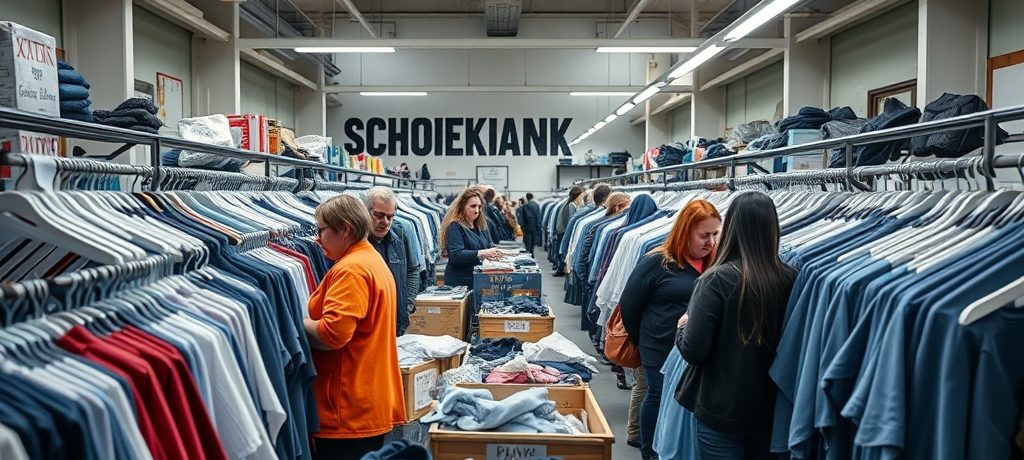
In response to this ongoing financial challenge, Clothing Coventry has established a three-week school uniform pop-up bank, operating by appointment only until August 28th. This initiative provides a crucial, direct financial lifeline for families seeking assistance, offering donated and pre-owned uniforms. Seyedeh Naseriniaki, another volunteer, shared her personal experience with the financial burden, noting her family “had to change twice” last year, with specific, logoed uniforms costing “a lot for us.” She added that with charity support, they “could choose the newer uniform if it was not logoed,” illustrating the tangible financial relief offered by non-branded options and the importance of such community-led initiatives.
However, the projected financial impact of the new regulations is not universally agreed upon across all stakeholders. The Association of School and College Leaders (ASCL), a head teachers’ union, suggests that the “actual difference in cost is likely to be marginal for most families,” implying that the new rules may not translate into substantial savings for the majority. Furthermore, the Schoolwear Association, representing suppliers, has voiced concerns that the new plans could inadvertently lead parents to spend more in the long run. They argue that parents might frequently replace lower-quality generic garments, which may not offer the same durability and longevity as higher-quality, often branded, items, potentially negating initial savings.
Despite these varying perspectives on the financial efficacy of the new rules, the education secretary retains legal powers to direct schools to comply. Clothing Coventry’s pop-up bank, a tangible response to immediate family needs, underscores the persistent financial challenges many households face in preparing children for the academic year. The ongoing debate over school uniform costs highlights a critical intersection of education policy, household economics, and the broader cost of living crisis, demanding continued scrutiny of measures intended to ease financial strain and ensure equitable access to education for all pupils.