The humble cup of coffee, once a simple morning ritual, has become a potent symbol of the intricate forces shaping the global economy. With prices for a large coffee in central London now nearing the £5 mark – and an iced latte at a west London cart costing £4.50 – the daily brew offers a stark illustration of commodity inflation, geopolitical friction, and the escalating impact of climate change. This premium price tag reflects a complex web of factors, from disrupted supply chains to evolving consumer tastes, making each frothy cuppa a concentrated insight into modern economic turmoil.
The New Price Reality
Across the UK, the £4 threshold for coffee is now routinely breached, even in chains not known for the highest-grade beans. Anthony Duckworth, operating the Dear Coco vintage Italian coffee cart at Kew Bridge, expresses a strong desire to keep his flat whites under £4, but admits it is "becoming increasingly difficult, because every part of the supply chain has become more expensive." He highlights a "really important psychological threshold around that four pound mark." This sentiment echoes concerns in the US, where Starbucks CEO Brian Niccol recently faced criticism for suggesting a "$9 [£6.68] experience" at his outlets was a "really affordable premium experience." The rising cost of coffee, from high-grade arabica brewed in expensive La Marzocco machines to standard chain offerings, signals a fundamental shift in the market.
Climate’s Bitter Brew
The journey to these elevated prices begins with the beans themselves, specifically arabica and robusta. Arabica, prized for its sweetness, is hand-picked in regions like Brazil, Ethiopia, and Kenya, while robusta, known for its caffeine content, is mass-harvested, with Vietnam dominating its market since the 1970s. Both have been severely impacted by climatic events. Vietnam experienced its worst drought in decades in early 2024, with rainfall collapsing by 30%, followed by a typhoon during harvest late last year. Brazil’s arabica crop is still recovering from a severe frost in 2021. These convergences pushed arabica prices above $4 (£2.97) per pound of green beans last year, up from a historical $1.20, now settled at $3.08. Robusta surged even more, reaching $2.59 (£1.92) before settling at $1.56. Giuseppe Lavazza, whose family launched the Lavazza brand 131 years ago, describes the past few years as "an unprecedented time in terms of complexity and troubles," predicting prices are "unlikely to drop any time soon," requiring "at least a couple of years" and "two big crops" to normalise. Adding to this volatility, thousands of Vietnamese coffee farmers now check smartphone prices daily, choosing to store beans after harvest in hopes of further price increases, effectively "playing the markets." All eyes are now on Brazil’s July crop, with analysts anticipating a bumper arabica harvest, though the prospect of a "super" El Niño this autumn looms as a potential source of further turmoil.
Tariffs, Trade Routes, and Regulation
Beyond climate, geopolitical and regulatory shifts have significantly disrupted coffee markets. Donald Trump’s ‘Liberation Day’ tariffs, announced last year, disproportionately hit coffee-producing nations, with Vietnam facing a 46% tariff, Indonesia 32%, and Brazil 50%. This caused Brazilian exports to the US to more than halve last summer, diverting beans to Europe, with Germany surpassing the US as the largest importer of Brazilian beans in 2025. American consumers, however, felt the pinch directly: US roasted coffee prices surged by 17% in the year to March, and instant coffee rose a near-record 25%, making it the single fastest-rising item in the inflation basket apart from fuel oil. A bag of ground roast coffee that cost $4.30 in 2020 was $6.32 in 2024 and is now $9.61, heading for $10, disproportionately affecting poorer Americans. Trump eventually signed an executive order in November last year to allow coffee beans to escape these sweeping tariffs, acknowledging the price spike and the economic lesson that tariffs on goods like coffee, which rely on specific climates and "comparative advantage," do not lead to reshoring.
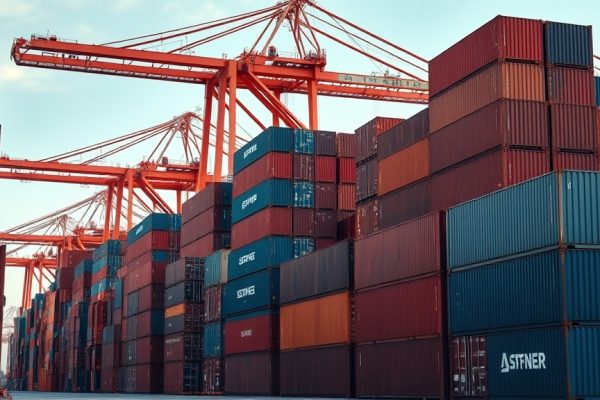
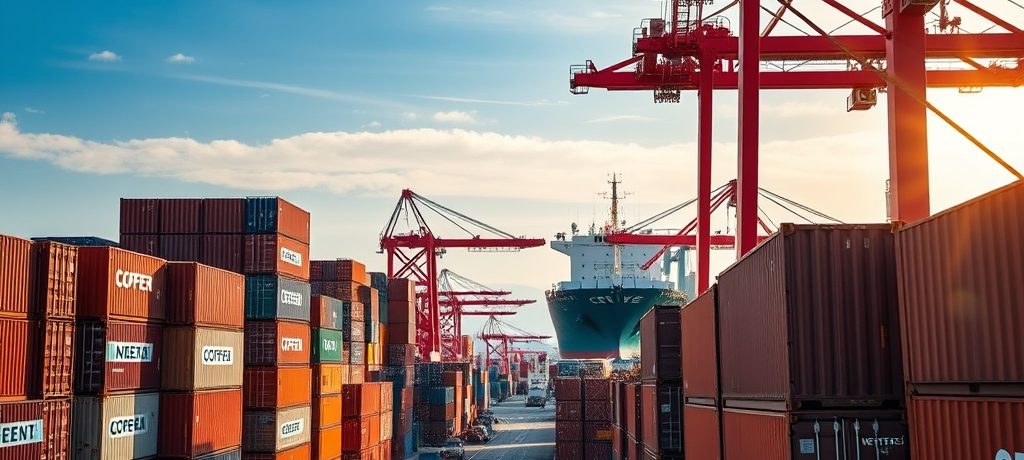
Further complicating supply chains is the chaos in global shipping. Vessels transporting Vietnamese beans to Europe must now navigate around the southern tip of Africa to avoid Houthi militant threats in the Red Sea, adding approximately 4,000 miles to the journey. New EU anti-deforestation rules, set to take effect across 2026 and 2027, also add costs, requiring Vietnamese and Brazilian suppliers to provide GPS coordinates of plantations for satellite verification, ensuring beans do not originate from recently deforested land.
Unyielding Demand and Premiumisation
Despite these myriad pressures, consumer demand for coffee remains remarkably inelastic. Giuseppe Lavazza observes, "We saw that despite the high prices, people love having coffee," and "We don’t see any significant decrease in terms of volumes in the most important countries." This resilience has fueled a trend of ‘premiumisation,’ where businesses justify higher prices through enhanced product experiences. The growing popularity of cold brews among younger demographics exemplifies this, as do chains like Blank Street Coffee, which employ "brand ambassadors" to connect with customers over elaborate, fruit and cake-themed concoctions, curating an experience to command a higher price point.
The £5 coffee, therefore, is more than just an expensive beverage; it is a tangible manifestation of a global economy grappling with climate change, protectionist trade policies, supply chain vulnerabilities, and shifting consumer expectations. As these forces continue to evolve, the price of our daily caffeine fix will likely remain a sensitive barometer of broader economic health and geopolitical stability.