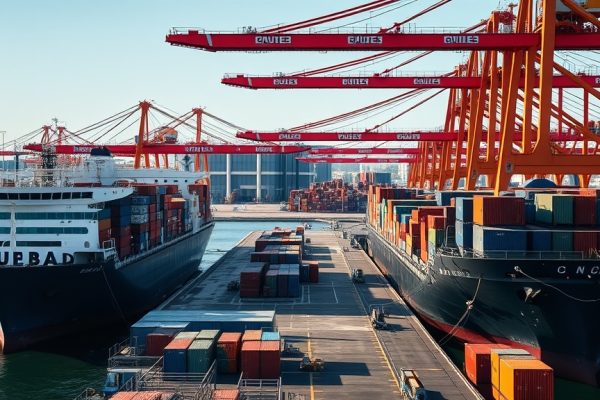
Overnight, the Trump Administration announced a sweeping new set of tariffs impacting 60 countries, citing authorization under Section 301 of the Trade Act of 1974. This move follows closely on the heels of a Supreme Court decision in February 2026 that struck down previous tariffs based on the International Emergency Economic Powers Act (IEEPA) as unconstitutional. However, analysts and legal observers are already raising significant concerns about the legality and procedural integrity of this latest tariff imposition, suggesting it may be as unlawful as its predecessor, albeit for more technical reasons.
Section 301 Recourse and Procedural Scrutiny
The administration’s pivot to Section 301 appears to be a strategic response to the earlier judicial setback. As noted by the WSJ’s Greg Ip, "To Trump, though, court rulings are road maps, not roadblocks. February’s court ruling simply rerouted him to tools the court hadn’t explicitly prohibited. And fortunately for Trump, Congress has over the years scattered many such tools through the law books, many largely forgotten or unused." While Congress did grant the Executive branch authority for such tariffs, it stipulated a very specific set of guidelines and procedures. The document filed by the United States Trade Representative (USTR) claims these were followed, but its own language suggests otherwise.
The USTR’s final "Notice of Action," filed at 12:01 am on July 24, 2026, references evidentiary findings from a June 2, 2026 document titled "Acts, Policies, and Practices…" However, the timeline of these investigations raises immediate red flags. The USTR initiated 60 simultaneous investigations on March 12, 2026. This means the entire process—including investigations, a comprehensive report, 1,600 comments, and a hearing—was compressed into approximately four months, with only about seven weeks from proposed action to final tariffs.
Boilerplate Determinations and Economic Fallout
A deep dive into the 431-page USTR document, which includes the tariff schedule from page 73 forward, reveals a striking lack of rigor. All 60 country-specific "Determinations of Action" are identical boilerplate. Each is a single paragraph, using the exact same template, with only the country name, the tariff rate (either 10% or 12.5%), and annex cross-references changing. There is no country-specific evidence, no discussion of any particular economy’s laws, enforcement record, or forced-labor exposure. The fact that "every major trading partner qualifies for tariffs" indicates that these actions are not specific to any one nation’s behaviors, but rather a broad, undifferentiated measure.
Analysts conclude that "none of the 60 economies received individualized analysis or consideration in that window as required by statute." The superficiality of the document "basically concedes there were no USTR investigations, DJT picked the countries, and picked the rates." Crucially, the process failed to include a true analysis of various countries (with only about half a page dedicated to each), no calibration of tariffs in response to specific illegality, and, most importantly, no analysis of how the behavior in question negatively impacted US companies, as mandated by Section 301. Such a comprehensive determination would require significantly more time, personnel, and intellectual firepower than the four-month attempt allowed.
The economic implications of previous tariffs offer a stark warning. "The most recent research shows US economy paid 95% of the tariffs cost, and while more than half of that was initially borne by companies in lower profits, by this spring it was mostly consumers paying." This suggests that the burden of these new tariffs will likely fall disproportionately on American businesses and consumers.
Legal Challenges and Judicial Outlook
The procedural deficiencies make these new tariffs "as likely unlawful as the IEEPA tariffs were." The previous IEEPA tariffs were deemed "clearly unconstitutional," though they still garnered three votes in favor from Justices Clarence Thomas, Samuel Alito, and Brett Kavanaugh. This time, the administration’s tactic is "slightly clever," leveraging the complexity of Section 301 to potentially provide the Supreme Court with "cover to allow what is plainly a usurpation of Congressional authority."
The critique is not confined to partisan lines. The conservative Reason Foundation, a libertarian organization, observed that "Trump Imposes Massively Harmful and Illegal Section 301 Tariffs," stating that "The new policy is based on sham investigations, and runs afoul of the major questions and nondelegation doctrine." While these tariffs "should be struck down," concerns persist that if the Supreme Court takes another year to act, as it did previously, "the damage will have already been done." Observers express apprehension about the court’s potential willingness to allow these tariffs to stand, even by a narrow 5-4 margin, given its recent trajectory since 2024.
The rapid imposition of these tariffs, characterized by boilerplate justifications and a compressed timeline, sets the stage for immediate legal challenges. The economic and reputational harm could be substantial if these measures remain in place, especially if the judicial process proves protracted, leaving businesses and consumers to bear the costs of what many legal experts consider a procedurally flawed and potentially unlawful trade policy.