Global oil prices experienced a sharp ascent, with Brent crude surging to $107.60 a barrel and West Texas Intermediate (WTI) rising to approximately $106.50, following US President Donald Trump’s renewed threats of severe military action against Iran. The price hikes, representing nearly a 7% jump for Brent crude and 6.4% for WTI, immediately reversed earlier market optimism that had seen oil briefly dip below $100 a barrel.
President Trump, in an address from the White House, reiterated his intention to hit Iran “extremely hard” in the coming weeks, vowing to bomb the nation “back to the Stone Ages” over the next two to three weeks. Despite these aggressive declarations, the President failed to provide concrete details on how the ongoing conflict would conclude, stating only that the US would complete its strategic objectives “very shortly.” This lack of a clear exit strategy disappointed investors who had hoped for a de-escalation roadmap.
Disrupted Supplies and Market Reality Check
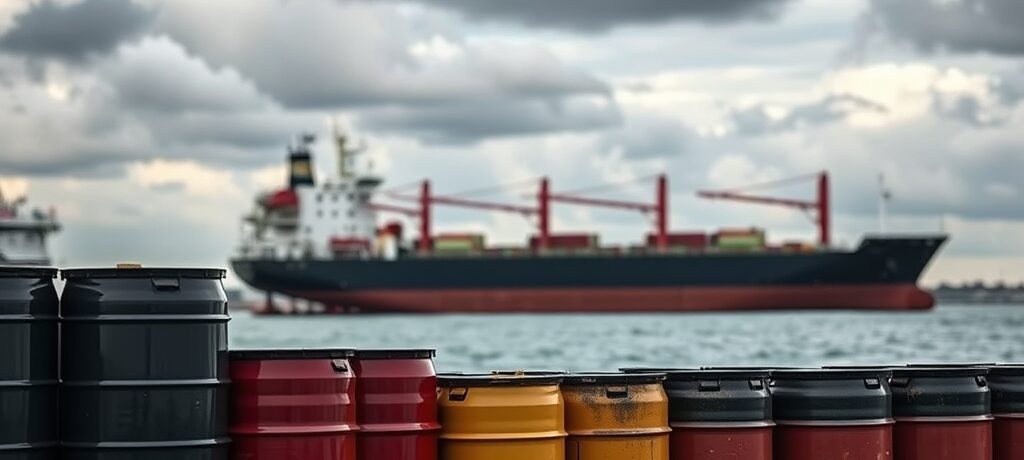
The protracted Iran war, which commenced on February 28 with US-Israeli strikes, has severely disrupted global oil and gas supplies. A critical choke point, the Strait of Hormuz waterway, has seen oil shipments largely halted after Iran threatened to attack tankers attempting passage in retaliation. Trump acknowledged the global energy crisis but asserted that the US does not rely on the Middle East’s energy resources. He provocatively urged other nations to intervene, stating: “To those countries that can’t get fuel, many of which refuse to get involved in the decapitation of Iran… build up some delayed courage, go to the Strait and just take it.”
This rhetoric, far from offering reassurance, cemented market fears of prolonged supply disruptions. Alberto Bellorin from InterCapital Energy described the gains in oil prices as a “clear market reality check following the earlier optimism for an imminent ceasefire.” Bellorin further noted that Trump’s speech lacked a “concrete timeline” for the reopening of the Strait of Hormuz, suggesting that a return to normal shipping operations now appears “months away rather than weeks.” He concluded that Trump’s call for other nations to intervene effectively “removed hopes that disruptions to global energy supplies will be resolved swiftly.”
Asian Markets Bear the Brunt
The ripple effect of Trump’s address extended beyond crude oil, significantly impacting major stock markets across Asia. Reversing earlier gains, the region’s indexes experienced notable declines. Japan’s Nikkei 225 fell by 2.4%, South Korea’s Kospi dropped by 4.5%, and Hong Kong’s Hang Seng was 1.3% lower. This volatility has been a consistent feature of Asian markets since the war began at the end of February.
Analysts highlight Asia’s particular vulnerability to the conflict, given its heavy reliance on the Middle East for energy supplies. Tina Soliman-Hunter from Macquarie University observed that Trump’s signals indicate the war is “likely to continue,” leading investors to anticipate that oil supplies will “remain tight.” This outlook underscores the region’s exposure to geopolitical instability in the Gulf and the direct economic consequences of disrupted energy flows.
The President’s address, while firm in its resolve for military action, left critical questions unanswered regarding the conflict’s resolution and the restoration of global energy supply chains. As investors digest the implications of a potentially prolonged war and continued tightness in oil markets, the immediate future points to sustained volatility and elevated energy costs, particularly for import-dependent economies.