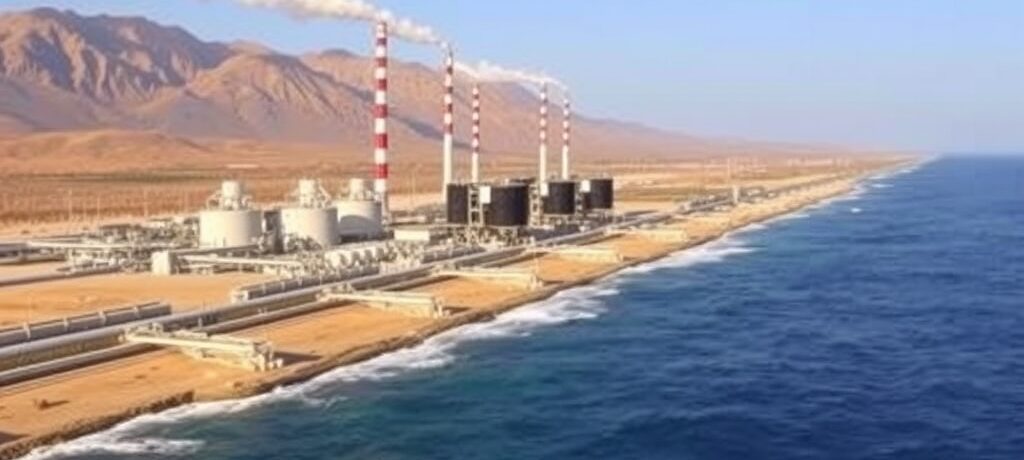
As climate change intensifies droughts and disrupts rainfall patterns across the globe, regions facing acute freshwater scarcity are increasingly turning to desalination, a process that removes salt from seawater to produce potable water. This industry is experiencing rapid expansion, now supplying water to hundreds of millions worldwide, from the Middle East to the United States, driven by a deepening global water crisis.
The economic imperative for desalination is clear in areas where traditional water sources are insufficient. Countries like Kuwait and Oman, for instance, source more than 85% of their drinking water from desalination, according to a 2022 report by the French Institute of International Relations think tank. Its adoption is also widespread in parts of Africa and Australia, as well as in drought-prone coastal areas of the U.S., such as California and Texas. Furthermore, in some Pacific Island nations, rising sea levels have contaminated groundwater, making desalination an increasingly vital freshwater source.
Technological Foundations and Industry Scale
Most modern desalination plants predominantly utilize a process known as reverse osmosis. This method involves forcing seawater at high pressure through a semi-permeable membrane. The membrane allows water molecules to pass through while effectively blocking most salts and other impurities, yielding freshwater on one side and a highly concentrated salt solution, or brine, on the other. Prior to membrane filtration, seawater typically undergoes treatment to remove debris and microorganisms, with post-treatment adding minerals to meet drinking water standards.
An older technique, thermal desalination, involves heating seawater until it evaporates, then condensing the vapor back into liquid, leaving salt behind. While still in use in some regions, this method is generally more energy intensive than reverse osmosis.
The scale of the industry’s growth underscores its economic significance. More than 20,000 desalination plants are currently operational worldwide, with the sector expanding at an approximate annual rate of 7% since 2010, as reported by the International Desalination and Reuse Association. This growth trajectory highlights a substantial investment in water infrastructure globally, responding to an undeniable demand.
The High Cost of Freshwater: Energy and Emissions
Despite its critical role in addressing water scarcity, desalination carries significant economic and environmental costs, primarily due to its energy-intensive nature. Plants worldwide are estimated to produce between 500 and 850 million tons of carbon emissions annually, according to a 2025 study published in the journal Water Research. To put this into perspective, this figure approaches the roughly 880 million tons emitted by the entire global aviation industry, an estimate from the industry group Air Transport Action Group. Such a substantial carbon footprint presents a growing liability in an era of increasing climate regulation and carbon pricing.
Environmental Externalities: Brine and Marine Life
Beyond energy consumption, the byproduct of desalination, highly concentrated brine, poses another significant environmental challenge. This brine is typically discharged back into the ocean, where it can harm seafloor habitats and coral reefs by increasing salinity and introducing chemicals used during the treatment process. Additionally, the intake systems used by desalination plants can trap and kill fish larvae, plankton, and other organisms at the base of the marine food web. These losses can have cascading effects, potentially reducing populations of larger fish and predators that depend on them, representing an ecological cost that could impact marine industries and biodiversity.
Innovations and Strategic Alternatives
In response to these challenges, the industry is exploring various mitigation strategies. Some companies are powering desalination plants with renewable energy sources, aiming to reduce carbon emissions. Others are investing in the development of more efficient membrane technology to lower energy consumption. Innovative approaches include experimenting with moving the desalination process into the deep sea, where natural ocean pressure could help drive reverse osmosis, thereby reducing the need for additional energy input.
However, many experts advocate for a broader, more integrated approach to water management. They suggest that water recycling and conservation efforts should take precedence. Wastewater purification, for instance, typically uses significantly less energy than seawater desalination and can substantially reduce impacts on marine life, offering a more sustainable and cost-effective pathway to augmenting freshwater supplies.
The rapid expansion of desalination underscores the urgent global need for freshwater, yet its substantial energy demands and environmental impacts present a complex economic equation. As the industry continues to grow, balancing the critical need for water with the imperative for environmental sustainability and cost-efficiency will remain a central challenge for policymakers and investors alike.