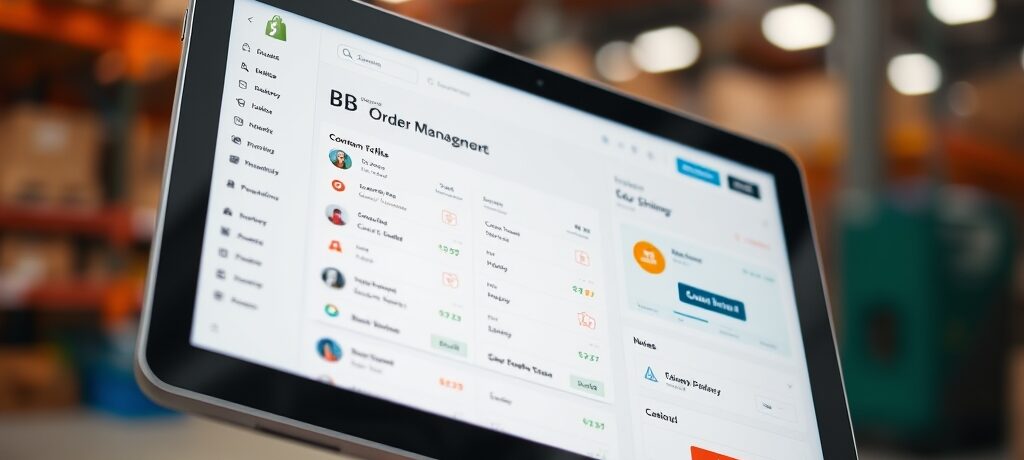
Shopify has announced a significant expansion of its business-to-business (B2B) capabilities, making several key features previously exclusive to its Shopify Plus plan available to merchants on Basic, Grow, and Advanced plans. This strategic rollout, detailed in a Thursday (April 2) press release, aims to democratize wholesale selling tools across its platform, enabling a broader range of merchants to manage B2B and direct-to-consumer (DTC) operations side-by-side within a unified system.
Expanded B2B Capabilities
The newly accessible B2B features, which Shopify described as ‘key pieces of what has been refined on Shopify Plus over nearly four years,’ now include company profiles designed for wholesale buyers. Merchants on Basic, Grow, and Advanced plans will also gain the ability to create up to three custom catalogs, allowing for tailored pricing structures, the application of volume discounts, and the implementation of specific quantity rules for their wholesale clients. This integration means that a substantial portion of Shopify’s advanced B2B functionality is no longer confined to its enterprise-level offering.
However, the company’s release also clarified that certain high-tier B2B features will continue to remain exclusive to Shopify Plus. These include the provision for unlimited catalogs to facilitate customer-specific pricing, direct catalog assignment to individual companies and their various locations, and advanced payment options such as partial payments and deposits.
Strategic Rationale and Market Impact
This expansion is a direct response to a recognized and substantial growth opportunity within the B2B sector for Shopify and its merchants. Samir Pradhan, vice president of product at Shopify, underscored the strategic importance of this move, stating in the release, ‘By bringing these capabilities to more merchants on Shopify, we’re making it easier for them to seize one of their biggest opportunities to grow.’
Pradhan further elaborated that this change will empower merchants to sell their products to wholesale buyers without the necessity of integrating external B2B tools, thereby streamlining their operations and enhancing efficiency within the existing Shopify ecosystem. The company’s fourth quarter and full year 2025 earnings report, released on February 11, provided context, indicating that B2B currently constitutes a ‘very small portion’ of its annual gross merchandise volume (GMV), which stood at $378 billion. Shopify explicitly attributed this limited size to the fact that B2B was previously ‘a product offering for Plus merchants only.’ Shopify President Harley Finkelstein had noted in February 2024 that B2B was ‘still very new’ but that the company was ‘beginning to see ‘B2B exclusive’ merchants come on [to the platform],’ signaling the nascent but growing demand for such specialized tools.
Shopify’s Broader Market Position
This initiative arrives as Shopify continues to solidify its formidable position in the broader e-commerce landscape. PYMNTS reported in February that the platform now commands more than 14% of the U.S. eCommerce market share. By extending sophisticated B2B functionalities to a wider merchant base, Shopify is not only enhancing its value proposition and competitive edge but also actively cultivating a segment it identifies as ripe for significant expansion. This strategic pivot is anticipated to drive future GMV growth, building upon its already substantial figures and further embedding Shopify as an indispensable platform for diverse business models.
The move represents a calculated effort by Shopify to unlock new revenue streams for its diverse merchant base while simultaneously strengthening its own market footprint in the burgeoning B2B e-commerce space. By integrating these wholesale tools directly into its core offerings, Shopify is positioning itself as an even more comprehensive platform for businesses looking to scale their operations across both consumer and wholesale channels, signaling a strategic commitment to capturing a larger share of the global B2B market.