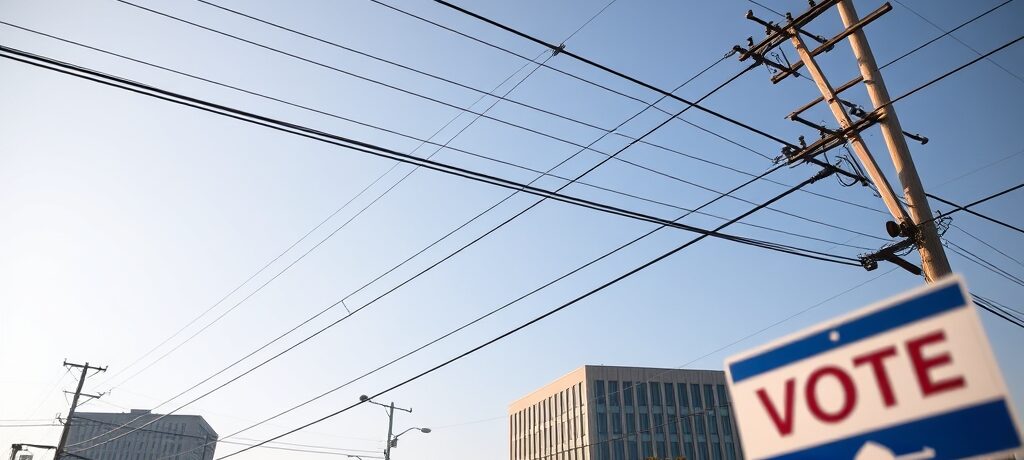
Previously low-profile elections for control over electric utilities are experiencing an unprecedented surge of attention, driven by escalating household electricity bills and the immense power demands of burgeoning data centers. This shift is transforming once-sleepy contests into intense political brawls, with national groups now mobilizing in states like Arizona and Alabama, mirroring tensions seen in Georgia, New Jersey, and Virginia.
Arizona’s Salt River Project Becomes a National Battleground
In Tempe, Arizona, an election to determine control of the Salt River Project (SRP), the nation’s largest public utility, exemplifies this new intensity. The utility projects a need to double its power capacity within a decade, largely due to the fast-growing Phoenix area becoming a hub for data centers and semiconductor factories. This demand, coupled with pressure to reduce reliance on fossil fuels, has made the SRP election a focal point.
Voter engagement has skyrocketed; more than three times as many people requested early ballots compared to two years prior. As of Thursday, with five days of voting remaining, turnout had already topped 22,000, significantly exceeding the average of 7,500 ballots turned in during the last two elections. Campaigning is visible through yard signs, text messages, and door-knockers, targeting ratepayers who own land to vote.
Two rival slates are vying for the board’s majority. One is backed by Turning Point Action, a national group better known for its role in mobilizing young conservatives, which aims to curb the influence of “radical environmentalists.” This slate, running as “Arizonans for Responsible Growth,” includes construction executive Jimmy Lindblom, who argues against an overnight switch to solar due to potential “reliability issue, there’s a cost issue there,” and the risk of “blackouts” that could impede Arizona’s growth. The opposing “clean energy” team, supported by the Jane Fonda Climate PAC, criticizes SRP’s current majority for being too eager to embrace natural gas and data centers, raising rates, and dismissing clean energy technologies. Randy Miller, a clean energy advocate on SRP’s board, called the current approach “insane, especially now.” Local chapters of progressive groups, energy interests, construction firms, and data center developers are also involved, highlighting the diverse financial and environmental stakes.
National Implications and Financial Stakes
The skirmishes in Arizona are a preview of more campaigns later this year, with at least a half-dozen states set to hold elections for utility regulators, including a hotly contested campaign anticipated in Georgia. This burst of attention is dragging the previously behind-the-scenes politics of elected utility commissioners into an “intensely national debate over how to power artificial intelligence without driving up electricity costs,” according to Dave Pomerantz of the Energy and Policy Institute, which advocates for lower rates and renewable energy. “And that means suddenly there’s all this pressure,” Pomerantz added.
Alabama Responds to Rising Power Bills with Legislative Overhaul
In Alabama, anxiety over rising power bills, which are among the highest in the South according to the U.S. Energy Information Administration, has spilled into the statehouse and onto the campaign trail. State lawmakers recently voted to overhaul the Alabama Public Service Commission (PSC), effectively shifting more authority to the governor and expanding the three-member commission to seven elected members, with the four new members initially appointed by the governor. The legislation, HB475, also forbids utilities from raising retail base rates until 2029.
Supporters, including Gov. Kay Ivey, House Speaker Nathaniel Ledbetter, and Senate President Pro Tem Garlan Gudger, described the bill as a significant step for consumer protection and affordability. Ivey stated that the bill was passed “to put a freeze on electric rates and to give the people of Alabama broader representation on the Public Service Commission.” However, former U.S. Sen. Doug Jones, a Democratic candidate for Alabama governor, called the bill a “first-rate con job” on voters, suggesting Republicans acted because “all of the sudden after two wins in Georgia, they realize that maybe the people don’t like what’s going on with the PSC.” Democrats are pointing to Georgia’s 2025 election, where they won two races for their state’s commission, as a model for success in GOP-dominated states. Tabitha Isner, vice chair of the Alabama Democratic Party, noted, “What happened in Georgia could happen in Alabama. That’s why the alarm bells are going off and so much money is being poured into maintaining the status quo.” Two of the current three PSC seats are up for election this year, with Republican incumbents facing both primary and Democratic challengers campaigning on affordability.
The confluence of soaring electricity demand from technological advancements like AI, rising consumer costs, and the increasing politicization of energy policy is fundamentally reshaping the landscape of utility governance. What were once obscure local elections, often dominated by established power brokers or monopolistic companies, are now critical battlegrounds where national political organizations, environmental groups, and business interests converge, reflecting a broader national debate over energy reliability, affordability, and sustainability.