Crude oil prices experienced a significant rebound on Monday, catapulting upwards as U.S. President Donald Trump implemented a naval blockade targeting ships transiting the critical Strait of Hormuz to and from Iran. This aggressive move, following failed diplomatic efforts, has reignited profound concerns over a potential wider conflict in the Gulf region, directly impacting global energy markets. West Texas Intermediate (WTI) Crude Oil for May month delivery saw a notable increase, trading up by $2.67, representing a 2.76% rise, to reach $99.24 per barrel.
Blockade Imposed After Failed Diplomacy
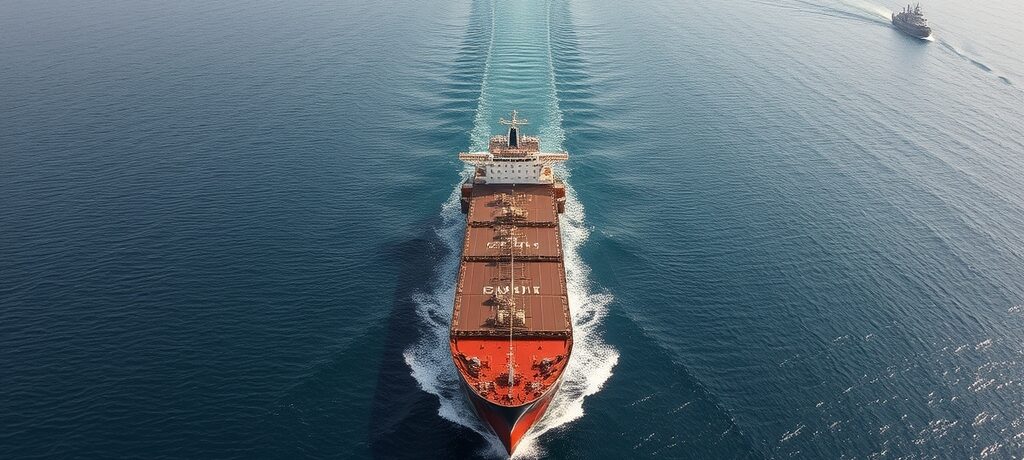
The presidential directive, announced after U.S. and Iranian delegations concluded bilateral talks in Pakistan without an amicable deal on Saturday, mandates the U.S. Navy to enforce a blockade on all vessels entering or exiting the Strait of Hormuz. This enforcement began at 10:00 A.M. EDT on April 13, effectively bringing shipping activity in the vital waterway to a virtual halt. U.S. Central Command confirmed its impartial stance, stating it would block vessels from all nations attempting to enter or exit Iran’s ports across the strait. Analysts suggest Trump’s strategy is designed to severely curtail Iran’s oil exports, which reportedly continued seamlessly even during the initial phases of the ongoing Gulf War, thereby aiming to destabilize its economy.
Iran’s Defiance and Escalating Rhetoric
The diplomatic breakdown occurred despite a high-level U.S. delegation, led by Vice President JD Vance, meeting Iranian counterparts in Islamabad, Pakistan’s capital, on Saturday. These consultations, spanning 20 hours, aimed to formulate a framework for discussions and measures to end hostilities. However, President Trump later announced that Iran refused to retract its nuclear ambitions, which he deemed ‘very dangerous,’ leading directly to the issuance of the blockade orders. In response, Iran’s Islamic Revolutionary Guards Corps (IRGC) swiftly vowed a ‘strong and forceful response,’ asserting its ‘full control of the Strait of Hormuz traffic.’ The IRGC declared that ‘enemies would be trapped in its deadly vortex’ should they miscalculate Iran’s responsiveness, underscoring the heightened risk of direct confrontation.
A History of Tensions in the Strait
This latest escalation follows a period of fluctuating tensions. Approximately ten days prior to the blockade, President Trump had served an ultimatum to Iran: either reopen the Strait of Hormuz, which it had blocked since the Gulf War’s commencement on February 28, or face ‘disastrous military attacks.’ The situation appeared to de-escalate last Wednesday when Trump messaged via his social media platform, Truth Social, that he had halted all proposed attacks on Iran for a period of two weeks. During this brief reprieve, Iran permitted restricted movement across the seaway, allowing only 15 ships per day. However, ship owners remained reluctant to fully resume fleet operations due to concerns over navigating sea mines reportedly planted by Iran. Iran subsequently offered a map detailing an alternative route to circumvent these maritime hazards, an offer that evidently did not prevent the current blockade.
Broader Economic and Environmental Repercussions
The renewed threat of an expansive war in the Gulf has profoundly gripped global markets, triggering significant supply-related concerns that have directly contributed to the catapulting oil prices. Experts are now predicting the potential for even more aggressive actions, with some suggesting the U.S. could attempt to seize control of Kharg Island. This island is strategically vital, serving as the primary base from which Iran exports approximately 90% of its oil and energy, making its control a potential means to cripple Iran’s economic lifeline. The ongoing ‘Operation Epic Fury’ has already had far-reaching consequences, disrupting the Gulf’s energy exports and shipping lanes, destroying several massive infrastructure projects, and severely impacting tourism in the region. Furthermore, the conflict has resulted in long-term environmental damages, including extensive oil spills and toxic smoke, highlighting the broader costs of sustained hostilities. In light of the war’s impact, OPEC has revised its second-quarter global oil demand forecast downwards by 500,000 barrels per day, signaling a tangible economic consequence of the instability.
The imposition of the Strait of Hormuz blockade marks a critical juncture in the escalating tensions between the U.S. and Iran, directly translating into immediate volatility in the crude oil markets. With both sides adopting increasingly firm stances and diplomatic avenues appearing to narrow, the global energy landscape remains acutely vulnerable to further disruptions. The coming days will be crucial in determining whether this latest move pushes the region closer to a wider conflict or if new diplomatic pathways can emerge to avert further economic and human costs.