The Trump administration has escalated its economic pressure campaign against Iran, imposing sanctions on a major China-based oil refinery, Hengli Petrochemical, and approximately 40 shipping companies and tankers involved in the transport of Iranian crude. Announced Friday, April 24, 2026, the move targets a key revenue source for Tehran and comes just weeks before President Donald Trump is scheduled to meet with China’s President Xi Jinping.
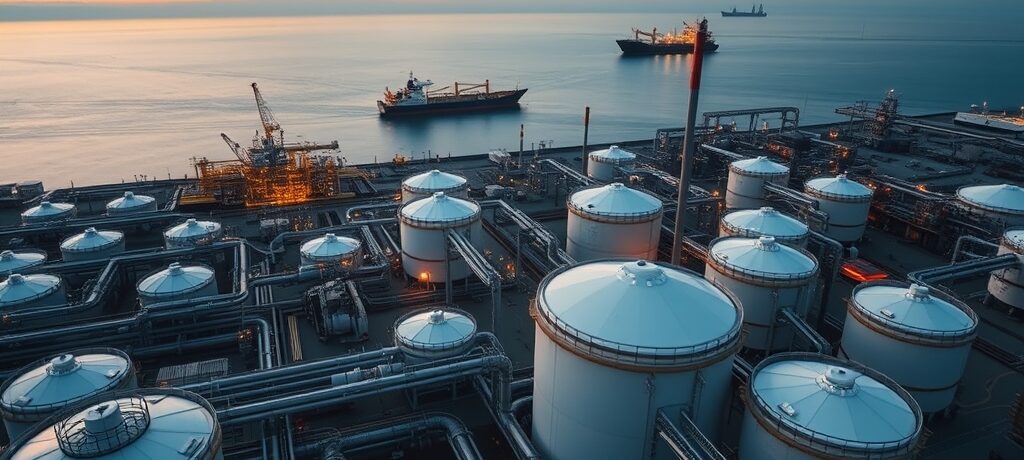
The sanctions specifically name Hengli Petrochemical’s facility in the port city of Dalian, a significant independent refinery with a processing capacity of roughly 400,000 barrels of crude oil per day. The Treasury Department alleges that Hengli has been receiving Iranian crude oil shipments since 2023, generating hundreds of millions of dollars in revenue for the Iranian military. The punitive measures effectively cut off these entities from the U.S. financial system, penalizing any individual or company that continues to engage in business with them.
Strategic Context of Pressure Campaign
This latest action fulfills President Trump’s earlier threats to impose secondary sanctions on companies and countries facilitating trade with Iran. It forms a critical component of his Republican administration’s broader strategy to choke off Iran’s oil exports, which are vital to its economy. The sanctions also follow a concurrent U.S. move this month to impose a physical blockade on the Strait of Hormuz, the crucial Persian Gulf waterway essential for global energy supplies. The timing of these sanctions, preceding the high-stakes meeting between President Trump and President Xi, adds another layer of geopolitical complexity to already strained U.S.-China relations.
The Shadow Fleet and Iran’s Oil Trade
China remains the largest buyer of Iranian oil, importing an estimated 80% to 90% of Iran’s crude before the outbreak of the U.S.-Israeli war with Iran. Despite international sanctions, Iranian crude often reaches China via a “shadow fleet” of vessels, with its origin obscured and frequently arriving disguised as oil from other countries, such as Malaysia. While Hengli is a major player, the advocacy group United Against Nuclear Iran stated in February 2025 that it is one of dozens of Chinese purchasers, with smaller “teapot refineries” typically being the primary buyers of Iranian oil. Iran has consistently reiterated that the lifting of sanctions is among its key demands for ending the ongoing conflict.
Treasury’s Firm Stance and Global Warnings
Treasury Secretary Scott Bessent affirmed the administration’s resolve on Friday, stating that his agency “will continue to constrict the network of vessels, intermediaries and buyers Iran relies on to move its oil to global markets.” Earlier this month, the Treasury Department underscored this commitment by sending a letter to financial institutions in China, Hong Kong, the UAE, and Oman. This correspondence explicitly threatened secondary sanctions for doing business with Iran, accusing these countries of enabling illicit Iranian activities to flow through their financial systems. Secretary Bessent further elaborated during an April 15 White House press briefing, warning countries that “if you are buying Iranian oil, that if Iranian money is sitting in your banks, we are now willing to apply secondary sanctions, which is a very stern measure.”
Navigating Global Energy Turmoil
These sanctions are being implemented against a backdrop of significant turmoil in the global energy trade. Ongoing conflict around the Persian Gulf has disrupted oil and natural gas shipments, leading to soaring prices worldwide. In an effort to mitigate the impact of rising oil costs, the Treasury has taken steps such as issuing temporary sanctions waivers on Russian oil and a one-time waiver for Iranian oil already at sea. This indicates a delicate balancing act between applying maximum pressure on Iran and preventing further destabilization of global energy markets.
China’s Response and Compliance Dynamics
While the U.S. imposed a similar sanction on a Chinese refinery earlier this month, drawing criticism, China’s official stance remains one of disagreement. Liu Pengyu, a spokesperson for China’s embassy in Washington, previously commented that the use of such sanctions “undermines international trade order and rules, disrupts normal economic and trade exchanges, and infringes upon the legitimate rights and interests of Chinese companies and individuals.” Despite these objections, major Chinese companies and banks typically comply with U.S. sanctions, primarily due to their extensive exposure to the U.S.-dominated financial system, which makes non-compliance a significant financial risk.
The latest sanctions underscore the Trump administration’s unwavering commitment to isolating Iran economically, even as it risks further exacerbating tensions with China and navigating a volatile global energy landscape. The upcoming meeting between President Trump and President Xi will likely serve as a crucial forum for discussing these contentious issues, with the implications extending far beyond the immediate targets of these economic measures.